Didn’t we all make promises? Didn’t we all say yes to caring for each other?
And yet, here we stand with the truth the we Must be our own golden mean, our own magic
We had nothing to do with the wild universe that Called us into existence, except for that we have made
A pact, a promise to ourselves, that we Would live each day to honor our mitochondria
To uplift our own atoms, to love the Starrdust Of others– to kin-keep, to break bread, to
Carry things on our heads and backs, and hearts And sometimes we have to break the promise
To set the other free, to honor our sovereignty And perhaps, that is the gift of grief, those
Tendrils of sadness and severed nerves which Feel so raw, so new, so in need of protection
Cradle all of us in. The letting go. The setting Apart, the making into two, and the reconstitution
Of family, of friends, of tables and candlelight A twilight override, a play it again, Sam
A journey that has always been one of the heart That can really only view and visit the other through
A window– soul to soul, sex to sex, human to Human, heart to heart, I am that I am
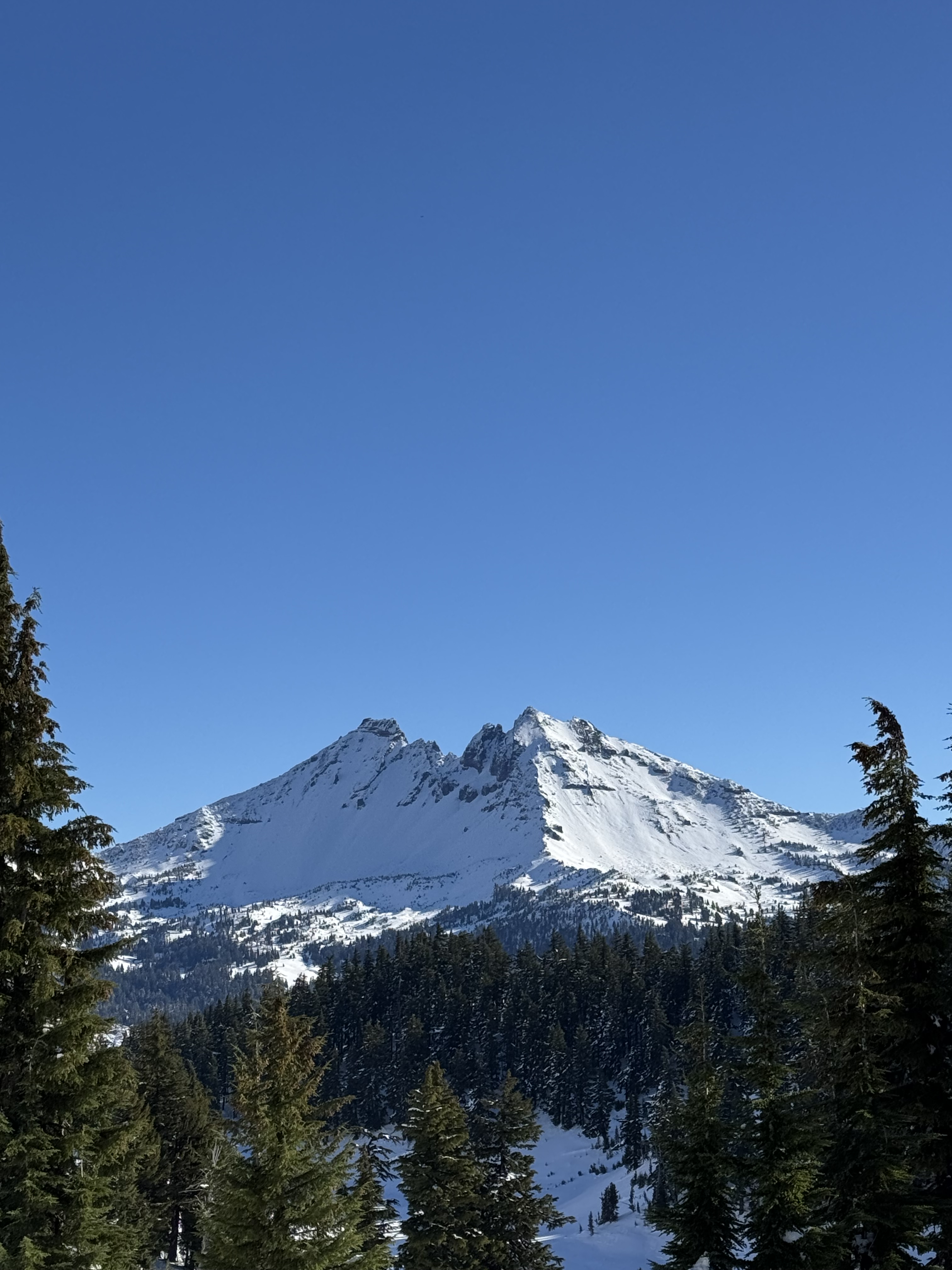
Broken Top, Three Sisters Wilderness, Deschutes National Forest, Oregon (2025).
Falling Forward
It’s not very often I’m privy to an American football game I prefer soccer, to be honest, or lacrosse, or even rugby … Any other sport, but I was watching the epic eternal battle (they call it the holy war) between the red and the blue And my partner pointed out that one of the quarterbacks
Knew how to perform a ballet for each play, each pass, they laser-focused their eyes, their body, their entire being On the intention, the target, even after it left their hands, yes, they fell forward, toward the play, toward the action each time, there was not even a hint of indecision in
Their gaze, and it got me to thinking about how life surely requires this, that we fall forward, that we look to our most noble intentions with laser-focus With longing, we’ll be so set on our goal that we’ll Fall that direction, a ballet for each day
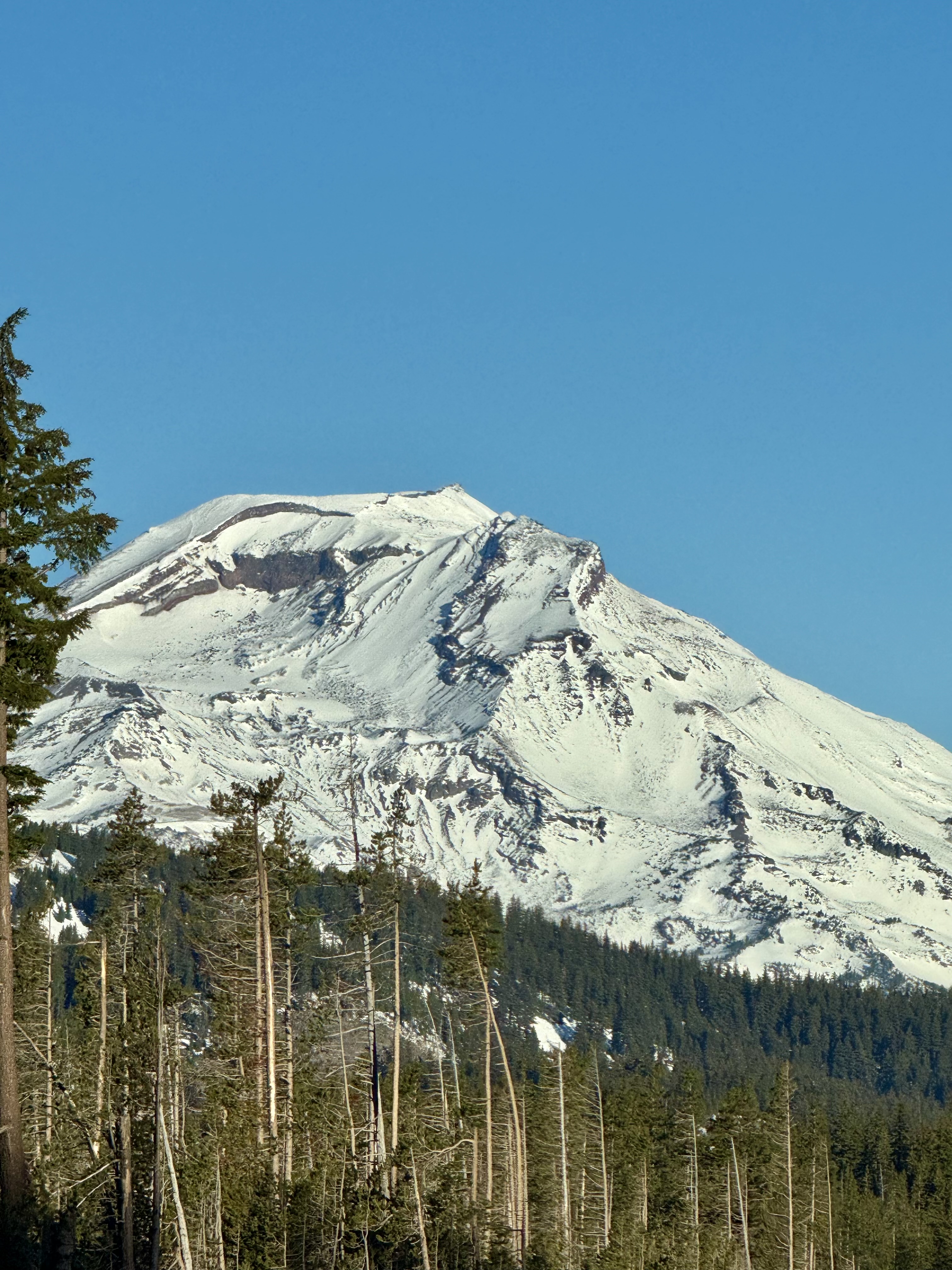
South Sister, Oregon
1.0 Human
a documentary something about education and technology
the second clip is Ken Jennings you know, Jeopardy most-winner who
explains that we have already been bested by the technology “gods’ all I can think
is, I’ll never be ready for this I’ll always want bodies, and touch,
and direct instruction eyes lit by the sun and that wondrous gray glob
of matter synapsed by neurons I need flesh over algorithms every
day and the fact that the bots spell rhythm with an i
(lower case) is all you need to know about the state of humanity
every Color all part of all unity upon Unity breath After breath sun Rising sun moon setting mooN high in the Wide Blue bowl of the Sky star birthing star miracle joins miracle death Brings death life gives Life bathed In every Color
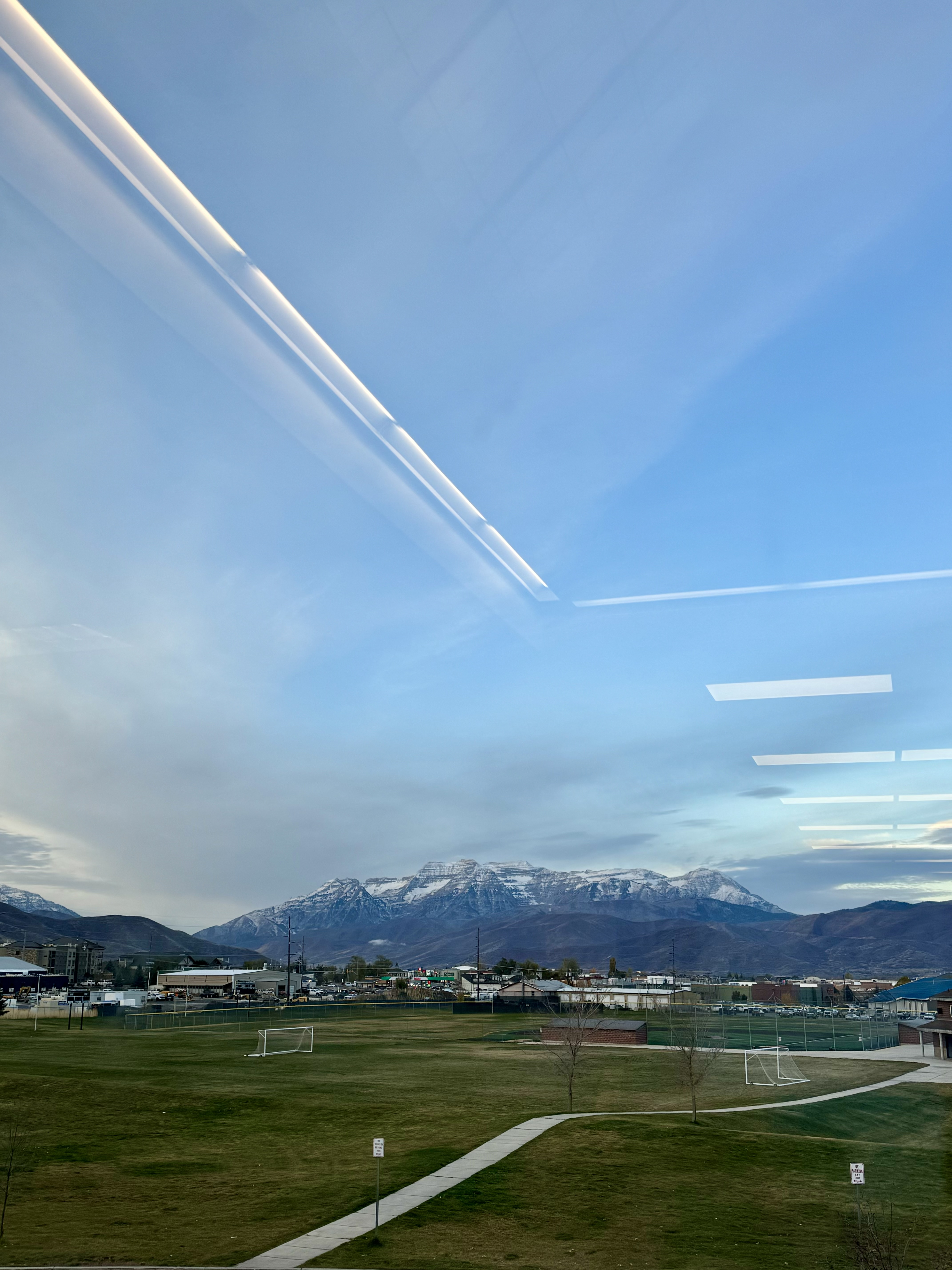
Timpanogos, through the window. November 2024. Image, my own.
In Memoriam: November
While the geese continue to fly south Crying, cawing in the early white billows And pillars of sky, the snow comes in Little promises, licking the ground like a prayer The branches in the woods become More bare by day, raw and line-worked Wiring out against the frozen landscape In stands and thickets tromped and tread By silent, fervent feet, over and over again Now the waiting for winter to truly take Hold, for snow to come and bind up Scattered grasses, still the scratching leaves. A memory of Novembers, a palace of dying, Nostalgia of hearths and firesides of Rooting, resting and acceptance
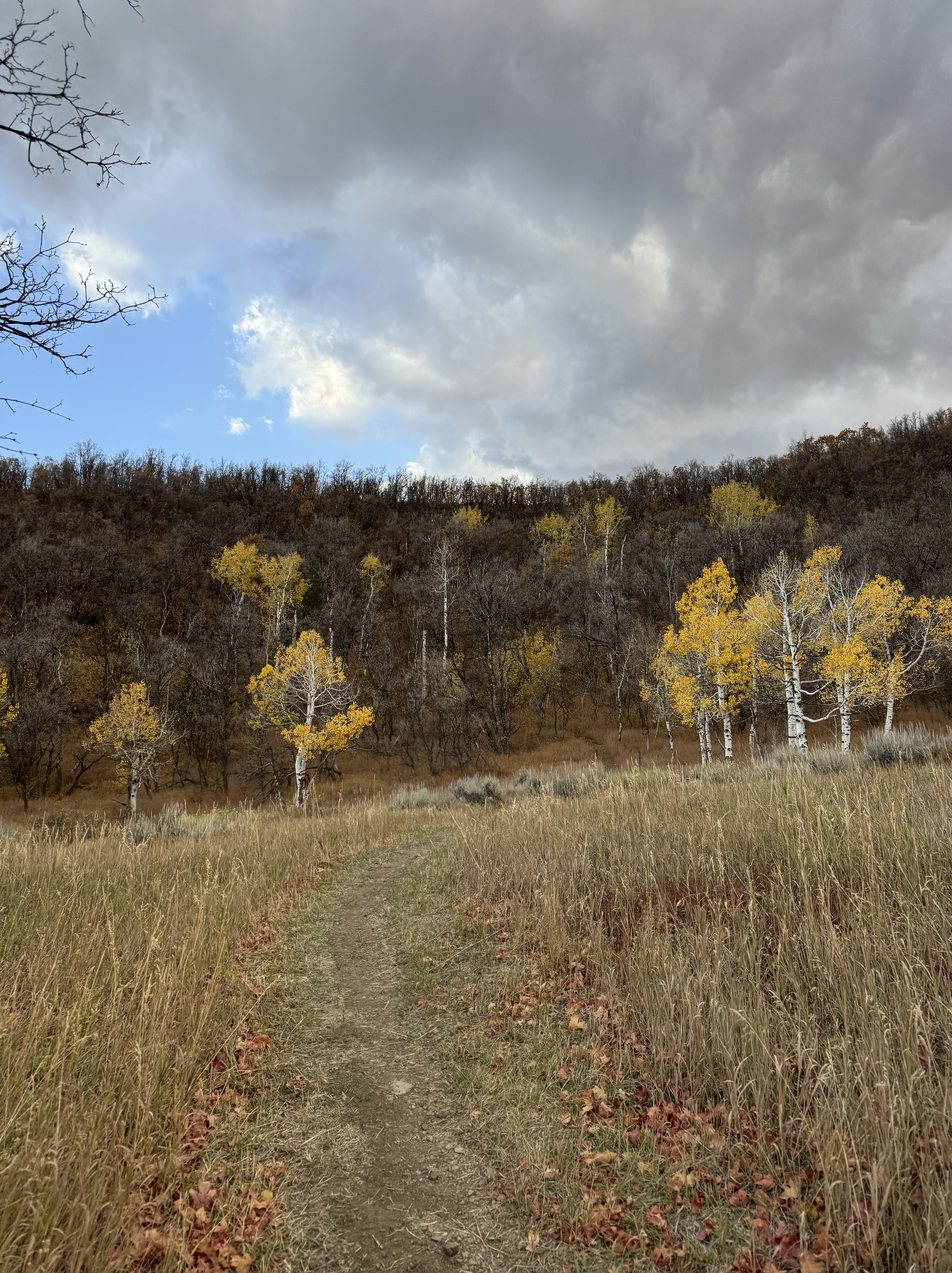
Neighborhood walk. Image, my own.
Palace
tides, ever shifting ever flowing, ocean wave upon wave turning over universes places of refuge
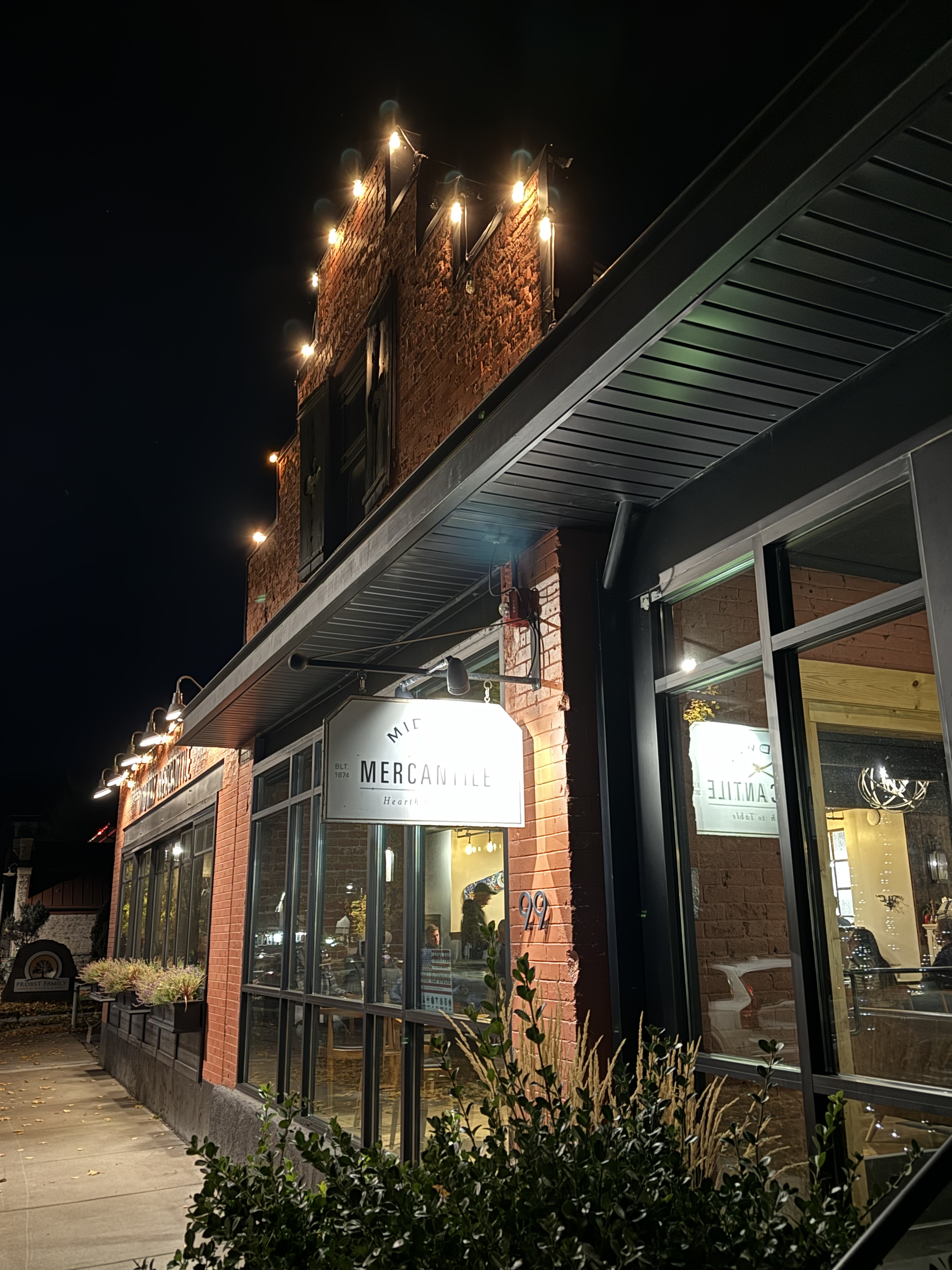
Midway Mercantile. November 2024. Image, my own.
She Burns
No one seems to like it, they claim her strength is admirable that it’s a protection to her and to them, she’s not sure she burns, like a kiln stoked into an inferno, she burns like molten earth just exited from a magma chamber, bright she burns, a dragon girl who never wanted to hurt anyone, seventeen hundred degree flames hiss at who she is near, causing a tremble, a stir, she burns because she knows that women, for centuries, have had to grow small, small and insignificant, accessory and accompaniment, to receive life, she can’t ever let on that she wants learning, love, expression, voice, power no those gifts are reserved for others. She burns like the forge meant to melt metal, meant to make paper towel racks and weapons, she can choose wedding colors and a matching fascinator she can choose rugs, mugs, décor, clothing. She can choose the height of her heels and the blaze of her eyes as long as she stays thin, “nice,” and modest she complies, and writes it in a poem where will she go with this fire?
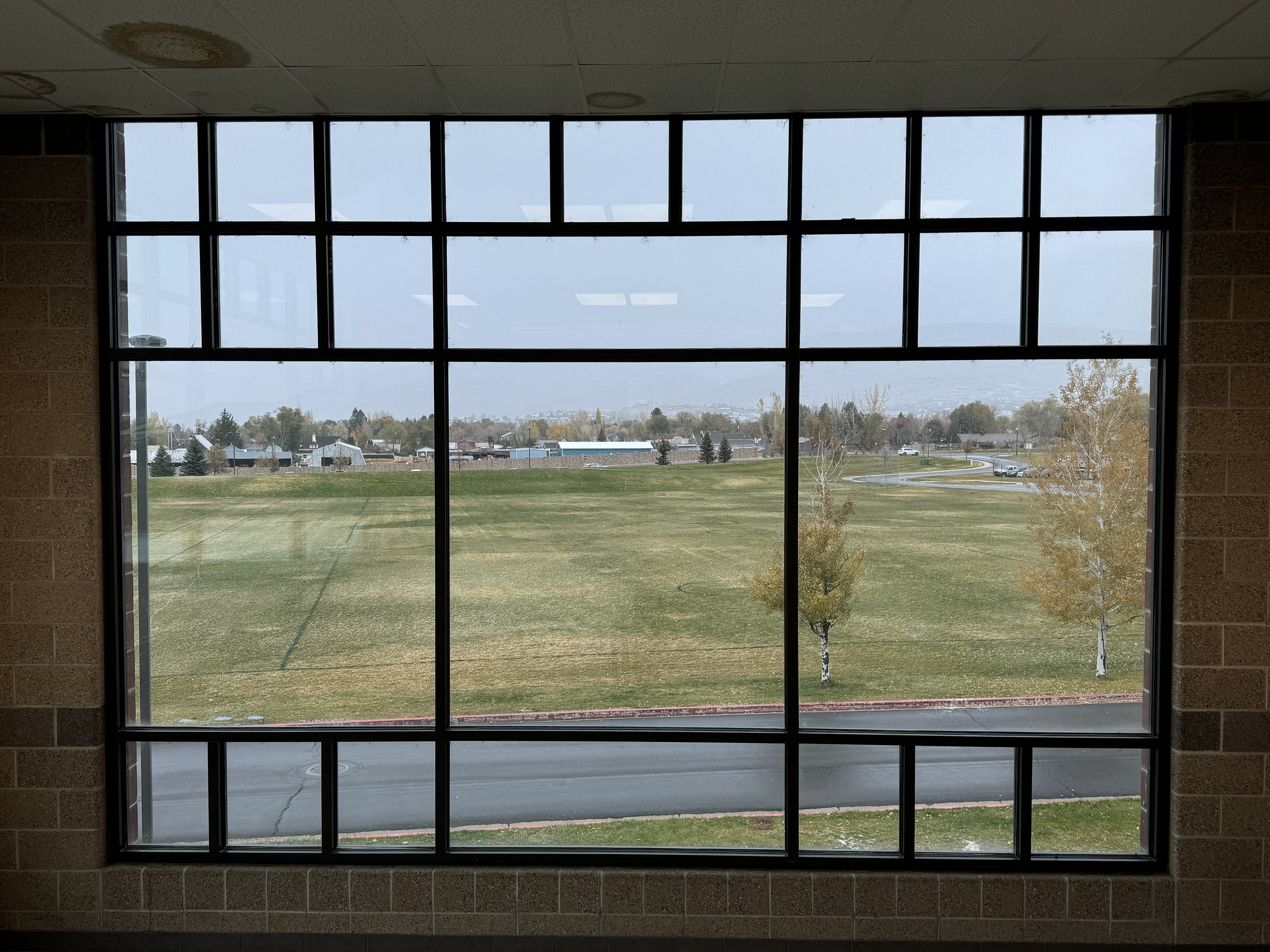
November windows. 2024. Image, my own.
Refuge
From the moment everything broke we wished for a place of peace and refuge. Another person is never a home, only your own skin and bones can hold you. Another person is never a place except for you are your own place inside your sinews and blood streams and heartbeats. A house can be so much more than a home—a refuge, a covering, a landing, a carrying, a place, a palace. But it would be nothing without you and the warm, bright, dark burdened and unburdening beautiful people who surround you—in sorrow and joy, in tears and laughter, in silence and singing. What is a place? A person is always a place– a place for the heart, body, and mind to attend—a place of love and horror, a place of welcome and displacement, a place of empathy and disgust, a place to be thoughtfully alive, in, inside. The heart of the house is the person who beats inside, who braves the storm to return, who lies down on the floor to pray and bless the space because it is all that holds back the outside, all that protects from life.
Crescent Moon, Sunset, Waikoloa, Hawaii. December 2022. Image, my own.
Be Old
Not in the wizened sense (but be that, too, if you are vigor and strong chords) you don’t have to be a sapling
or a sprawling hundred-year growth the world, and you are fascinated with all things new, be old
and let some of the love that life has offered you seep through, a sticky sap of belonging,
bright, amber scent of pine to teach you that in your bones you can give your self moments
to sit in stillness in silence in the calm of the wind out of the storm
be old and look at lessons that life has revealed think about the continuum
of the world with lenses, and circles you’ve crafted of heart– sinew and marrow
joy and sorrow ache and pulsing love, all experience. don’t forget that molten
rock sometimes surfaces from the core of the earth because you need be both– foundation and fire be old and be new
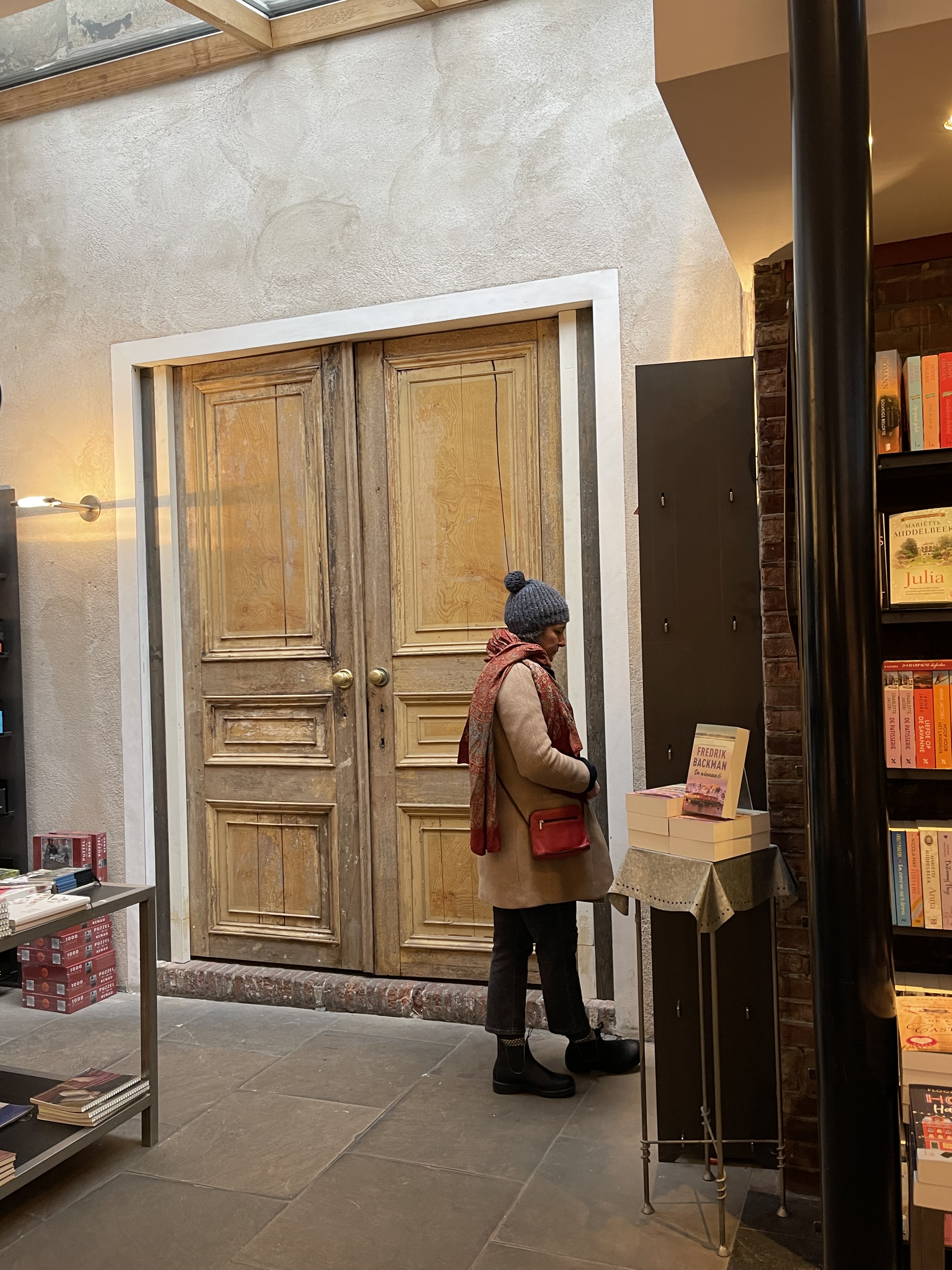
Church Doors, doors from a church that were moved to a bookstore in Haarlem, Netherlands, January 2023. Image, my own
Bus
Today I saw your bus Pull safely to stop at the light on highway 40 and the tears just
spontaneously came I was so happy you were safe, you were Home
Timpanogos and waning gibbous moon, yesterday, my commute. August 2024. Image, my own.
Attraction
It turns out that attraction is real
I know this from a plethora, a multiplicity of experiences
but the most vivid is my high school physics teacher who explained that if you were to put two objects into space, in a vacuum, a gravitational attraction would eventually, inevitably be established, formed between the two objects
these two objects would attract one another who knew?
Beach Huis, Noordwijk, Netherlands. January 2023. Image, my own.
The End From the Beginning
Endings, they definitely aren’t my favorite. A bird in the hand… they claim. I’m better if some things never change. A feather in a vacuum only acted on by gravity Falls as fast as anything. This fundamental of physics makes my head spin. Like that janitor who left all of his fortune to the library where he shined the broken tiles day-in and day-out. Here. Now.
Maybe this gift is just the beginning.
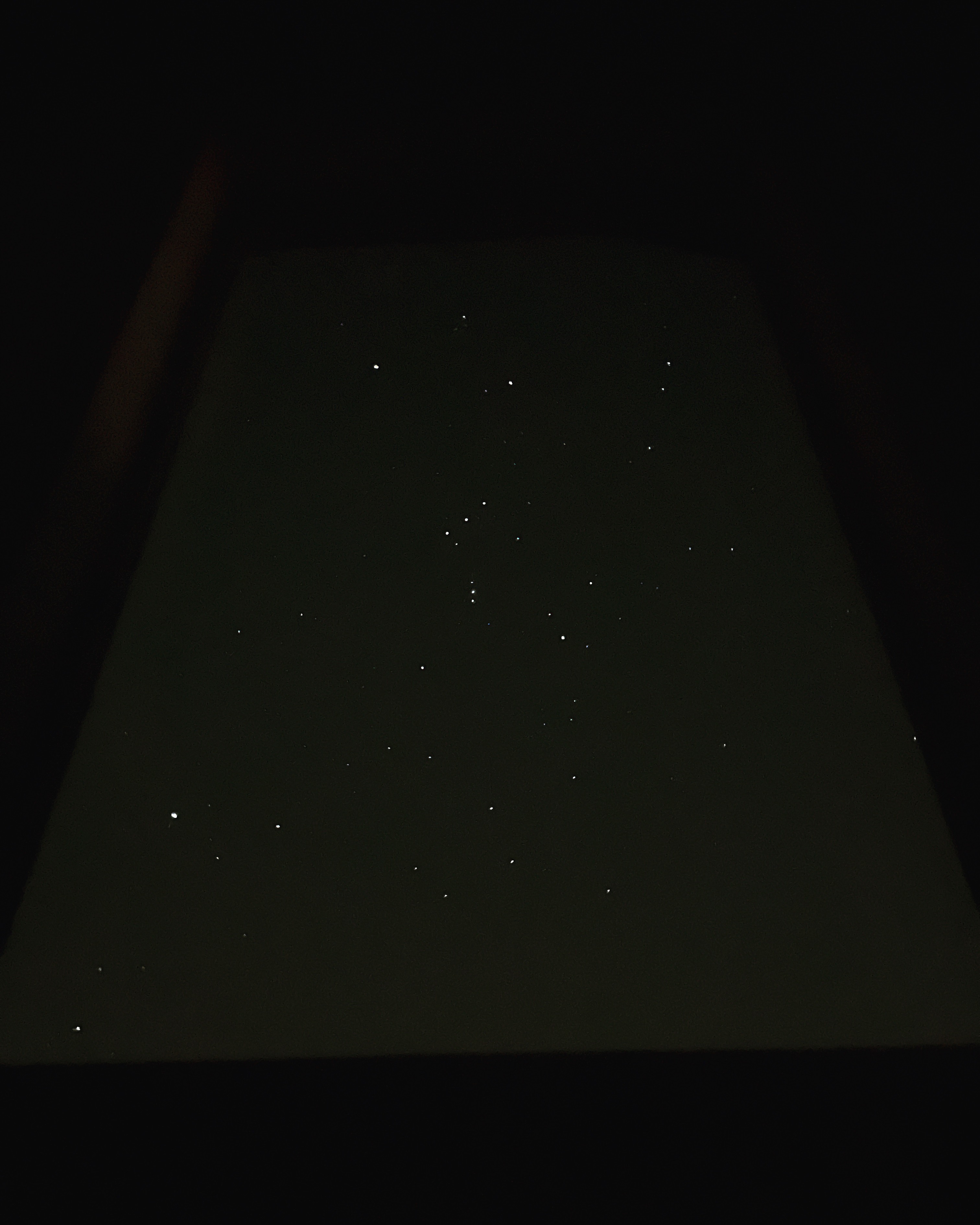
Orion, from my window. December 2023. Image, my own.
The Color Atlas of Galaxies
why do you purchase the color atlas of galaxies, cambridge press, for your child? with any other intent than to enable you and them to feel impossibly small. micro. insignificant. to be reminded of your own obsolescence. is it working? yes. you possess the color atlas of galaxies, cambridge press, so that you understand that if you are tiny, miniature, inconsequential as far as all existence is concerned you will begin to feel that your place in the universe is not unknown, it is confirmed. because, it turns out that in the english language, you should never put a comma after because, because this rule has been established by grammarians for a long, long time. before you were born. but it also turns out, that you don’t really need to worry about that, in the grand scheme of things because, you hope your students will never read your work, or call you out on your hypocrisy of punctuation. the best thing is that you’ve chosen this side-gig as a poet so you can really say f-it and look into a color atlas of galaxies, cambridge press.
Landscape Arch. April 2021. Image, my own.
Best Part
the best part is crop- ing the hard stuff out in favor of Earth’s beauty
Exit Glacier was the first to meet my lips. On a late summer day in August of 2002 my friend Jordan and I jumped into the little white 1970s Honda Accord I had purchased for six hundred dollars and headed down the Seward Highway. Leaving Anchorage, the White Rabbit skimmed and scampered over mats of thick fog arriving in Seward two hours later.
The glacier wasn’t hard to find. The directions my Aunt Martha had given me were something like, “Five miles outside of Seward, start looking off to your right. You can’t miss it, big chunk of blue ice. The turn will come up after a brown sign. You can park there and walk right up and touch the face.” So we did just that. I turned the wheel hard to the right. The little car lacked power steering, and we careered into the parking lot. Skipping to a stop, we hopped out of the car, and walked up a paved path which was at most 500 feet long.
Standing in front of the enormous wall of ice, I was awe struck all over again. Time passed, seconds, minutes, maybe more, as we starred at the face of Exit’s massive ice floe. After the seemingly interminable pause, we slowly began to move closer to the glacier. I was close enough to touch it but didn’t raise my arm to do so. Motionless, I let the cool waves of air riffing off the ice caress my face. Jordan gingerly touched a polyp of blue, then pressed her whole hand against the ice.
“Kiss it,” she challenged, smiling.
I looked for a moment from the ice to Jordan, and then back at the frozen wall. I had walked across a glacier the year before, 2001, when Era helicopters in Skagway, AK, offered Holland America Tour Director’s a promo tour package which included the helicopter flight, and dog mushing on Denver glacier. I remembered squinting behind sunglasses at the incredible glare of the sun’s rays glancing off miles and miles of snow as the helicopter hovered then touched down on the glacier.
According to scientists John and Mary Gribbin, authors of the book Ice Age, I was experiencing first-hand a phenomenon known as positive feedback. The shiny white snow covering Denver glacier, the rest of the Juneau Ice Field, and the entire polar cap was reflecting the solar rays of that bright day, helping to keep earth cool. Stepping out of the helicopter, I stood atop the snow of the latest arctic winter.
One hundred plus Millenia of snowpack adding to the weight of the accumulating ice itself, this is nature’s icy version of compound interest from the Wisconsin Ice Age and the additional Little Ice Age, and it felt deceptively firm beneath my feet. This particular glacial savings account in the Juneau Ice Field had accumulated over the course of 70,000 years. Due to climate changes around 10,000 years ago the ice beneath me had ceased to compound and had begun to recede into the interglacial period the earth was now experiencing.
Later that afternoon, my musher-guide, Sarah, had taken me to the edge of their camp to see an ice fissure that had opened up just the day before. Pulling a tawny strand of hair behind her ear and peering into the dark slit, Sarah explained that they had to probe the area around and through the dog camp twice daily to make sure the ice they were camped on was relatively stable, no cracks. Sarah told me that she hadn’t ever fallen into a crevasse, but she had talked to people that had, and survived.
If I crouched down right here in front of Exit glacier, I could slip myself into the gapping crevasse which was forming between the ice and bedrock at the glacier’s base. Rather than being still and immovable, glaciers actually act more like rivers of ice than humongous stationary ice cubes. What would my journey up through the bowels of the glacier be like? Eventually, if I lay there long enough, I supposed that Exit’s fused ice would freeze me solid and carry me deep into the heart of the glacier.
In another thousand years maybe I would surface, minus a few limbs, in the medial moraine, a dark ribbon of sediment of all sizes, which flowed in a black current through the center of the glacier. I smiled at the absurdity of my fantastically imagined journey. Puckering, leaning in, the frozen tingle on my lips didn’t take me by surprise. I thought I could taste the refracted blue light.
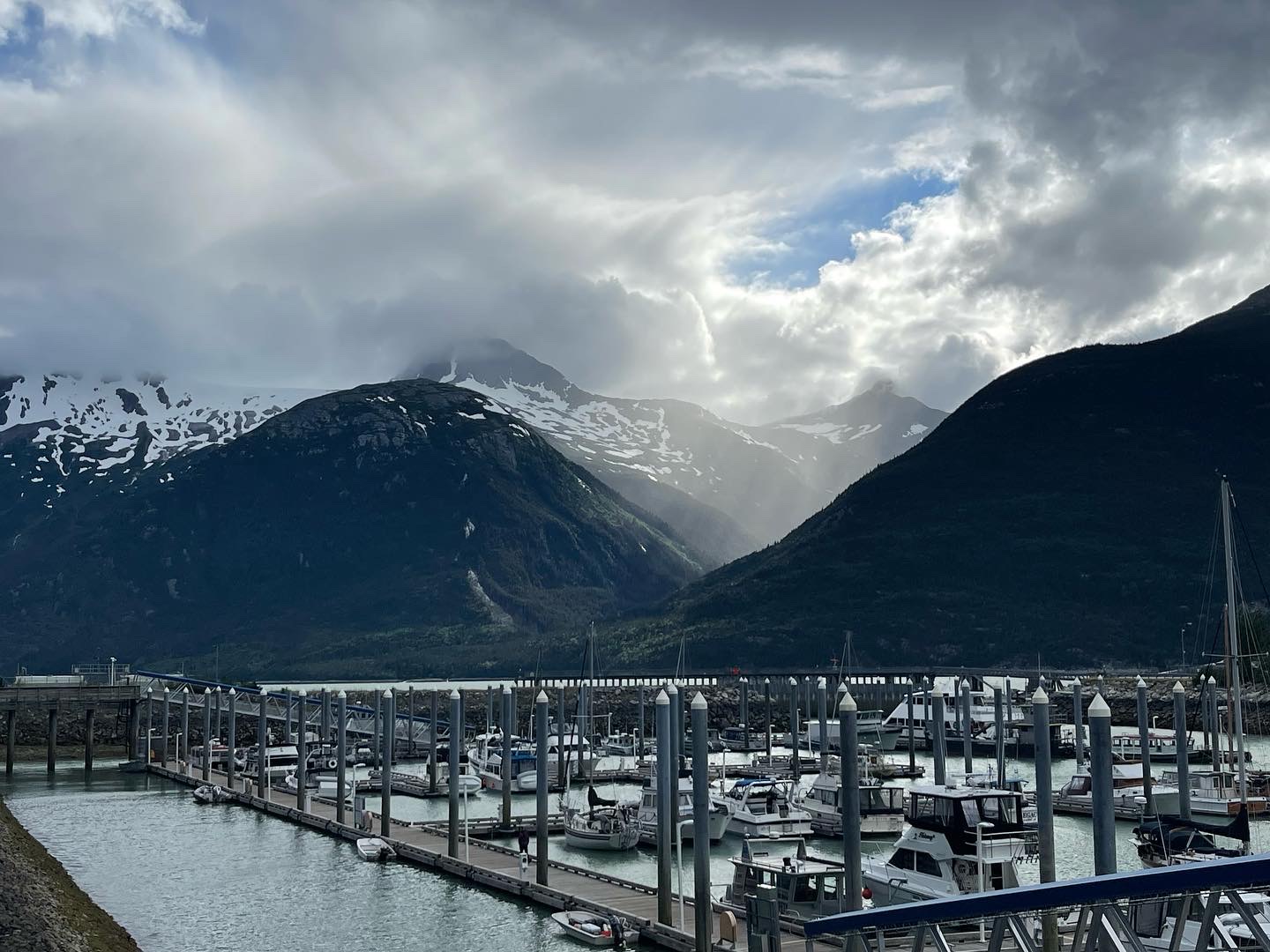
Skaway, Alaska, Small Boat Harbor, July 2022. Image, my own.
——
For my grandmother’s funeral, I refused to wear black. Death, grief, pain, loss, sorrow, sobs all bowed to black. Most of all, black meant forgetting. Oblivion is black. Sleek black like the raven wings of an eternal night, eternal sleep. I would not forget her. Perhaps she would not always sleep. I wore white. White like her temple dress. White like the snow tipped mountains that looked down on her grave. White for her faith in a loving God. White like stem under the soft gills on the belly of a mushroom. White for resurrection and the promises of her heaven.
One long pew, in the center of the Church held the entire immediate family of Dorothy Adelaide Muchmore Crisp Mickelson Farnsworth. Seventeen all told, four children, two in-laws, and eleven grandchildren. The Church then filled with her friends, neighbors, co-workers, and extended relatives. Words spoken, hymns sung, tears shed in the Mormon chapel in Duchesne, Utah. We packed into cars and drove in a strange June rain toward Mountain Home, Utah, and her grave.
——-
Scire (ski:re) to know. Latin. for Starr by Megan Dickson
To know Time is to begin to understand the mortal drum of the Universe
The thrum of blood coursing through your veins, narrative in your head, bringing you closer to Death,
but to know Life is to know the thousand Drums cacuophonizing consciousness Beating,
to know to see to love to joy to song to peace
Yes, to tragedy but, to know the Infinite is to know that a star is birthed in an unfathomably incandescent act of fusion
Bed of a nebula beginning of Everything, Creation– calamitous, cataclysmic formidable, entropic where one star died, another reborn
In the End, we’ll remember this bead to celebrate one life, it returns us to our original scire– to know– all love
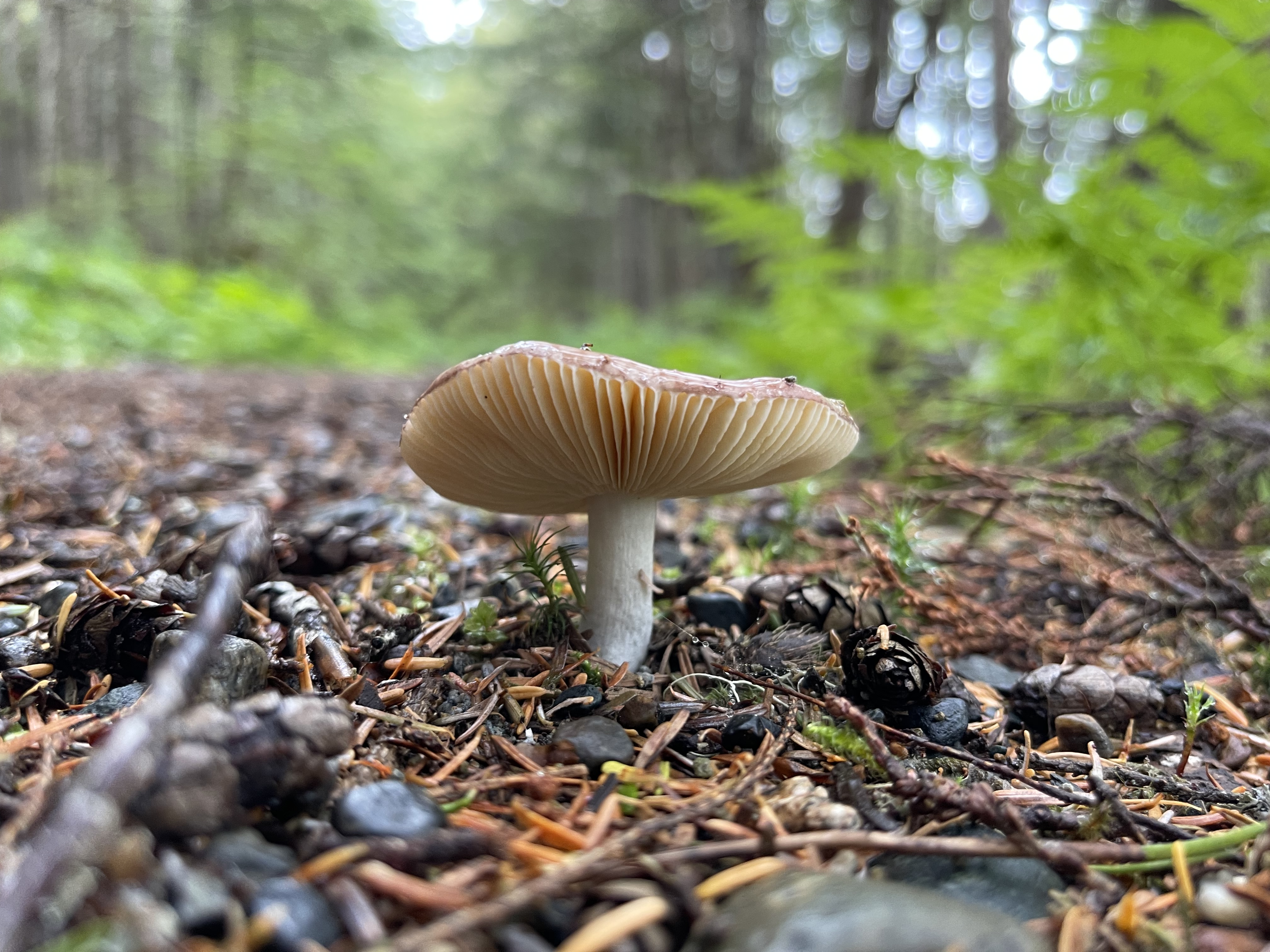
Mushroom, Haines Alaska, 2022. Image, my own.
——-
There are pictures of Earth that give us some idea of how precious, how miraculous our planet really is and what it might be like to look out on our own home from the window of a space shuttle or planetary lander. Bill Anders from NASA’s Apollo 8 Mission, 1968, took the famous photo “Earthrise.” He explains, “My photo “Earthrise” points out the beauty of Earth – and its fragility. That little atmospheric thing you and I are enjoying now is nothing more than the skin on an apple around the core.” That’s the funny thing about this whole accidental miracle, in all the cosmos we exist. Just that fact alone is part of a probability that is so far beyond my perception that my eyes blur and my head dizzies.
Sometimes I still imagine being an astronaut. Alan Lightman and Tom Wolfe advocated that instead of sending airmen and women or folks who were formally trained by the military into space, we should prioritize sending artists, poets, musicians, and more scientists of every description because they would be able to communicate the awe, the beauty, the wonder, and the utter incredulity when faced with looking at our very own blue and green oasis–Earth– from off-planet.
I remember seeing another photo of Earth from a satellite camera trained at the center of the pacific ocean. From that perspective Earth looked much more like a water born planet with two tiny, almost wispy ice caps floating on one vast sea. Water and ice. That was it. How might human perspective be changed if we all got a chance to look at our planet from outer space? Would we be more compelled to find ways to stabilize our planet’s climate?
It feels as if sending a lot more Earthlings into space would achieve the same result as I was hoping to achieve by introducing my children to ice. To have our human perspectives opened wide, our understanding of what we thought we knew about Earth thrust away from us just like 7.2 million pounds of thrust that rocket a space shuttle to reach terminal velocity and escape Earth’s gravitational force. Sometimes that’s the force it feels like it takes to get folks care about Earth, 7.2 million pounds of thrust. I hope the care we continue to need to take care of Earth seems to grow as humans continue to populate our only home.
Climate activists and advocates in New York City and elsewhere have been heating up this summer– literally and figuratively. They are calling on companies and corporations to limit their use of fossil fuels and begin phasing these fuels out entirely. This message is not new, but the heat wave in the past few weeks, July 2024, has reenergized some of these groups. A longstanding group called Third Act was co-founded by Bill McKibben. Last week, McKibben and others marched around Citigroup’s headquarters downtown NYC in burlap sacks labeled with climate changes that have been the cause of the most loss of human life. Some of the hazards were “heat waves,” “bleached coral,” “tsunami,” “ocean acidification.”1
This group wants American corporations and large oil interests to be held accountable for their slow response to phasing out fossil fuel usage in industry, auto production, and the investment portfolios that reflect the fact that many of the companies have slothed or re-negged on their original climate goals.
If Greta Thunberg has proven nothing else, she has shown us how long, how fraught, how tiresome and relentless the calling of Earth Advocate can be. Perhaps if we shuttled Citigroup’s CEO, Jane Frazier with a batch of us climate egotists and apologists into space that would change. Maybe we’d all return with fresh eyes for how beautiful, how delicate, how balanced, and how worthy of our utmost care and love Earth really is. All love.
*(This is the fifth essay in a braid that runs back over thirty years in my lifetime, but the story is hundreds of thousands of years old, and continues as we face climate change at the human level more than perhaps ever before in Earth’s history. Previous essays and poems include: Hope (Alaska), Hope (and Ice), Hope (and Earth), Hope (and Loss). Thank you for reading, liking, commenting, and sharing.)
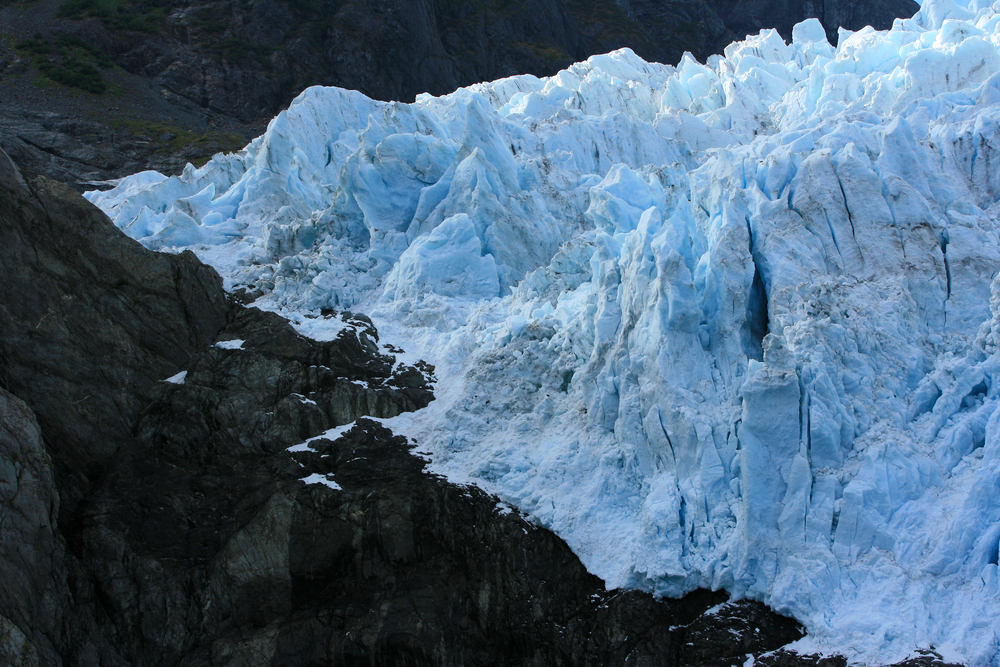
Exit Glacier as taken from Exit Glacier Trail, 2002, “Kiss It”
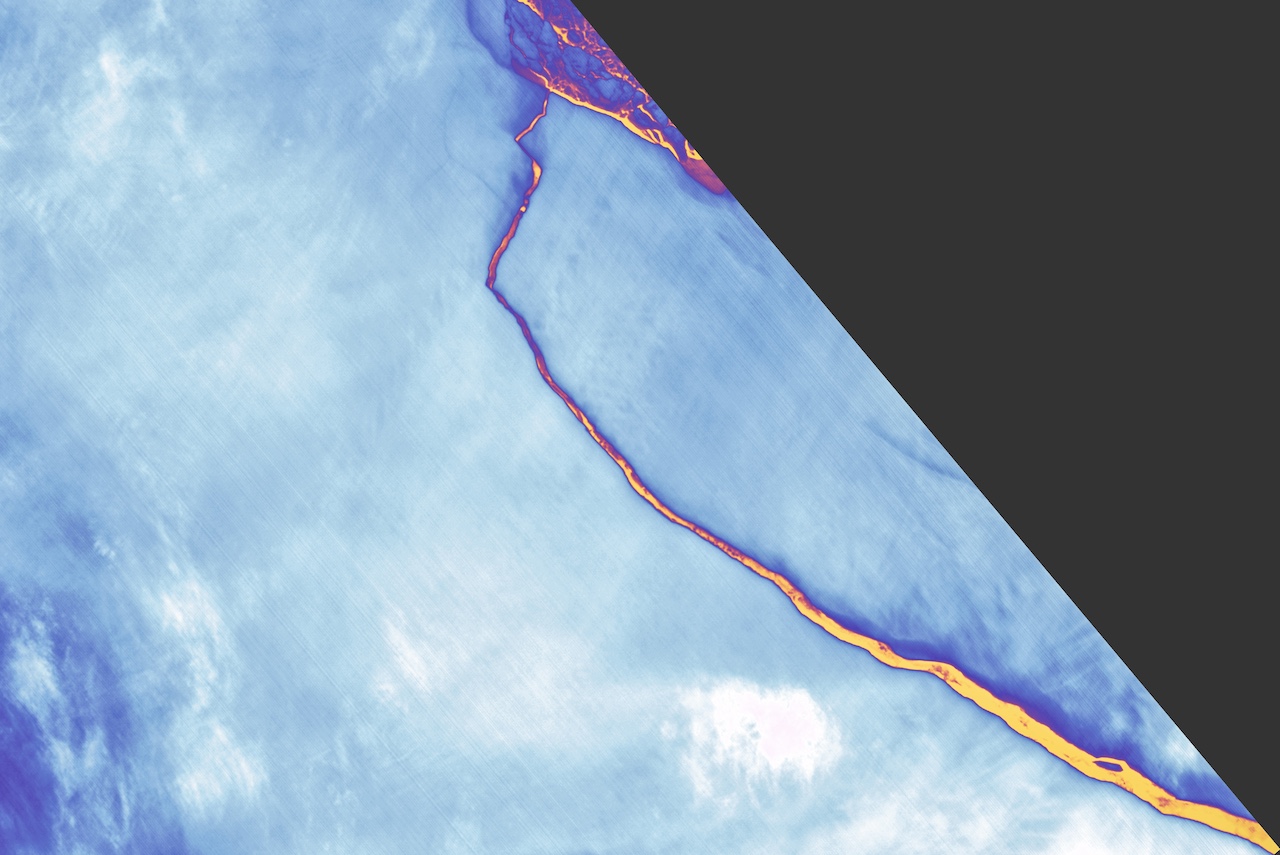
Satellite image of a massive iceberg breaking away from the Larsen C ice shelf in the eastern Antarctic Peninsula. The false-color image was captured by the Landsat 8 thermal infrared sensor in July 2017. Image credit: Joshua Stevens, NASA Earth Observatory, using Landsat data from the U.S. Geological Survey
I stand near Hope, the muskeg path falls steep and spongy to the rhythmic, slate waves of Turnagain Arm. Gold, not ice, is what originally situated the town’s two hundred residents at the Northern root of the Kenai mountains in 1896. Now locals may be pondering which is more precious, or maybe the current answer is still ‘C’, “tourists.”
The first-green of fragile ferns springs up over dirt-peppered gobs of crusted snowmelt along either side of the trail. In the still-frozen snap of early May, birch bark flakes paper-white against the greywacke sandstone and granodiorite. Black and white spruce limbs and needles twine, their winter-fixed dance now a spring still life. Farther up the mountainside, an unseen breath of cool air wavers through the dark boughs of Lutz spruce posts, scrawny and more solitary.
Hope and the rest of the Kenai Peninsula are divided from mainland Alaska by this choppy spume of Turnagain Arm. The watery arm is bounded by towering mountain ranges on either side—Chugach and Kenai. Seward Highway, one of the most scenic in the world, scratches its route out of Chugach bedrock on Turnagain Arm’s northern side. Standing on Turnagain’s southern shore, at the base of the Kenai Mountains, I look across the inlet.
The Cretaceous bulk of the Chugach, the parallel mountain range, sketches dark crags and cliffs into the northern horizon line as the contrast meets the dewy green iris of my eyes. Tall against the cerulean arc of the sky, the mountain’s ancient rocks remind me that I am young, barely twenty-one. Yet, I watch the world being born before me. Behind these mountains, small peaks protruded from blankets of fresh snow and ice like the breasts of rock Eves, nunataks, carved clean by this glacial ice. Creation isn’t finished here.
—–
Tenacious, tactless, and bursting with energy that can’t be contained in a somebody who’s seven, I was the kid who couldn’t be shut-down, shut-up, or put-out at a slumber party. Sticking my tongue through the enormous gap between my front teeth, I’d lay plans to stay up all night. First, I’d giggle raucously with my three other sleepover friends till ten. As the party started to die down, I’d begin the war if I could, two against two, two live-wires versus the two heavy-eyed and tired. Mercilessly I’d poke, prod, and pester our sleepy victims, sticking things up their noses and in their mouths, pelting them with jolly ranchers till midnight.
My co-terror would undoubtedly grow sleepy when I couldn’t dream up any more interesting battles to wage on the dreamers, and she’d drift off to dreamland herself. The war would wind down, and I’d remain alone and awake, watching creepy alien shows on the Sci-fi Channel. The living room floor seemed strewn with huge wriggling worms. Snoring seven-year-olds moaned and drooled and twisted into grotesque shapes which became part of the alien landscape all lit up by the TV’s fluorescent flicker. I’d be wide awake till dawn, and finally exhausted, fall asleep.
It’s this very same seven-year-old that Grandma Dorothy trots off with to Alaska in August of ’88 to visit her youngest son Bruce, and his family. Only Grandma didn’t just travel with one seven-year-old. That would have been too easy. Instead, she takes two. Flying on a jet-plane for the first time in our lives, my cousin Jenny and I can’t sit still for one moment of the five-hour flight. When we reach Anchorage, Alaska, we are reunited with a third cousin, seven-year-old Sarah. Grandma’s three babes. All girls, we were all born to Grandma in ’81 through her three sons—Ken, Floyd, Bruce.
It’s getting late, far past bedtime, probably nearing midnight Anchorage time. The three of us have been put to bed. I’m not tired. The black-out blinds in Sarah’s room, designed to keep out Alaska’s midnight sun, are framed in late summer light. To me, this isn’t night.
“Look, it’s not even dark,” I say.
“I know,” Jenny chimes.
“Does it ever get dark?” I ask Sarah.
“In the winter,” she replies.
We’re reading Charlie Brown comic books with a flashlight, trying to stifle our laughs with a pillow. One short comic strip makes us giggle till we’re red from burying our heads in the nylon folds of our sleeping bags. Charlie Brown and the gang are playing football. Charlie fumbles again and again, a complete failure, but Sarah, Jenny, and I don’t care. Realizing in retrospect that anything can be funny to three girls at age seven, it’s the one-liners that get us. This time it’s Linus. Holding his blanket and stumbling toward the fifty-yard line, he wants Charlie to pass him the ball. His arms raised high, his blanket trailing at his side, Linus yells, “Pass me the pig-skin, Sir!” Laughter grips our sides and cinches our lungs tight as we try desperately to snort air through our pillows. A floor above us, Sarah’s baby-sister Sophie starts to cry.
“Aw crap! We woke up Sophie,” I say.
Grandma’s voice shoots down the stair well, “Girls, go to bed.”
We’ve been caught, and our laughter dies. I settle into my sleeping bag, hoping for rest even though the light hasn’t died behind the blinds. The sun is still awake outside.
The next morning over breakfast, Uncle Bruce announces that we are all going to see Portage glacier. When the breakfast fiasco is done, we pile into their van and head out of Anchorage onto the Seward highway. We drive for a long child-time. Full-lunged, and over-dramatic, now we sing songs from all of our Broadway favorites. Then dissolve into rich peals of kid-laughter.
The incredible scenery passes unobserved by girls of seven who are content to chatter, giggle, and imagine with one another. Free from the van, we run headlong to the Visitor’s Center entrance in Portage Valley, unaware that with one glance toward the lake we could view the glacier face to face.
Inside, we are ushered into a movie theatre.
“What are we watching?” I whisper to Sarah.
“I don’t know,” she replies. The lights go dim.
“Quiet,” whispers Grandma.
The main screen cues and I read the title Voices from the Ice. The voice of the narrator begins its drone, and my eyelids threaten to become too heavy to rise. With a thundered, crumbling resound, an iceberg voices its descent from the glacier’s face and plunges toward the chunky melt water above the terminal moraine. I startle in my seat at the boom. Another massive chunk of ice calves off the front of the glacier and plummets into the lake. Now, fully awake, my senses are filled with wonder.
I ignore the commentary as the narrator’s monotone voice continues. Instead, I’m intent on watching Portage, one of over 600 named glaciers in Alaska, 30,000 estimated in total. These gargantuan ice mammoths gouge striations into rock, churn up sediment in track-like moraine. The scars left by the glacier remind me of the deep notches that appear in black pavement as cars scrape in and out of a parking lot entrance. Only these scars are not formed on soft blacktop but in granite bedrock as glaciers’ miles-thick arms of ice drag debris of all different sizes ranging from sediment, to pebbles, to boulders, on up to erratics– boulders the size of cars or small houses which glaciers ice-belt down mountainsides and across valley floors.
The camera pans from the expanse of snow across the ice field to a close-up shot of mesenchytraeus solifugus, a tiny indigo ice worm, as it wriggles through the structural holes in an individual ice crystal. What seems like a sterile chub of ice reveals life in microcosm.
I sit silent and still as the movie ends and the lights come up. The screen rises slowly to the ceiling, and the red curtain behind it parts. Real and a deep raw blue, Portage glacier rises from Portage Lake. The crystalline blue ice incongruously toes through pillowy gray skies. My breath fled. Before I know that glaciers are dying, with clean seven-year-old eyes, I am awed by ice for the first time.
—–
Encase: In Case by Megan Dickson
Melt me out, I’m not going to make it in this hostile environment
—–
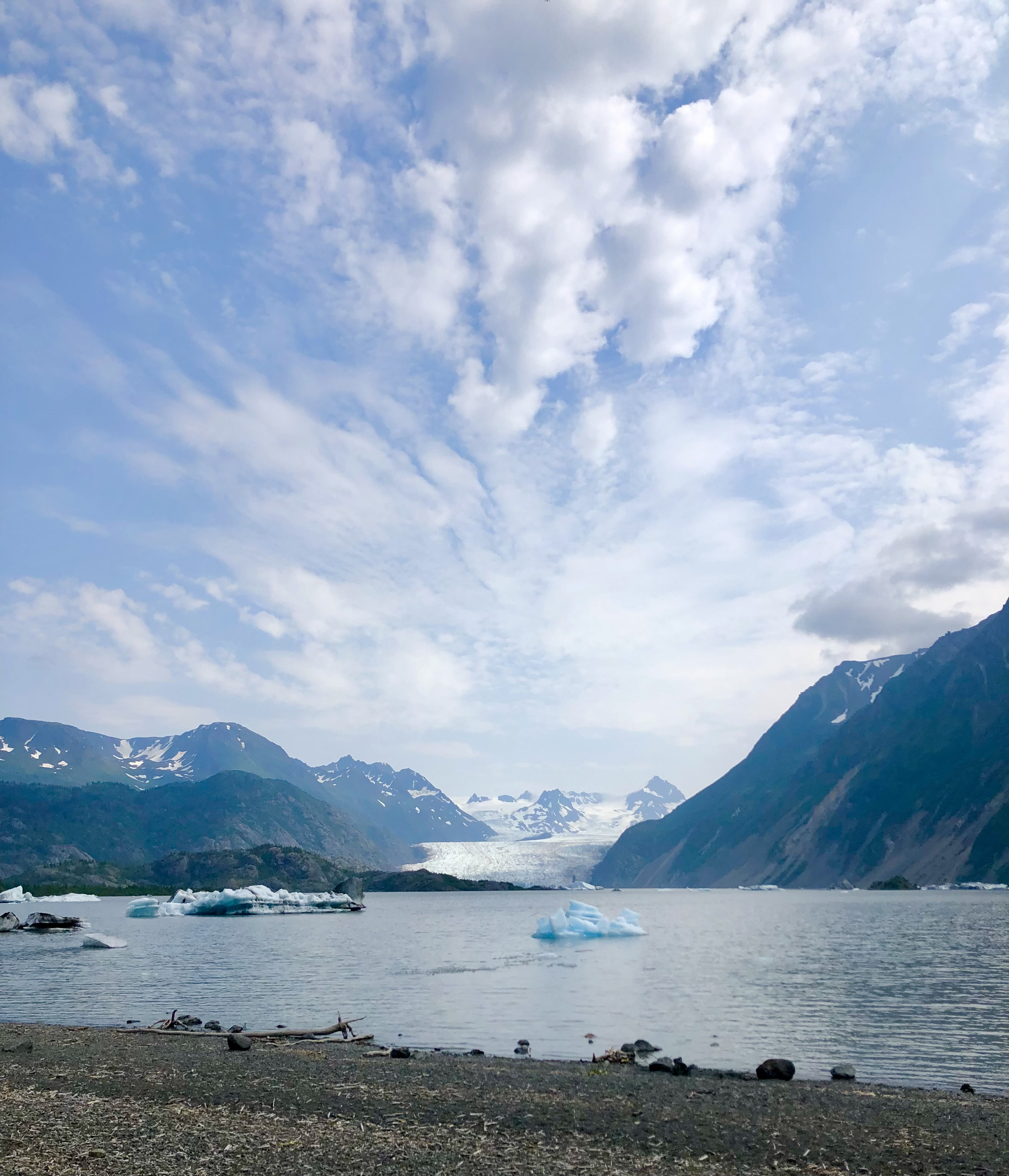
There my sons are, jumping into a glacial lake for the first time. Bodies all bare and ready for the shocking cold. Running down the rocky shore so as not to lose resolve, they squeal into the water like little seals, a little less lithely. It’s like an exclamation point inside me. Grewingk Glacier’s lake is the swimming hole today, in Kachemak Bay State Park, Kenai Peninsula.
I couldn’t have dreamed up a more exciting family adventure. We’re here to celebrate my cousin, Sophie’s wedding, and it’s the first of many firsts for my boys in the ways of ice. My seven-year-old son holds up a puppy-sized, crystal clear chunk of glacial ice. His expression, open-mouthed awe. Just like I felt thirty years ago. Everything in me feels dazzled, just utterly magiced. A day really can glow and glitter in memory forever. This is wild.
—–
*(This is the first in a set of braided essays about ice, glaciers, Alaska, love, loss, and what climate change looks like at human-level.)
Gerwingk Glacier, Kachemak Bay State Park, Homer, AK (July 2019). Image, my own.






 Refined + Rugged