Four little poems for your day. Happy, Merry sweet humans. xx MM
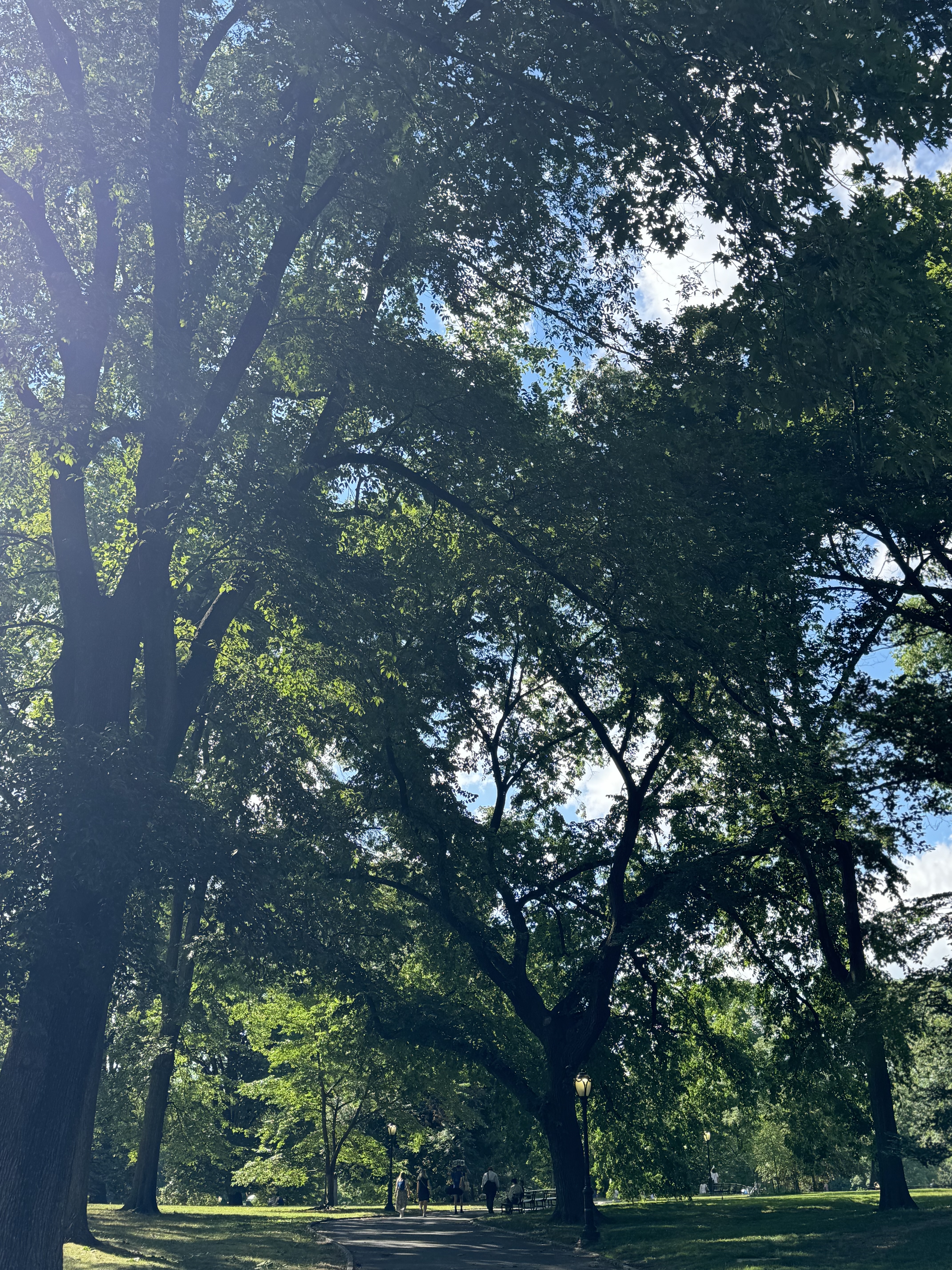
Central Park bathed in sunshine (June 2024).
….
Flow
flow can be the essence of knowing the power of prescience the smell of petrichor the smooth surface of an ocean tossed pebble, translucent amber the great wave of goodness but flow can also be the tumultuous spume, the glassy, wind-bereft waters, the deep, dark, depths the void, the unknowing don’t forget that flow has many ways and many waves
….
Into the Green
There are more words, expressions, descriptions of green in human language than are intoned for any other chroma
when you are draped in green golded and guilded in green it is completely obvious why this hue
green captures the eye grounds the heart breaths through the body as you realize that you’re respirating
at the same rate as the statuary oak next to you the ash is breathing out a sigh of joy, just as you do
The cottonwood leaves glittering green, making a magical cacophony of nearly silent whispers which crescendo into a forte of breezy, winsome refrains
aspen, largest living organism, holding ground in root and spear as they shiver and rattle in green all their own a sort of awe and wonder at once
alluring, regenerative, stable, steady, cholrophyllic music, all love-mixed whimsy and reality each leaf a hard-earned medallion, sign of life
….
Reverberation
It’s impossible to feel alone soaking in the reverberation of humanity ringing through the great halls of civilization. The echo. The sound. The deconstructed interplay of all those expressions and explications bouncing and bounding around in the domed, arched architecture. Dancing over the simulacra, art, massive and tiny, representative of nothing and everything. The absolute alacrity the beatific joy of each repercussive utterance. Jazz. A fusion of improvisational auditory stimuli. The resounding transcendence of humanity in the envelope of a space. Astonishing.
….
Tuesday
On a Tuesday in December Life will eventually present you with the fact that you have absolutely no answers not one
I don’t use that word lightly—fact
On a Tuesday in December, You’ll be opened wide by the love of the people who have offered you a life raft,
A golden, glittering net—a light, a torch.
You’ll come to the understanding, the conclusion, that life brings you many endings, many beginnings to teach you
that life has no end no beginning
it simply is this beautiful imperative this open, pulsing opportunity at love that you will never receive again, this moment this is it
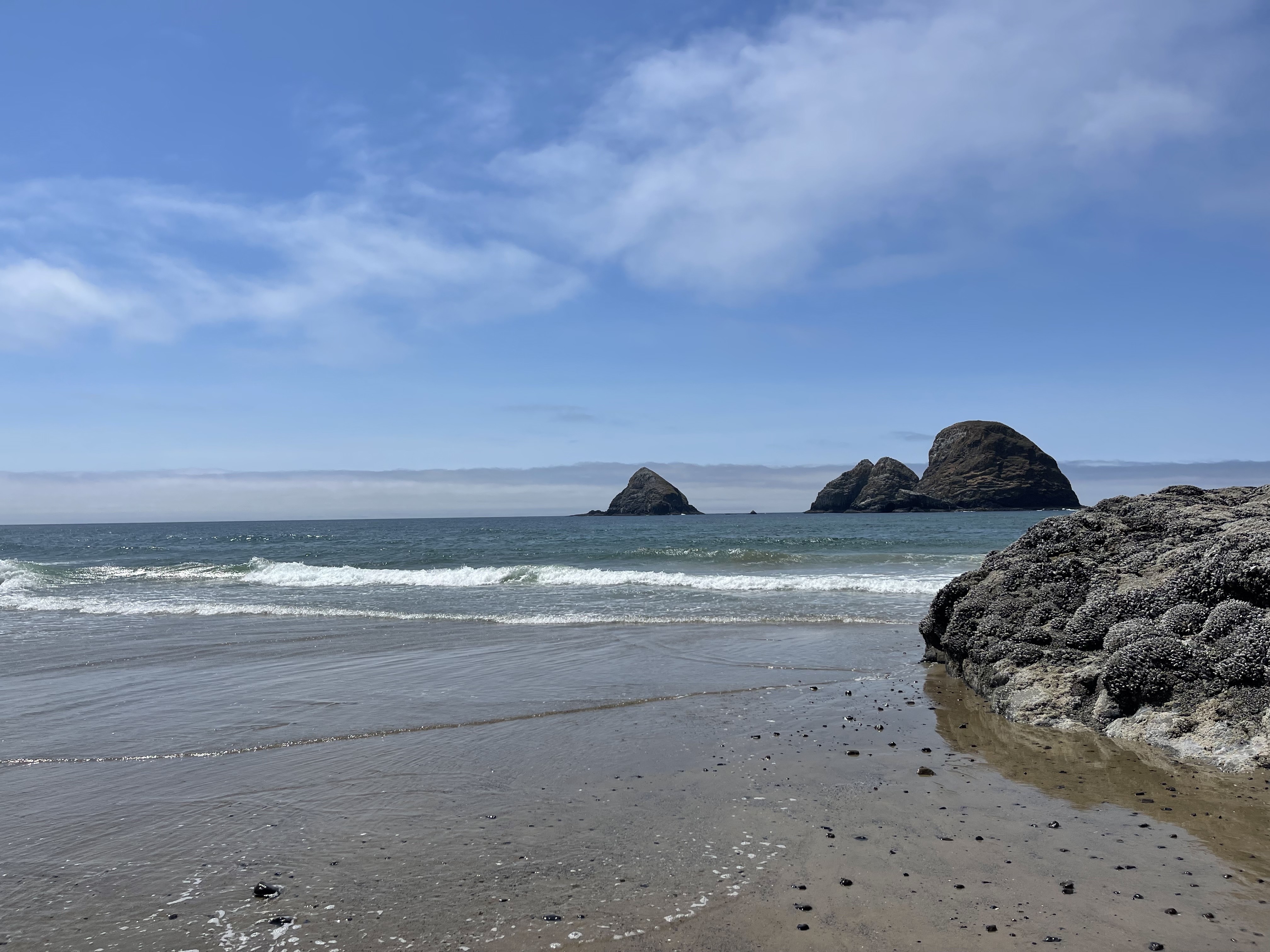
Oregon coast putting on a glorious show. (June 2023)
In the eleventh hour, your girlfriends come to hang the final doors in your soul.
They know it is your funeral, your wake. The death of so much you have built and known.
You know that’s how it will be when you die–literally– or you pray, or wish it to be so, women and men surrounding you.
Understanding you need to build this one last thing before this death, they come with drill bits, and toolboxes,
and dirty jokes, and Beyoncé ballads. You’re *Drunk in Love* together in the night.
They come with highly absorbent towels and borrowed vacuum cleaners because they know
you need to laugh and cry at the same time. They do the same. It’s no coincidence when
you look down at your watch, it’s eleven twenty. And then you clutch your heart as if you could offer it beating
out of your chest to show them how much this grand act of love matters.
In the eleventh hour, you call your guy-friend and desperately ask him for a recommendation for a plumber.
The upstairs faucet won’t stop leaking, like your eyes, broken, and you call him again when the plumber tells you the only fix
is to drill through the wall behind the tub to replace the valve. Your friend gives you the okay, and the world is made right for that moment.
Another friend, a man, gifts you a ring, a broken piece of turquoise healed with gold, Kintsugi. Mixing Urushi Laquier into your internal joinery.
Another tells you to drink the good wine and offers you a bottle to catch all the confusion, upset, anger, chaos, tumult, of these tender days.
Another wraps you up in Spring in Seattle. God-parent to your sons playing super-smash until dawn.
In the eleventh hour, your friends, who are no longer young spread the table with salmon and homemade spice chutney
for a feast to last through the wind. They don’t know you’ll go home to silently sob at their magic on the shower tiles.
Your girlfriend jumps on her bike to ride with you through the rainstorm, sunshine yellow cut-leaf balsam root punctuating each meadow.
The rain, the sun, the rich smell of the greening earth make you laugh with joy, woop with pleasure over the berms
Revel in the living of it as they’ve each given their day, their night, precious moments of their one precious life, to be with you, to cradle you,
to eat *Thunder Cake** and salty tears together. It will never be final or forgotten, this Gift. The fact that they knew
and understood the challenge and all stepped in with Windex and mops with arms outstretced
Ready to hold you as your once-life died and you were made anew. You, free entirely
-MM
“In the Eleventh Hour” has to do with ambiguous grief and the power of others to help heal us in our deepest darkness and pain. You see, our society honors and marks certain types of grief, specifically the death of a loved one. The death of a partner, parent, child, sibling, or close friend presents the mourner with its own unique fire, dragons, daemons, and oceans of grief. 🌊 But some griefs in our culture do not have specific metrics or physical markers. These bereavements may be losing someone to dementia, substance abuse disorders, divorce, familial estrangement, watching someone slip away in mental illness, or leaving our religion or faith origin. When someone dies, we generally mark their grave. But when someone miscarries a baby, we often don’t have ritual to mark that grief event. The same goes for things like childhood abuse. When you grow into an adult after this abuse, who is there to mark the unimaginable path you have trod out of the way you were treated by those who were meant to be your protectors not perpetrator(s) of your worst nightmare?
I’ve found that grief is holy, sacred even. Whether you experienced an ambiguous or more direct loss through death. Human opportunities to walk through the circles ⭕️ of life and death can both teach and strain the body, heart, and soul.
When I got divorced, I sat down with Google to see if a human really could die of a broken heart. 💔 That is how bereft, how torn and sad I was. And it turns out, yes, sure enough, you can die of a broken heart. Takotsubo cardiomyopathy syndrome is the term for this condition. Your heart, in essence, cannot withstand the excess adrenaline caused by a stressful grief-induced event.
All grief has the potential to break our hearts. But, in fact, not a lot of people literally die from this condition which means that a whole lot of people who have experienced deep, great, wide grief live to tell about it. One thing that saved me in my grief was the net of love, care, catching that my family and friends spread out under me and my family. “In the Eleventh Hour” details that love.
*So worth a read. Thunder Cake, by Patricia Polacco.
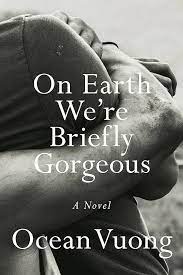
*Also important in this conversation, On Earth We’re Briefly Gorgeous, by Ocean Vuong.
The first rays of an orbital sunrise break through the Earth’s horizon. NASA iss066e099389 (Dec. 30, 2021)
Friends,
It’s certainly a gift that I feel I can use this moniker to describe each and every one of you. If you don’t feel like I’m your friend, will you please reserve that judgement for hallway talk? Or see me after class so that I can assure you of my care.
Here’s the thing, when you stepped through the doors of this classroom, somewhere around August 17th, 2023, I was already determined and committed to create a space where we can and could all safely explore concepts that require a fair amount of nuance and maturity.
But here is the other secret I happen to already have known: you have the prerequisites to be successful in this kind of open, thoughtful, argument-based inquiry and exploration. You see, everything, at its core, is an argument. Some arguments are petty—not worth engaging in. Some arguments are about cleaning toilets—your choice. But most arguments simply surround the differences of perspective, experience, and ways in which we’d like to control the world around us.
Now beyond argument, there is a field, and I’d like to call this field TRUTH. Many of the arguments we engage in as humans can be extrapolated into our desire to discover, uncover, find, know, and live in Truth. (Something I think is innate to our species.) And truth has taken a real beating in our society and culture as of late. As the information age and technological age have chaotically clashed and melded together, not unlike the birth of a new star, we have a constant stream of data that is both driven our way and so effortlessly accessible at the click of one key stroke or touch digit that we forget how far humanity has come on this examination of truth before you were even a gleam in your parent’s eyes. (You can google that idiom after class if you don’t know what I’m talking about.)
But if there is one thing I am certain of, it is that Truth with a capital T still exists. There is truth to be had and found in the world, and I hope that your research, your writing, your thinking and pondering on the subjects you have chosen this year (including your “self” in your personal narratives) have caused you to invest in this examination of the world with the intent to find truth. Don’t let the algorithm and the horrific car-crash videos you watch take that quest away from you. Don’t let AI rob you of the opportunity to figuratively bend the squishy matter we recognize as brain in coruscating synapses and ever-more lovely electrical exchanges of action-potential through your very own neurotransmitters. Use your sublime brain for your and humanity’s betterment. Promise me.
Things I have learned that don’t matter: being swoll or the hottest person in the room, being cool like above all comment because your persona gives off such a vibe or drip-and-smack that you are inaccessible (most of the time I’ve found that those who are “cool” often remain inaccessible to themselves); being “right”, this one is huge, and there is absolutely no honor in it. There isn’t one correct way to do things, and once you free yourself of this constraint you’ll live much more happily. And living too much in either retrospection—the nostalgia and glow of the past; or prospection—the lust and thirst for a future that hasn’t happened yet.
Live, my beautiful friends, with your eyes wide open in wonder. Live with your arms thrown apart ready to receive both the pain and the joy that life will bring you. Live so that you are constantly, even doggedly, learning more and evolving as a human every. single. day. Live the questions. (That’s Rilke. You can look it up, too.)
Now it’s all well and fine for me to offer you this “advice” but please don’t think I can even live the half of it myself. However, I’ve also learned that the more you practice these modes of living right here, right now, being present, sitting in the packet of time you’re fixed to and watching the experience unfold as you settle in– allowing you to determine how you can love more, reciprocate better, and evolve with grace, and seek that capital T truth– the better off you’ll be. In fact, the some of the best advice I’ve ever received comes from Lori McKenna’s song “Humble and Kind” from her album The Bird and the Riffle. (Also covered by Tim McGraw who is a little more famous.) She reminds, “When you get where you’re going, turn right back around. And help the next one in line. Always be humble and kind.” And then, just like that (snap), it’s gone. And you are moving on to the next moment, episode, or lesson that life offers.
Nothing can make a human feel more small and insignificant that taking just a moment to ponder on the infinite. Or the eventual dissolution of the infinite into entropy (still infinite, I believe). As the physicist and writer Alan Lightman, in his book, The Transcendent Brain, describes, “I believe that the spiritual experiences we have can arise from atoms and molecules. At the same time, some of these experiences, and certainly their very personal and subjective nature, cannot be fully understood in terms of atoms and molecules. I believe in the laws of chemistry and biology and physics — in fact, as a scientist I much admire those laws — but I don’t think they capture, or can capture, the first-person experience of making eye contact with wild animals and similar transcendent moments. Some human experiences are simply not reducible to zeros and ones.” There simply isn’t an algorithm that can capture the human experience.
One day this will all be gone, we will all be gone. Just like Macklemore says in his song (“Excavate”, Gemini). And there will be some kid in the hallways of Wasatch High School, like L. Daines who is looking for herself or himself in the sound of her/his music (also Macklemore), “Because music is a mirror…” Let’s not make our eventual death the reason we live. Instead, let’s live between these two great mysteries within whatever searing, glittering moments we’re presented with. And then turn and give our help, our hands, our brains, and our hearts to those other humans around us who make OUR world go round. That’s it. I think.
Once upon a time, I sat at the California Academy of Sciences in their astronomy hall underneath a false sky filled with tiny pin-prick light bulbs made to resemble stars, and listened to the smooth baritone of Tom Hanks narrate something like the advent of the Universe as though it was a nighttime story. Goodnight Moon, but better. When the camera moved from focus on our Milky Way Galaxy to an increasingly anamorphic lens, I, and the rest of the audience, could see that galaxy after galaxy after galaxy after galaxy… it really did appear to go on forever, infinitely.
Just like those galaxies, star upon infinite star, there are so many things that go into making up one single human person. The innumerable number of atoms, the constantly functioning systems. Just breathing, for heaven sakes, takes… do we know how many systems are engaged in one human breath? None of this has to matter to you. But I do hope that you’ll continue to put your best brain forward in every moment, every breath you are part of.
Today is one ending. You’re leaving, you’re out of here. But tomorrow, a new day will dawn. You’ll have the chance to gaze upon another sunrise. And if you’re not into that, to watch the death of another day as dusk moves us into night. Beautiful, either way. A new moment will rise, and you’ll be given opportunity after opportunity to make the most of your life. I hope you’ll take and treasure each one.
And when you realize that you’re rushing on, your attention is whacky and divided, or you’ve gotten trapped outside yourself and the road is dark and the path is winding, and you don’t know the way home, I hope you’ll consider thinking about the way/ways you can share your gifts with others to reorient your true heart. So I’m going to leave you with this poem. A gift from my true heart to yours. Don’t forget that for each end, there certainly is a new now. A gift of beginning.
The End From the Beginning
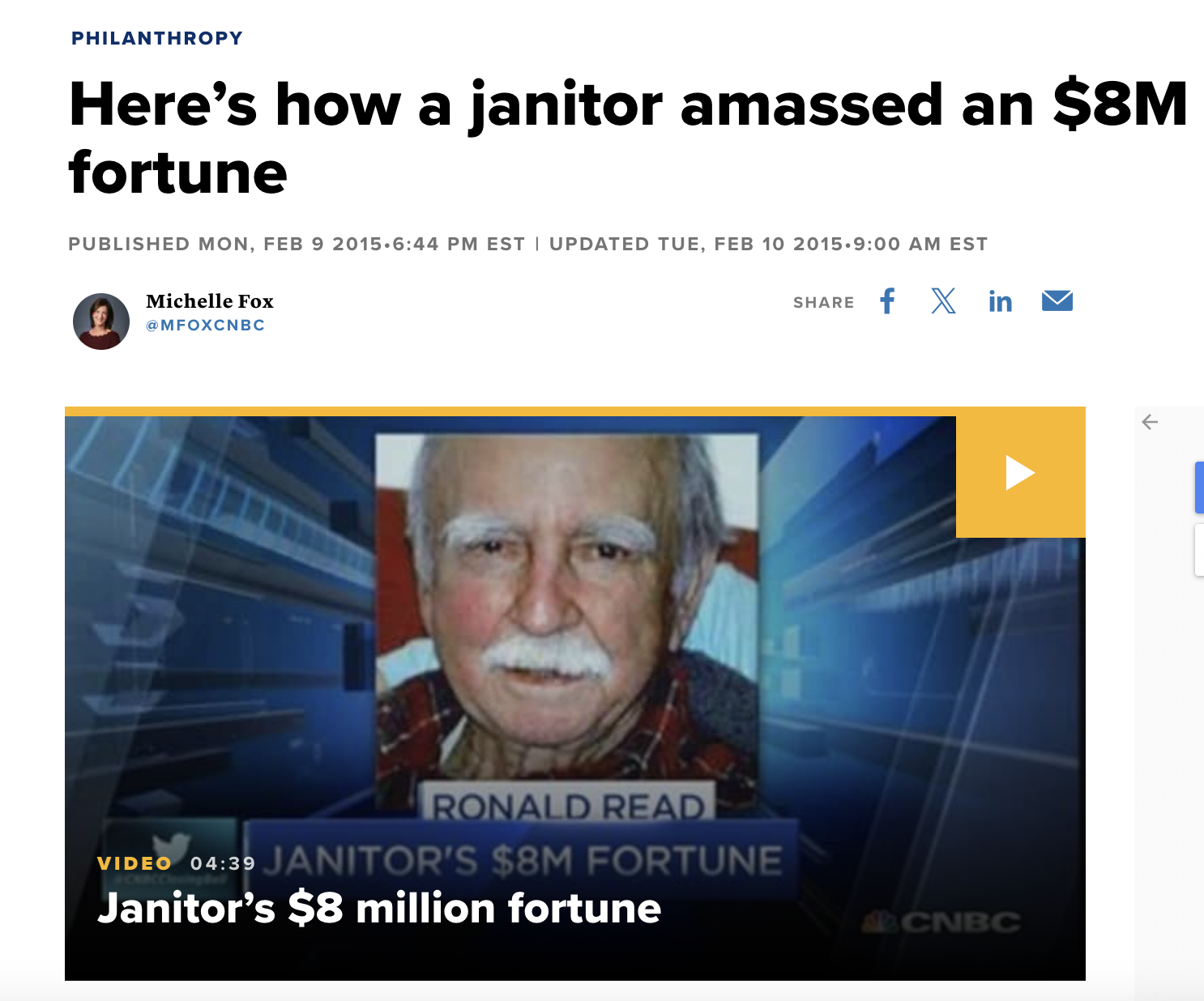
Endings, they definitely aren’t my favorite. A bird in the hand… they claim. I’m better if some things never change. A feather in a vacuum, only acted on by gravity Falls as fast as anything. This fundamental of physics makes my head spin. Like that janitor who left all of his fortune to the library where he shined the broken tiles day-in and day-out. Here. Now.
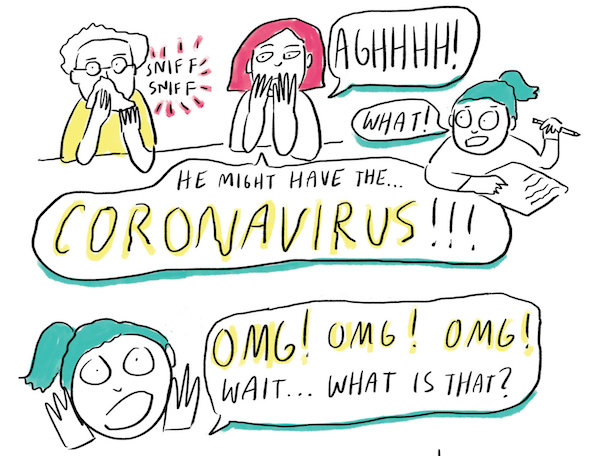
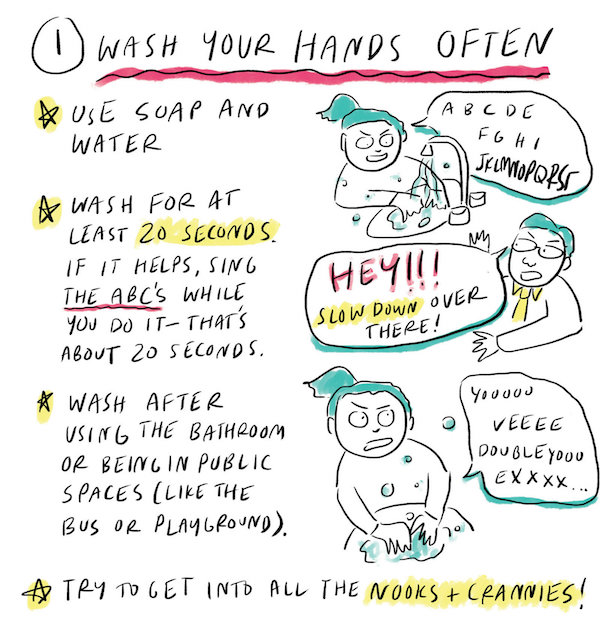
Malaka Gharib of the NPR blog Goats and Soda has created a comic that explains COVID-19 in simple terms for children. Gharib is the creator of I Was Their American Dream, a graphic memoir about her upbringing as an immigrant with parents from Egypt and the Philippines; the book was chosen as one of SLJ’s Best Graphic Novels of 2019.
The day came. Quietly, unlooked for, relatively unannounced—at least not preemptively announced at my High School. I left school on a Friday afternoon in March, set to pick up sick-work for my own elementary school student at his school. (No, he didn’t have SARS Co-V2. He had strep throat.) As I pulled into Midway elementary, my husband called, “Did you see the text from the school district?” he asked. “Nope,” was my brief reply.
“They’ve instructed elementary students to take their devices home this weekend,” he explained. “Ah, good to know. I’m here at the school now, and I can pick up both devices for the boys,” I returned. “I’ll call you back in 15 minutes, okay?” And that was the beginning of the new reality which most of us face.
Thirty minutes later our Governor announced a “soft-closure” of school. Two weeks later, a May 1st extension, and after two more weeks, it was announced that our schools will be closed for the rest of the school year.
We—the community, the parents, the teachers, the students, the administrators, the staff, individual states, the nation—let each new wave of distance sink in. (While some were desperately unable to gain distance because of their circumstances, and I’ll address this harsh reality later.) But sometimes the tide has risen so quickly, as each new day dawns on our brave new world of online schooling, we’re still caught off-guard, brought to turmoil, left (some) in tears.
For those of you who are struggling—and, yes, I’m pretty sure I’m speaking to a universal WE—TAKE HEART! I know that this road has been constantly changing, ever updating, inundated with crashing breaker upon crashing breaker of the new, the not-normal, the unknown. Yes, it has felt like a dystopian reality has been thrust upon many of us; and yes, I understand that holding the education of your own children in your own purview has got to be scary.
I spent the entire first weekend after the school closure working. When I say working, I mean that I put in two solid twelve-hour days. Scouring my lesson plans, shifting my expectations, creating a video welcome, expeditiously scanning text into PDF, drafting a parent email, assuring my students that their current assignments were still due, grading my current assignment load, and scrupulously re-designing my instructional rubric to fit our new reality—online schooling.
I’m a teacher. I share this not because you didn’t read the last paragraph where I explained all of the hard work and effort that went into shifting my classes to online models, but because I want you to understand that I feel you, parents, when you describe the hardship of schooling all of your people at home. Wednesday of the following week I entered upon an educational arena that I will hence forth and forever refer to as “The Rodeo.” We’re god-fearing cow and sheep folk here where I live, and I can only describe that those first few days of EVERYONE online, everyone collapsed into one space, one classroom, one life was a POOP-SHOW to behold.
My husband on a conference call with the East-coast. Myself on a Zoom meeting with my teaching team. My sons on a host of platforms, apps, and technological learning tools that left my head spinning, and my heart overflowing with passwords that I hopelessly cast into the soft-shod muck of my working memory.
Holy cow. We were failing. We were failing, and we were going to fail. It took my breath away. This instant shift, and equally instant knowledge– that while I felt aptly, even confidently, prepared to transition (with a 24 hours-worth of weekend-work) to teach eleventh graders both the art and science of reading, writing, speaking, and thinking with the flip of a switch– my own little family, my own pride-and-joy, my own little think tank was going to fall flat on its face in the mutton-busting, teeth brown with animal crap and tears, and there was nothing I could do about it!
Then Thursday dawned, and we were all okay. The kinks were there. You better believe there were kinks, and still are some. But we began to piece together our new reality. My second grader, who is bright, and silly, and a handful to be around for eight hours at a stretch, was completely overwhelmed just to see the “to-do” list his teachers posted. “Thirteen pages of math, MOM!” he yelled. As I tried to explain that those 13 pages were really just slides– on a Power Point, or a Nearpod, or a … you fill in blank with the app your student is using to ingest and then submit work—which meant that there were only THIRTEEN PROBLEMS. In total. Much less than he had done for his homework the week before.
So it has gone in our home. Sometimes we are able to re-visualize, re-imagine, re-calibrate our thinking about school. We’re riding high and feeling the adrenaline of success for every one of those eight seconds. My oldest son has quietly gone about his work, day-in and day-out, nary a hiccup. But we had some good old-fashioned ride-the-bull sessions when he couldn’t explain to me why his work was left “unsubmitted” on some of his assignments. We’re working it out. Sometimes we still get bucked off the bull.
But it is also very obvious to me that my children’s teachers got the news about school closures, went out to their own virtual rodeo arenas, got on the saddle bronc assigned to them, and WENT. TO. TOWN! (Go Wranglers!) We came back, to online school, to a system that was ready to deliver learning– targeted, essential learning– to each of my children in practically the eight seconds it takes to ride a saddle bronc. The execution, the preparedness, the effort, the instructional stability, the stamina, and the standards were astounding. Their style, their grace, their precise timing was everything. My children weren’t going to sit out this pandemic twiddling their thumbs. They were going to be learning. Truly gaining in knowledge, education, and standards-based instruction for their grade-level. It was and IS remarkable.
I also want parents, students, community members, and administrators to know that MY STUDENTS ARE SHOWING UP! My students are here. They are in their classrooms. Some of them in record displays of participation. It is so easy to give High School students a bad rap. To label them with some derogatory generational disparagement. But I want you to know that my students have been there for me as much as I have been there for them. They are writing, they are reading, they are thinking, they are responding to online discussions, and submitting FlipGrids full of poems, and rocking this brave new world in a way that I could not possibly have imagined.
This online learning platform IS accessible, IS relevant, IS possible, IS working. And, no, in my opinion, it is not the best there is to offer. I am an eternal advocate for the face-to-face classroom. I love the people. There will always be outliers. There will be those whose situations, livelihoods, family environments, and living situations have been thrown into such chaos by this change that they will not be able to either succeed or survive in this online learning platform. We should begin to plan for their recovery now. How will we offer make-up credit, re-teaching, re-assessment, and re-vitalization of those whose educational opportunities really did go down the tube when social distancing became a reality.
But above all, I want us to remember, and I believe that this moment in education has re-taught us, the incredible resiliency of the human spirit. We are all experiencing this rodeo together and yet separately. Almost all lived human experiences are like that—individual and collective. My hope is that we’ll continue to reach out with that human spirit of support and core care. I hope we will ban together in care and community-interest not just blast our latest emotion into the social media echo chamber. But take up the banner of education because it is one that we all must bear. Here’s to that next great ride of Old Glory around the rodeo arena in real-time. As the horse picks up speed, and the wind takes that banner of freedom into endless ripples of hard work, good will, and committed effort, may we remember learning and pedagogy are built upon the backs of those educational bronc riders—past, present, and future. You’re one of them now. We are all in this together.
I’ve wanted to write a New Year, 2019, post all January. I want to talk about what I am pledging to do with my time this year, and I want to find out what you have set as your goals or resolutions for 2019. I am realizing that there are many reasons that folks don’t subscribe to the January goal setting frenzy, but I think that because it’s my birthday month I feel additionally on-board with the resolution setting set.
If you abhor resolutions that center around an arbitrary date of the year you may consider this post alternatively titled “Lessons from Dedicating 30 Days to Yoga.” You see, I began this year with many intentions– like bringing more peace and patience into my life, and renewing my commitment to not buying new things. For reference, that didn’t really work out for me as a year-long endeavor. Mostly because I came to the project grossly underprepared to support myself. More on that later.
But this year, I am still evaluating and cornering my spending habits, I’m still seeking to be a parent that speaks more peace to my children, and I’m still trying to be a human that is more patient with her fellow humans at large– in the classroom, on the road, at the grocery store, on the news, and on and on.
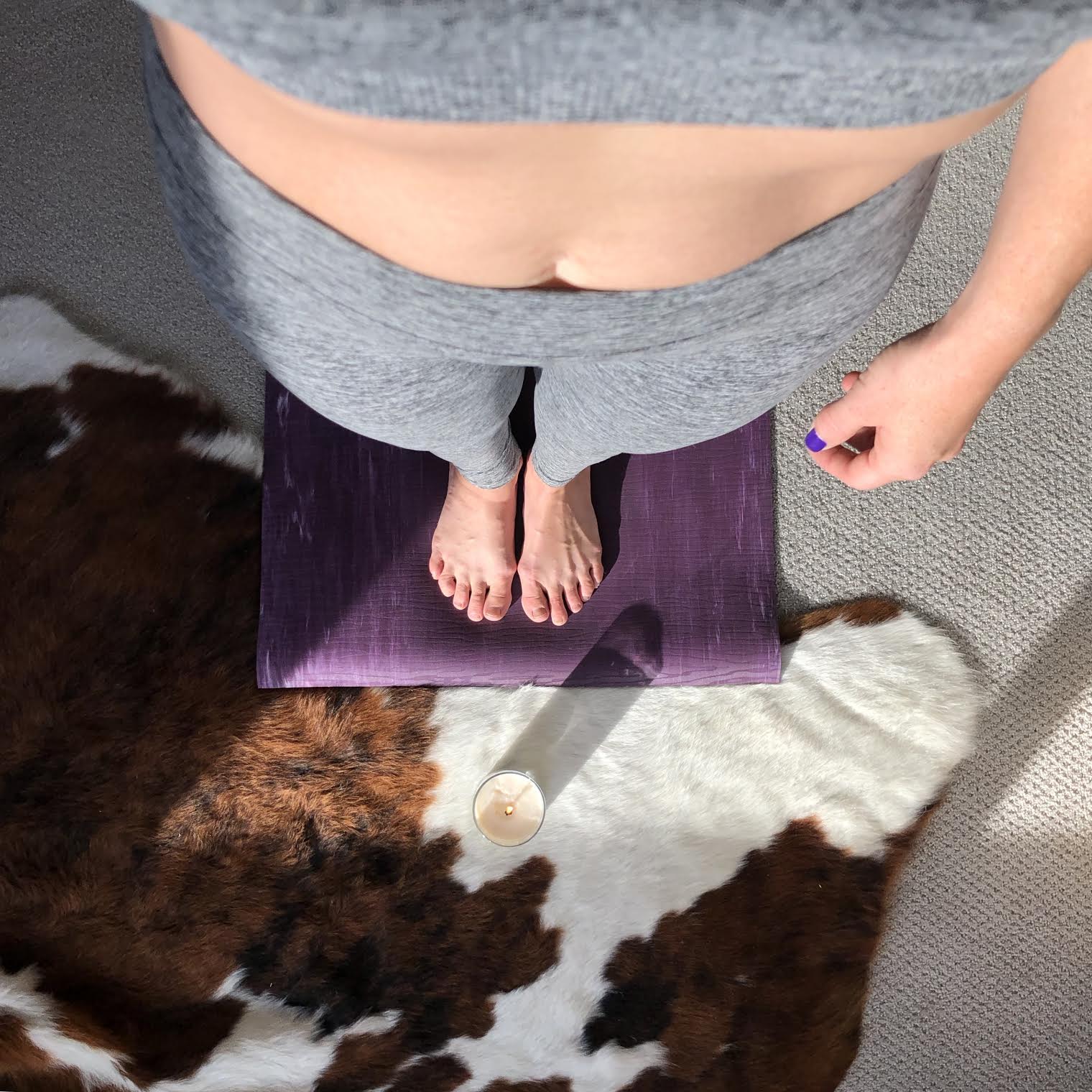
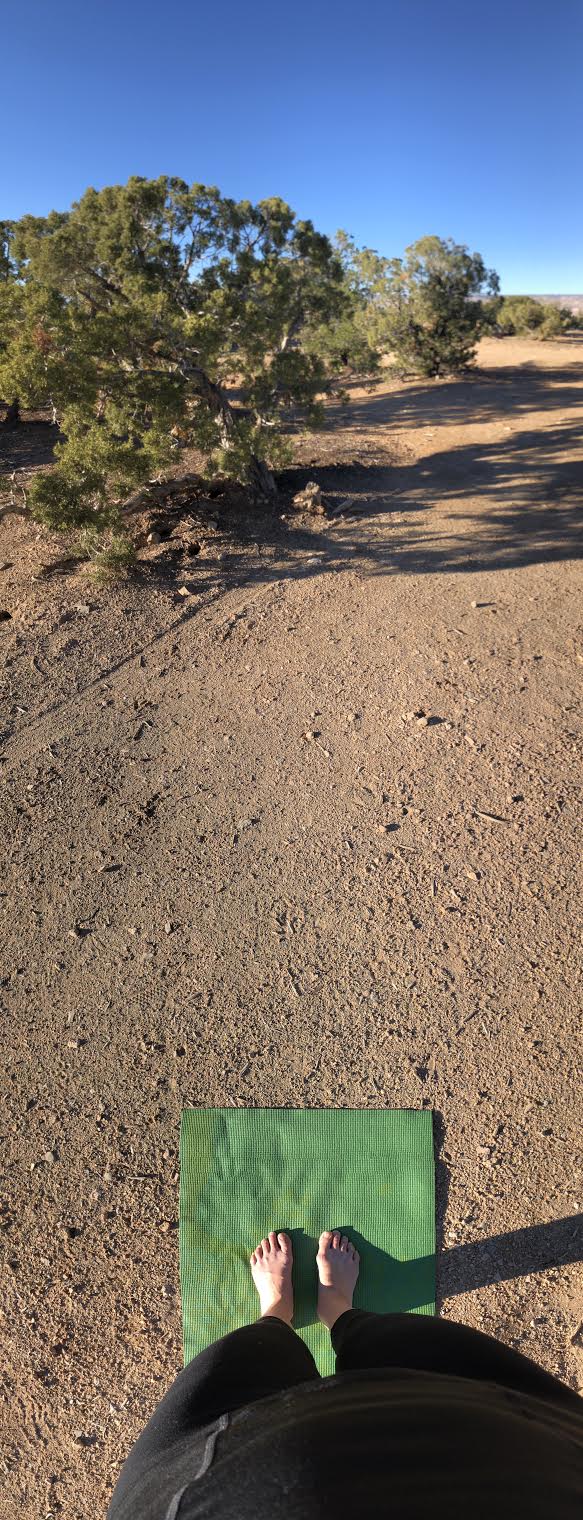
Instead of putting immense pressure on myself to be all that I wanted to be on January 1, I decided that I would first engage in a yoga practice that lasts the entire month of January. This was one of the best moves I’ve made in terms of beginning a New Year, and I hope I’ll remember how cleansing, enlightening, grounding, and opening this journey has been.
One of these personal revelations is a two-part story with yet another alternative post title: “The difference between being hard on yourself and kind to yourself (even honest with yourself) is not that you need to stop being too easy on yourself.”
Allow me to explain. Four nights ago I was doing Adriene’s (Yoga with Adriene) Dedicate 30 Day Yoga Journey. Nearing the end of her practice we were lying in a final Shavasana. The practice had been about sweetness and Adrienne was saying, “Sometimes it’s not only about WHAT we do but HOW we do it. Consider that.” Now this is an idea that I subscribe to. We should all think about what we are doing. Why we are doing it, how we are doing it are keys to the ‘what’. Adriene went on, “Are you more in the habit of being hard on yourself or can you get more in the habit…”
My video stopped streaming at this exact moment. And I was left trying to figure out what Adriene was going to say next. The truth is that when I finished her statement the only thing that I could come up with was, “Or are you in habit of being too easy on yourself. Do you need to push yourself harder?” In other words, do you cut yourself a break too often, are you lazy, apathetic, flawed? And on and on and on with the self-denigrating comments. I was ready to get on the wagon and stone myself for being a push over. Why didn’t I see that this was the same thing as being TOO HARD ON MYSELF?
My video eventually reloaded and Adriene said, “Are you more in the habit of being hard on yourself, or can you get more in the habit of finding practices that help you, get you, in the habit of being sweet to yourself. EVEN WHEN YOU MESS UP.”
Stunned silence from my mat.
Can you be kind to yourself? Even when you mess up? Can you? Can I?
This brings me to my next story. Hang with me here. There was once a girl who couldn’t spell. That girl was me, I’m still that girl. And I don’t know when I began to believe or it was pointed out to me that I could not spell. (I hope at this point you are already seeing the irony of this reality as I am an English teacher. An English teacher who can’t spell.) Apparently, not even being a school Spelling Bee champion served to solve this self-image notion.
But this not-being-able-to-spell thing has been something that has haunted me for my entire life. Not just academically, but not being able to spell became something of a self-forecast for all of my failings, all the stuff I couldn’t do. It became a sign that I wasn’t cut out for success.
Well from this girl– me– came a sweet little boy– P. As it turns out, he showed some of the same phonetic unawareness that his mom had/has. That mom– me– told this little boy– my son– that he “could not spell.” Just like that, “You can’t spell.” Just like I had been told.
Now I tried to forecast some solutions to this problem by explaining that he could memorize words and thereby overcome his failing. “We can’t spell.” I kept telling him, like we were rowing this boat called “Can’t Spell” together. Fast forward to Parent-Teacher-Student conferences 2019.
As we concluded our meeting, my son’s sweet teacher asked if I had any questions for her and I felt that this would be a great time to bring up the spelling thing. I explained, “I can’t spell. And I’m worried that this might be the case for my son. It appears that he doesn’t have phonetic awareness.”
His teacher stoped me in my tracks and said, “Oh! That sounds just like me! Your son can spell, he just needs to practice with different variations of each phonemic pairing. It wasn’t until I was a teacher that I realized there were certain vowels and sounds that were patterned through language. But you know what? (She turns to my son.) For every one of these patterns there are times when the rules apply and there are times when the English language breaks those rules! You CAN spell!” She declared with certainty.
Just like that. “YOU CAN SPELL!” With all of the vigor and certainty of a seasoned educator who knows that as she bolsters students to believe in themselves they will fulfill those prophecies and SPELL.
I was stunned into silence again. Here I had been telling myself (for years) that I couldn’t spell. I had been telling my son that he couldn’t spell. I had been practicing this can’t over and over and over. My son’s teacher continued, “The wonderful thing about spelling is that you do need to memorize how to spell words. Once you can recognize different patterns like ‘r’ controlled vowels– er, ur, ir, or– then you can begin to memorize which words use which patterns.”
I nearly fell off my chair. More than that, I was ashamed for telling my boy that he couldn’t, that he didn’t, that he wasn’t able to. Nothing better than strapping yourself to your failings and then just clinging to them! In that moment I remembered my yoga, the moment that I was so certain that my instructor was going to tell me that perhaps if yoga wasn’t working for me or working a change on or in me I was being too easy on myself.
I realized that I am constantly falling into this belief that if I will just push harder, do more, press into my present with more resolve, then– and only then– will I come out conqueror. But in those moments, on that mat and in that classroom, I realized that I need to be a whole lot kinder to myself and to those around me.
You, my beautiful friend, thank you for reading this post. I’m learning, slowly and steadily, to pass on the power of believing in yourself to my kids and to my deeper self. You, me, we all need to be more kind to ourselves. Happy 2019!


 Refined + Rugged