Hope (and Ice)

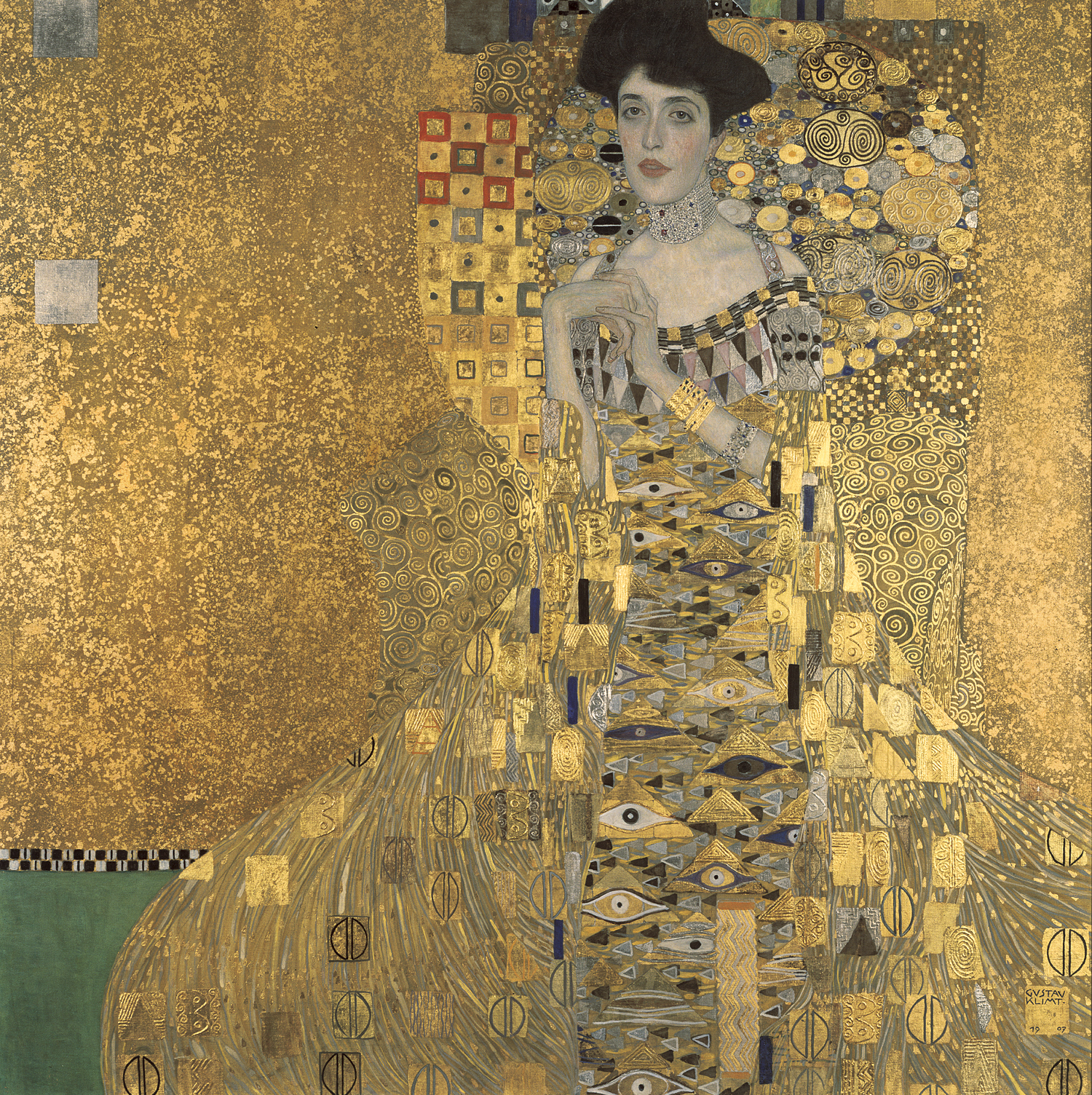
Portrait of Adele Bloch-Bauer I , 1907; Gustav Klimt; Oil, gold, and silver on canvas
Neue Galerie, New York

The Matriarch, Grandma Dorothy dressed in a gold lamé housecoat each year for Thanksgiving dinner. The table, set with rose china, was laid out long in her small basement apartment. Poised and gracious in her kingdom, she sat at the head of the table and smiled at each child and grandchild as we voiced gratitude for our blessings. She, in turn, gave thanks for “all of you.” 

Regal, despite the crippling arthritis which attacked her bony sylph of a body, she held herself with an aristocratic air. Her back stayed straight with practiced posture through two total knee replacements, three husbands, four births, and five decades of single motherhood. Her studied gait had slowed, but still kept its polished flow from her days at the Presbyterian Girls School in Missoula, Montana, where Bertha Harriett, her mother, had insisted her only daughter be enrolled.

Dorothy’s hands gave one clue to her impatient internal pace; slender, knuckley, and nubbed, they were never still whether fluttering in her lap, tapping the tabletop, or brushing out a rhythm on her thigh. Another clue to her core came from her eyes. Bright and clear, her hazel eyes couldn’t hide all her knowing. They blinked and batted, magnified behind her glasses which earned her the nickname Granny-Bird. Beyond the constant pain of fibromyalgia which inflamed all her soft tissue, my grandmother carried the wit and wisdom that only a lifetime of studied learning can teach and only a sage can repeat.

“I just ache all over,” she explained.

When I was twenty-three and she was seventy-nine, she was diagnosed with lupus. In near-constant pain, I drove her an hour to her primary care physician. She said to the doctor seriously, “Fix me.” Holding her hands outstretched as if in child’s pose, palms up, in release and submission to the pain, in hope for healing. Then looked him piercingly in the eye until he admitted with a stutter that none of her ailments had a cure, a salve.

There was no fix, no hope. Regaining his composure, he whispered to her quietly, “We are a horse and we are a rider. The horse grows old, tired and pained; the rider is young forever.” So, she continued to wince and sigh in her sleep and persisted in walking slowly, majestically enough so the burden wouldn’t show much.

—–

—–

No longer seven, Holland America Line Westours brought me back to Alaska in 2000 as a nineteen-year-old tour director. My job was to guide tour groups ranging in size from twenty to fifty people on nine-day land tours between Anchorage and Skagway, Alaska. The distance covered on each tour was somewhere around 812 miles, 1,624 round trip. 

During the second week in May, the tour director trainees converged on the Anchorage Hilton. I’d never been a room with so many extroverts. The uniform for that year was khakis and red shirts, and the majority of our training as tour directors consisted not of classroom instruction, but taking the actual tours that our guests would take when they arrived in Alaska.

A typical first day in a Holland America cruise-tour package included a stop at the Alaska Native Heritage Center, a brief city tour, followed by a trip out to Portage Glacier. Our fifty-five-passenger motor coach ferried the group the forty-five miles or so to the Visitor’s Center. There is no better way to see Alaska than from the windows of a motor coach. Greyline, Holland America, claimed the window had been engineered by Kodak, and I thrilled as I gazed on Alaska for the second time. 

Twelve years of nostalgia struck as we reached the Visitor’s Center, and I hurried off the bus into the building without a glance toward Portage Lake. Though I was now nineteen, it was as if I was there for the first time. With the other tour directors, I took a seat in the theater for Voices from the Ice. I was excited for my companions; I thought I knew the finale.

The movie ended, the screen rose, the curtain parted, and behold… a lake. There was no glacial face, no snout. No grand finale. No blue terminus of ice to awe at. Nothing but a dingy, mud-gray, motionless lake, dotted with giant melting ice cubes.

—–

—–

Skagway became Alaska’s first incorporated city on June 28, 1900, boasting 3,117 residents. The population has fallen steadily ever since, and the 862 year round residents remain set at sea level at the mouth of the Lynn Canal, the deepest fjord in North America. The “Gateway to the goldfields!” continues to be Skagway’s modern claim to renown. The famous picture of gold miners and fortune finders treacherously clambering over the “Golden Staircase”, grand piano included, is set right outside of Skagway in the now non-existent town of Dyea.

The land surrounding Skagway rises abruptly from the ocean with White Pass Summit hitting 3,292 feet just 37 miles North of town into sub-arctic alpine tundra, think scrawny, wind and ice-bitten trees and tiny kettle lakes. But Skagway City’s climate is temperate coastal rain forest, think lush top-soil and muskeg, thick fern foliage, and dense forests just outside city limits.

 I run. Chugging South down the Klondike Highway into the town of Skagway, I keep my eyes trained on Harding Glacier. This small hanging glacier, nestled in the armpit of Harding peak across Taiya Inlet from Skagway, has almost melted out of existence over my five summers in Alaska. Alarms sound off through my senses, as my feet scud over old glacial silt which lies alongside the road, “Fire!” Watching the midnight sun rise hotter and hotter in the Northern sky each summer has fueled my fear. 

Finishing my run, I stand sweating, in ninety-degree heat on Broadway’s boardwalk, the main drag in downtown Skagway. This heat just isn’t quite right. A mere four blocks wide twenty-three blocks long, tourists clog every artery of Skagway’s downtown district, weaving in and out of open store doors, gawking through shop windows. Down at the docks there’s only parallel parking for mammoth cruise ships that pull-in and drop their load of 3,200 passengers per boat, per day.

With five berths, the math is easy, these ships can release 16,000 people or more into town on any given summer day. None of them seem too concerned about the fate of Harding Glacier or the Juneau Ice Field. I see the signs of glacial recession everywhere. What should we do? Imagination plays a “what if” video clip: I turn to the man in the green fishing vest and dockers khaki shorts standing next to me on the boardwalk. He’s quickly licking the myriad of drips from a pecan praline double cone he just purchased from Kone Kompany, held tightly in his fist.

In my imagination, I unload, “Sir, I know you’re on vacation” I pull out my imaginary microphone, begin diplomatically, “but does this heat scare you? You know, we’re in Alaska, the North country? Do you believe in global warming? Does it look to you as if this blue ice is a bit uncomfortable in this unbearable heat? Look, everything is melting, you, me, your ice cream cone, the glacial ice. Which boat did you come in on, the Diamond Princess, Empress of the Seas, the Volendam, Carnival Spirit? Did you enjoy awing all the way up the Lynn Canal this morning from your deck chair at the blue ice hung across the shoulders of the Chilkat and Coast Mountains?  Nature dressed up just for you, sir. Do you want your grandchildren to be able to see what you saw? I really want my children to experience Alaska the way I did, glaciers and all. What should we do?” 

There it is.  Even though the scene played out in my mind instead of in real-time, I feel better. Sounding the global warming alarm. It’s not a him thing, or a me thing, it’s a we thing. Which doesn’t make the situation of Arctic warming any better, but it sure does make me feel a whole lot better to pass the blame on to the guy in the flop-backed fishing hat, or at least share it with him.

—–

Grandma was with me, lying on the purple silk bedspread in her room like a queen. I, her five-year-old courtier, heard the tiny tinkling tick of each bead hanging over her lavender pillows as my head parted them to rest on her shoulder. Opening a worn copy of The Tales of Old Mother West Wind, Grandma flipped to “The Tale of Johnny Fox.” We read for what seemed like days in a world where the wind had a name, and her animated baby breezes played tricks on the rabbits, beaver, and foxes who always seemed to get caught in the bluster.

At age six, I watched her morning routine. A garish multi-colored silk mu-mu, draped loosely over her small shoulders, got pinched under the little bulge of her belly then fell long to the floor. A tall glass of skim milk, burned buttered toast, bowl of soggy mini-wheats, all crumbed and dripped over a crossword puzzle. After breakfast, she’d shower and then stand naked and wrinkled, puffing loose folds of skin with talcum powder while listening to the tenor whine of the Bible on her old black tape recorder.

Even when I was eight, long after my parents were sleeping, I’d tip-toe into her bedroom and watch late-night reruns of MASH, The Love Boat, Star Trek the Next Generation, and eat bread-in-milk from mugs with spoons. She too was a night owl, and she’d sit next to me on her water bed, smelling of vitamin E oil and half-dry finger nail polish, her gray curls preserved for the night in a paisley scarf. I’m too young to understand that one day, I’ll lose her forever.

*(This is the second in a series of braided essays and poems about love, loss, ice, life, and what our world faces as we experience climate change at the human level. Here’s the first essay: Hope (Alaska). Thanks for reading!)

Terminus of the Meade Glacier, Juneau Ice Field, July 2022. Image, my own.

Epiphany

Four little poems for your day.
Happy, Merry sweet humans.
xx MM

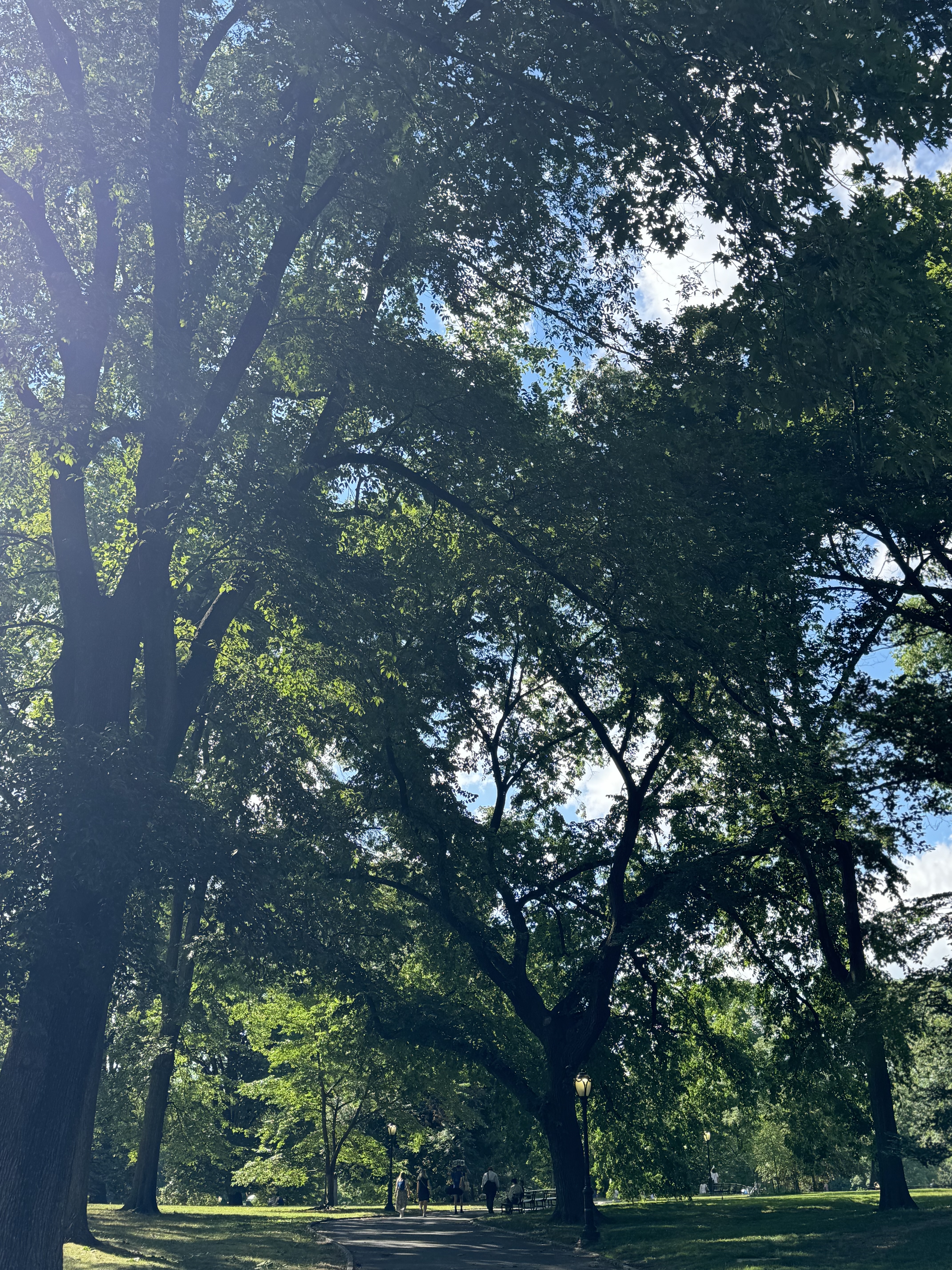
Central Park bathed in sunshine (June 2024).

….

Flow

flow can be the essence of knowing
the power of prescience
the smell of petrichor
the smooth surface of an ocean
tossed pebble, translucent amber
the great wave of goodness
but flow can also
be the tumultuous spume,
the glassy, wind-bereft waters,
the deep, dark, depths
the void, the unknowing
don’t forget that flow has
many ways and many waves

….

Into the Green

There are more words,
expressions, descriptions of green
in human language than
are intoned for any other chroma

when you are draped in green
golded and guilded in green
it is completely obvious
why this hue

green captures the eye
grounds the heart
breaths through the body
as you realize that you’re respirating

at the same rate as the statuary oak
next to you
the ash is breathing out a sigh
of joy, just as you do

The cottonwood leaves glittering
green, making a magical cacophony
of nearly silent whispers which
crescendo into a forte of breezy, winsome refrains

aspen, largest living organism,
holding ground in root and spear as they
shiver and rattle in green all their own
a sort of awe and wonder at once

alluring, regenerative, stable, steady,
cholrophyllic music, all love-mixed
whimsy and reality each leaf a hard-earned
medallion, sign of life

….

Reverberation

It’s impossible to feel alone soaking in the reverberation of humanity ringing through the great halls of civilization. The echo. The sound. The deconstructed interplay of all those expressions and explications bouncing and bounding around in the domed, arched architecture. Dancing over the simulacra, art, massive and tiny, representative of nothing and everything. The absolute alacrity the beatific joy of each repercussive utterance. Jazz. A fusion of improvisational auditory stimuli. The resounding transcendence of humanity in the envelope of a space. Astonishing.

….

Tuesday

On a Tuesday
in December
Life will eventually
present you with the
fact that you have
absolutely no answers
not one

I don’t use that word
lightly—fact

On a Tuesday
in December,
You’ll be opened
wide by the love
of the people
who have offered
you a life raft,

A golden, glittering
net—a light, a torch.

You’ll come to
the understanding,
the conclusion,
that life brings
you many endings,
many beginnings
to teach you

that life has no
end no beginning

it simply is
this beautiful imperative
this open, pulsing
opportunity at love
that you will never
receive again, this moment
this is it

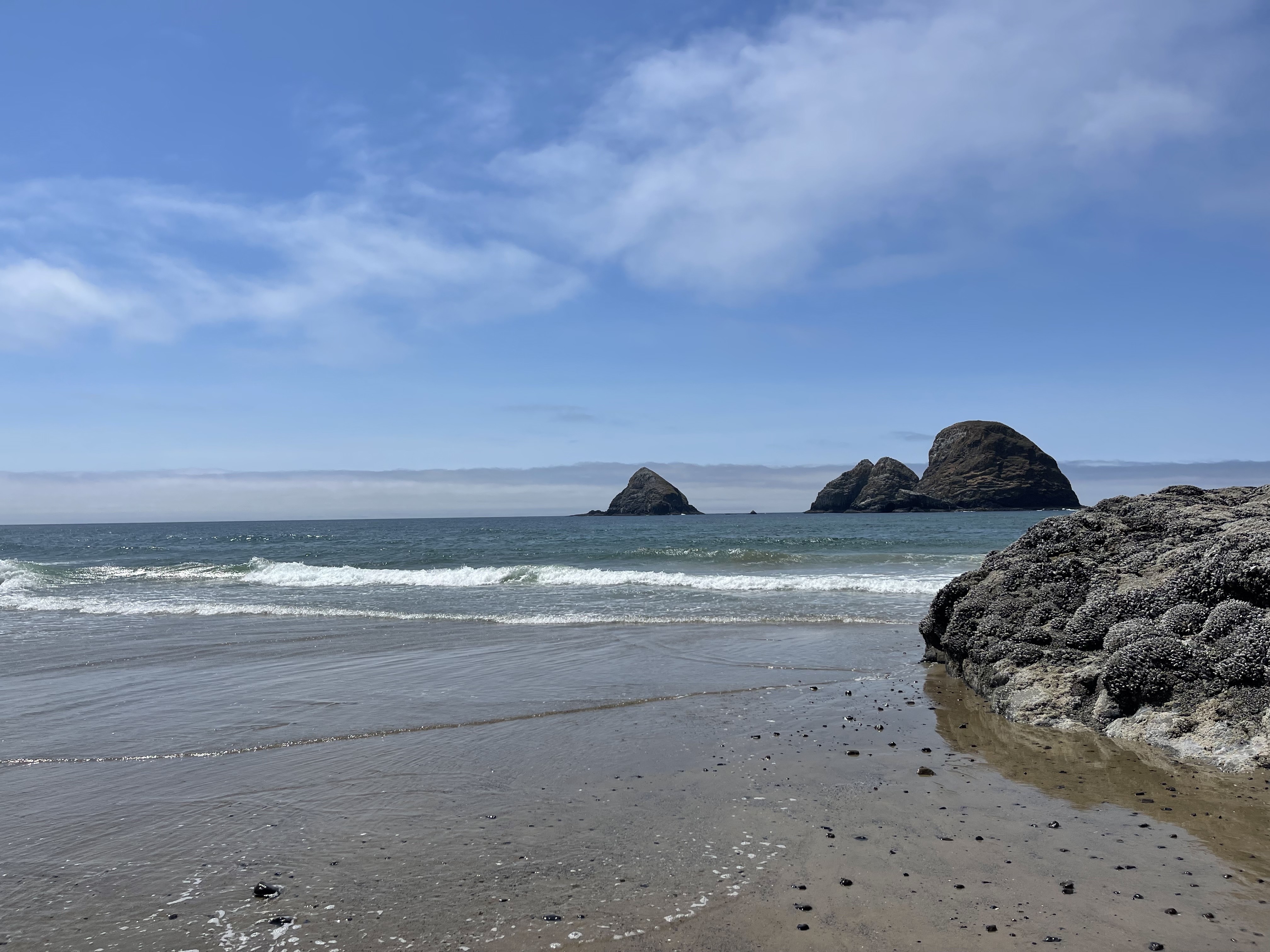
Oregon coast putting on a glorious show. (June 2023)

In the Eleventh Hour

In the eleventh hour,
your girlfriends come
to hang the final doors
in your soul.

They know it is your funeral,
your wake.
The death of so much you have built
and known.

You know that’s
how it will be when you die–literally–
or you pray, or wish it to be so,
women and men surrounding you.

Understanding you need
to build this one last thing before this death,
they come with drill bits,
and toolboxes,

and dirty jokes,
and Beyoncé ballads.
You’re *Drunk in Love*
together in the night.

They come with highly
absorbent towels
and borrowed vacuum cleaners
because they know

you need to laugh and cry
at the same time.
They do the same.
It’s no coincidence when

you look down at your watch,
it’s eleven twenty.
And then you clutch your heart
as if you could offer it beating

out of your chest
to show them
how much this grand act
of love matters.

In the eleventh hour,
you call your guy-friend
and desperately ask him for
a recommendation for a plumber.

The upstairs faucet won’t stop
leaking, like your eyes,
broken, and you call him again when
the plumber tells you the only fix

is to drill through the wall
behind the tub to replace
the valve. Your friend gives you the okay,
and the world is made right for that moment.

Another friend, a man, gifts
you a ring, a broken piece of turquoise
healed with gold, Kintsugi.
Mixing Urushi Laquier into your internal joinery.

Another tells you to drink the good wine
and offers you a bottle to catch
all the confusion, upset, anger, chaos,
tumult, of these tender days.

Another wraps you up
in Spring in Seattle.
God-parent to your sons
playing super-smash until dawn.

In the eleventh hour,
your friends, who are no longer young
spread the table with salmon
and homemade spice chutney

for a feast to last through the wind.
They don’t know you’ll go home
to silently sob at their magic
on the shower tiles.

Your girlfriend jumps on her bike
to ride with you through the
rainstorm, sunshine yellow cut-leaf balsam
root punctuating each meadow.

The rain, the sun, the rich
smell of the greening earth
make you laugh with joy,
woop with pleasure over the berms

Revel in the living of it as
they’ve each given their day, their night,
precious moments of their one precious life,
to be with you, to cradle you,

to eat *Thunder Cake** and salty tears together.
It will never be final or forgotten,
this Gift.
The fact that they knew

and understood the challenge
and all stepped in
with Windex and mops
with arms outstretced

Ready to hold you
as your once-life died
and you were made anew.
You, free entirely

-MM

“In the Eleventh Hour” has to do with ambiguous grief and the power of others to help heal us in our deepest darkness and pain. You see, our society honors and marks certain types of grief, specifically the death of a loved one. The death of a partner, parent, child, sibling, or close friend presents the mourner with its own unique fire, dragons, daemons, and oceans of grief. 🌊 But some griefs in our culture do not have specific metrics or physical markers. These bereavements may be losing someone to dementia, substance abuse disorders, divorce, familial estrangement, watching someone slip away in mental illness, or leaving our religion or faith origin. When someone dies, we generally mark their grave. But when someone miscarries a baby, we often don’t have ritual to mark that grief event. The same goes for things like childhood abuse. When you grow into an adult after this abuse, who is there to mark the unimaginable path you have trod out of the way you were treated by those who were meant to be your protectors not perpetrator(s) of your worst nightmare?

I’ve found that grief is holy, sacred even. Whether you experienced an ambiguous or more direct loss through death. Human opportunities to walk through the circles ⭕️ of life and death can both teach and strain the body, heart, and soul.

When I got divorced, I sat down with Google to see if a human really could die of a broken heart. 💔 That is how bereft, how torn and sad I was. And it turns out, yes, sure enough, you can die of a broken heart. Takotsubo cardiomyopathy syndrome is the term for this condition. Your heart, in essence, cannot withstand the excess adrenaline caused by a stressful grief-induced event.

All grief has the potential to break our hearts. But, in fact, not a lot of people literally die from this condition which means that a whole lot of people who have experienced deep, great, wide grief live to tell about it. One thing that saved me in my grief was the net of love, care, catching that my family and friends spread out under me and my family. “In the Eleventh Hour” details that love.

*So worth a read. Thunder Cake, by Patricia Polacco.

The Thunder Cake Challenge! – Natascha's Palace

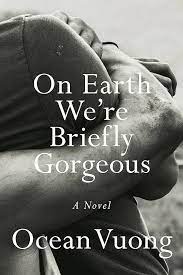
*Also important in this conversation, On Earth We’re Briefly Gorgeous, by Ocean Vuong.

The Rodeo: Online Schooling in the Time of Covid-19

COVID-comic-featured-image
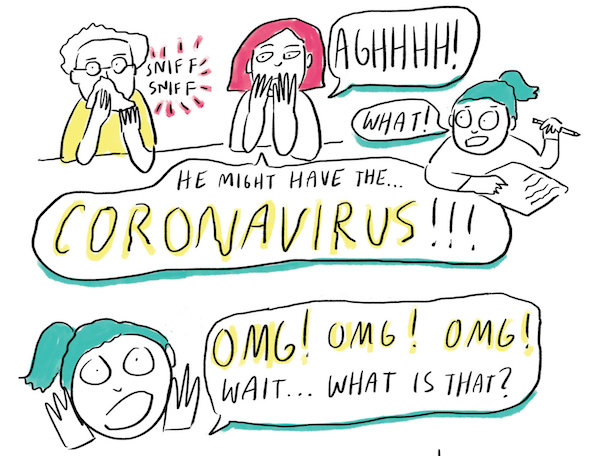
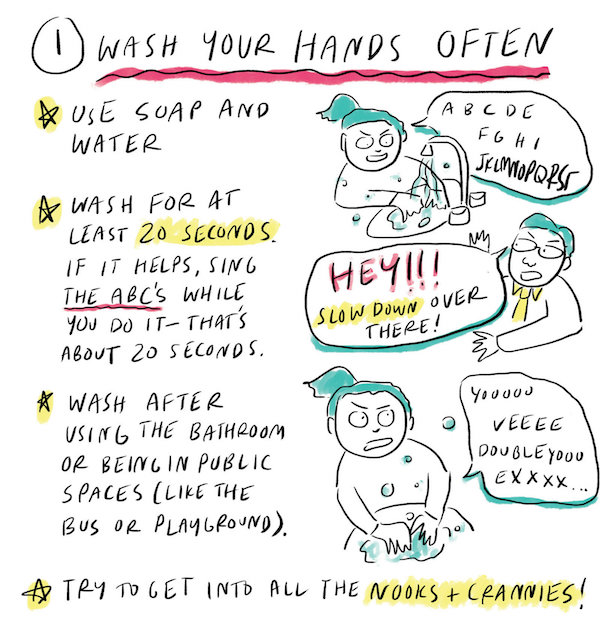
Malaka Gharib of the NPR blog Goats and Soda has created a comic that explains COVID-19 in simple terms for children. Gharib is the creator of I Was Their American Dream, a graphic memoir about her upbringing as an immigrant with parents from Egypt and the Philippines; the book was chosen as one of SLJ’s Best Graphic Novels of 2019.

The day came. Quietly, unlooked for, relatively unannounced—at least not preemptively announced at my High School. I left school on a Friday afternoon in March, set to pick up sick-work for my own elementary school student at his school. (No, he didn’t have SARS Co-V2. He had strep throat.) As I pulled into Midway elementary, my husband called, “Did you see the text from the school district?” he asked. “Nope,” was my brief reply.

“They’ve instructed elementary students to take their devices home this weekend,” he explained. “Ah, good to know. I’m here at the school now, and I can pick up both devices for the boys,” I returned. “I’ll call you back in 15 minutes, okay?” And that was the beginning of the new reality which most of us face.

Thirty minutes later our Governor announced a “soft-closure” of school. Two weeks later, a May 1st extension, and after two more weeks, it was announced that our schools will be closed for the rest of the school year.

We—the community, the parents, the teachers, the students, the administrators, the staff, individual states, the nation—let each new wave of distance sink in. (While some were desperately unable to gain distance because of their circumstances, and I’ll address this harsh reality later.) But sometimes the tide has risen so quickly, as each new day dawns on our brave new world of online schooling, we’re still caught off-guard, brought to turmoil, left (some) in tears.

For those of you who are struggling—and, yes, I’m pretty sure I’m speaking to a universal WE—TAKE HEART! I know that this road has been constantly changing, ever updating, inundated with crashing breaker upon crashing breaker of the new, the not-normal, the unknown. Yes, it has felt like a dystopian reality has been thrust upon many of us; and yes, I understand that holding the education of your own children in your own purview has got to be scary.

I spent the entire first weekend after the school closure working. When I say working, I mean that I put in two solid twelve-hour days. Scouring my lesson plans, shifting my expectations, creating a video welcome, expeditiously scanning text into PDF, drafting a parent email, assuring my students that their current assignments were still due, grading my current assignment load, and scrupulously re-designing my instructional rubric to fit our new reality—online schooling.

I’m a teacher. I share this not because you didn’t read the last paragraph where I explained all of the hard work and effort that went into shifting my classes to online models, but because I want you to understand that I feel you, parents, when you describe the hardship of schooling all of your people at home. Wednesday of the following week I entered upon an educational arena that I will hence forth and forever refer to as “The Rodeo.” We’re god-fearing cow and sheep folk here where I live, and I can only describe that those first few days of EVERYONE online, everyone collapsed into one space, one classroom, one life was a POOP-SHOW to behold.

My husband on a conference call with the East-coast. Myself on a Zoom meeting with my teaching team. My sons on a host of platforms, apps, and technological learning tools that left my head spinning, and my heart overflowing with passwords that I hopelessly cast into the soft-shod muck of my working memory.

Holy cow. We were failing. We were failing, and we were going to fail. It took my breath away. This instant shift, and equally instant knowledge– that while I felt aptly, even confidently, prepared to transition (with a 24 hours-worth of weekend-work) to teach eleventh graders both the art and science of reading, writing, speaking, and thinking with the flip of a switch– my own little family, my own pride-and-joy, my own little think tank was going to fall flat on its face in the mutton-busting, teeth brown with animal crap and tears, and there was nothing I could do about it!

Then Thursday dawned, and we were all okay. The kinks were there. You better believe there were kinks, and still are some. But we began to piece together our new reality. My second grader, who is bright, and silly, and a handful to be around for eight hours at a stretch, was completely overwhelmed just to see the “to-do” list his teachers posted. “Thirteen pages of math, MOM!” he yelled. As I tried to explain that those 13 pages were really just slides– on a Power Point, or a Nearpod, or a … you fill in blank with the app your student is using to ingest and then submit work—which meant that there were only THIRTEEN PROBLEMS. In total. Much less than he had done for his homework the week before.

So it has gone in our home. Sometimes we are able to re-visualize, re-imagine, re-calibrate our thinking about school. We’re riding high and feeling the adrenaline of success for every one of those eight seconds. My oldest son has quietly gone about his work, day-in and day-out, nary a hiccup. But we had some good old-fashioned ride-the-bull sessions when he couldn’t explain to me why his work was left “unsubmitted” on some of his assignments. We’re working it out. Sometimes we still get bucked off the bull.

But it is also very obvious to me that my children’s teachers got the news about school closures, went out to their own virtual rodeo arenas, got on the saddle bronc assigned to them, and WENT. TO. TOWN! (Go Wranglers!) We came back, to online school, to a system that was ready to deliver learning– targeted, essential learning– to each of my children in practically the eight seconds it takes to ride a saddle bronc. The execution, the preparedness, the effort, the instructional stability, the stamina, and the standards were astounding. Their style, their grace, their precise timing was everything. My children weren’t going to sit out this pandemic twiddling their thumbs. They were going to be learning. Truly gaining in knowledge, education, and standards-based instruction for their grade-level. It was and IS remarkable.

I also want parents, students, community members, and administrators to know that MY STUDENTS ARE SHOWING UP! My students are here. They are in their classrooms. Some of them in record displays of participation. It is so easy to give High School students a bad rap. To label them with some derogatory generational disparagement. But I want you to know that my students have been there for me as much as I have been there for them. They are writing, they are reading, they are thinking, they are responding to online discussions, and submitting FlipGrids full of poems, and rocking this brave new world in a way that I could not possibly have imagined.

This online learning platform IS accessible, IS relevant, IS possible, IS working. And, no, in my opinion, it is not the best there is to offer. I am an eternal advocate for the face-to-face classroom. I love the people. There will always be outliers. There will be those whose situations, livelihoods, family environments, and living situations have been thrown into such chaos by this change that they will not be able to either succeed or survive in this online learning platform. We should begin to plan for their recovery now. How will we offer make-up credit, re-teaching, re-assessment, and re-vitalization of those whose educational opportunities really did go down the tube when social distancing became a reality.

But above all, I want us to remember, and I believe that this moment in education has re-taught us, the incredible resiliency of the human spirit. We are all experiencing this rodeo together and yet separately. Almost all lived human experiences are like that—individual and collective. My hope is that we’ll continue to reach out with that human spirit of support and core care. I hope we will ban together in care and community-interest not just blast our latest emotion into the social media echo chamber. But take up the banner of education because it is one that we all must bear. Here’s to that next great ride of Old Glory around the rodeo arena in real-time. As the horse picks up speed, and the wind takes that banner of freedom into endless ripples of hard work, good will, and committed effort, may we remember learning and pedagogy are built upon the backs of those educational bronc riders—past, present, and future. You’re one of them now. We are all in this together.

COVID-comic-wash-hands

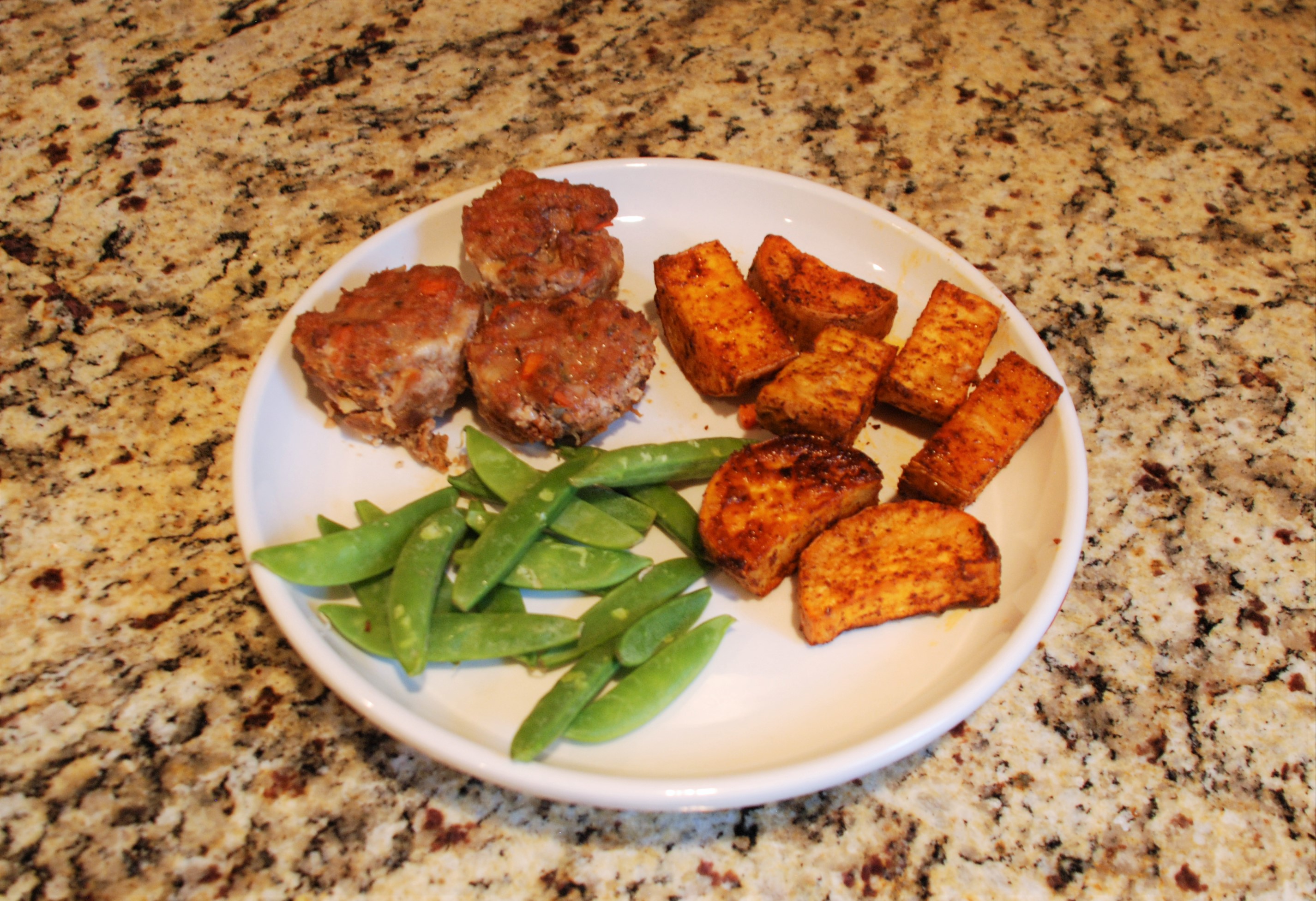
Meatloaf Muffins

DSC_0361 (2)

I read an article today titled “The home-cooked family dinner: Yes, it’s a burden for moms but is it worthwhile?” from the Washington Post. The article isn’t new, dated 2014, but all of the questions may still be asked contemporarily. Do we really need family dinner? Is family dinner a burden that we, primarily women, should carry? Do the benefits outweigh the inherent struggle?

For me, the answer is undoubtedly yes, to all three. The takeaway, and I realize that I may be preaching to the choir here, was that family dinner is an integral part of working toward increasing the health of your family– not just physically, but mentally as well. Research shows that kids who eat family dinner five or more times a week are proven to do better in school, to be more adverse to drug and alcohol abuse, less prone to depression, and more likely to avoid eating disorders.

The more I learn about and experience family dinner, the more sold I’ve become. I really do need to give credit where credit is due and recognize Aviva Goldfarb and her meal planning service The Six O’clock Scramble because she and her team are the reason that our family dinners have succeeded.

I’ve written about The Scramble, and sung its praises here on Refined + Rugged more than once, but I really do credit the simple, straigtforward menus, easy grocery lists, and customizable meal plans that The Scramble offers for keeping us on the family dinner wagon for SO LONG- going on seven years now, I believe. You know it’s good when you’ll recommend it to every person you meet, call a radio talk show just to drop the name, and write Instagram love letters to the founder because you life has been so changed! 🙂

To my mother and close friends I’ve joked that it only took me eight years of being home to figure out how to make a home-cooked meal, but the reality is that there will be some trial and error if you do decide to jump on the train and begin family dinners.

However, an equally important reality offered in the article was that of dinnertime flexibility. Anne Kruger, former editor-in-chief at Parenting magazine explains, “I remember as a working mom dragging my kids to Arby’s after picking them up from day-care and kindergarten because I was just too tired to cook when my husband was out of town.” She continues, “I’d let them watch ‘The Simpsons’ in Arby’s and pray that nobody I knew would see me because of [my position] I should have been ‘doing better.’ Which is ridiculous, because we’re all doing the best we can.”

That is the ultimate truism. So this Thursday, friends, I hope you find yourselves in the kitchen, or find yourselves grabbing dinner at some fast food joint. I hope that you feel good about it either way! If you’re home, this meal was SIMPLE, DELICIOUS, and HEALTHY. All things I’ve come to expect from The Six O’clock Scramble which is still the biggest family dinner silver bullet I’ve found.

XX, Megan

DSC_0339

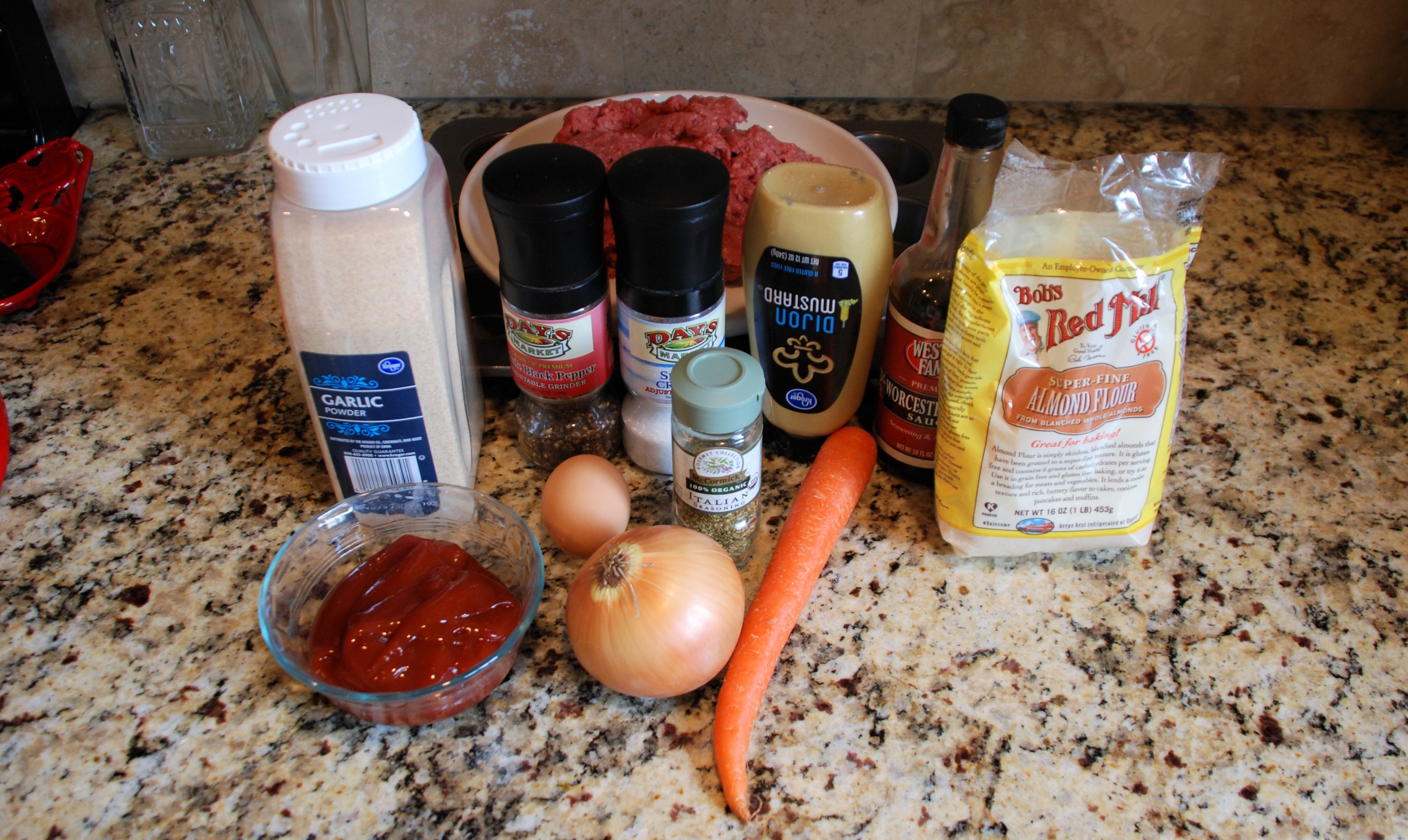
Ingredients:

  • 1 tsp. extra virgin olive oil
  • 1/2 white or yellow onion, finely chopped (1 cup)
  • 1 carrot, finely chopped (1/2 cup)
  • 1 tsp. dried oregano
  • 1 tsp. minced garlic, (1 – 2 cloves)
  • 1 1/2 lbs. lean ground beef, turkey or chicken, or use 24 oz. meatless crumbles
  • 3/4 cup ketchup, or use tomato sauce
  • 1 cup Italian-style bread crumbs (use wheat/gluten-free if needed),  I used almond flour with 1 1/2 Tbsp. Italian seasoning added
  • 2 Tbsp. Dijon mustard (use wheat/gluten-free if needed)
  • 1 Tbsp. Worcestershire sauce
  • 1 egg

Directions:

Preheat the oven to 350 degrees.  In a skillet, heat the oil over medium heat and sauté the onions, carrots, oregano and garlic for 3 – 5 minutes until the vegetables are tender (if using meatless crumbles, add them now too and cook for 3 – 4 extra minutes).  Remove them from the heat and let them cool for about 5 minutes.  Meanwhile, in a large mixing bowl, combine the remaining ingredients, then add the onion and carrot mixture, and stir thoroughly.

Spray a 12-cup muffin pan with nonstick cooking spray. Spoon the meat mixture into the cups, dividing evenly — each mini meatloaf should completely fill a muffin cup but won’t go much over the top of it.  Bake the meatloaf muffins for 30 minutes.  (Meanwhile, prepare the carrots and the potatoes, if you are serving them.)  Remove the muffins from the oven and let them sit for 5 minutes before serving, or refrigerate them for up to 2 days or freeze them for up to 3 months.

*The Six O’Clock Scramble is a meal planning service to which you can subscribe here. For a fantastic price you will receive 8 weekly meals which means 8 recipes (main course plus a side dish), complete grocery list, the ability to tweak the number of people you are making for, and full nutrition facts.

PLUS tips as to how best to PREP your meal beforehand, add a punch of FLAVOR, and how to SLOW COOK almost every recipe if you’re especially slammed that night. This wonderful service really does live up to it’s name. You can come home at 6 p.m. and be sitting down to a DELICIOUS, HEALTHY, HOME COOKED meal by 6:30 p.m. most nights.