“Astronomy for the use of schools and academies.” Joseph A. Gillett (1882)
Oceanus Procellarum
His eyes the hue of all Earth’s oceans tossed In tumult (spume, spray) churn infinitely Her heart, the oceans of the moon, ensconced In basalt magma mares laid anciently He senses love and feels it coursing through Her ever-present depth, the seat of grief Conditions both are now accustomed to By life’s relentless quest to find relief Yet, love and laughter fill their atmosphere A world where they alone can live and be It saves them from an epoch of disaster– A home, a space, a place—this you and me New woven in this moment learning how Their love gives import to the here and now
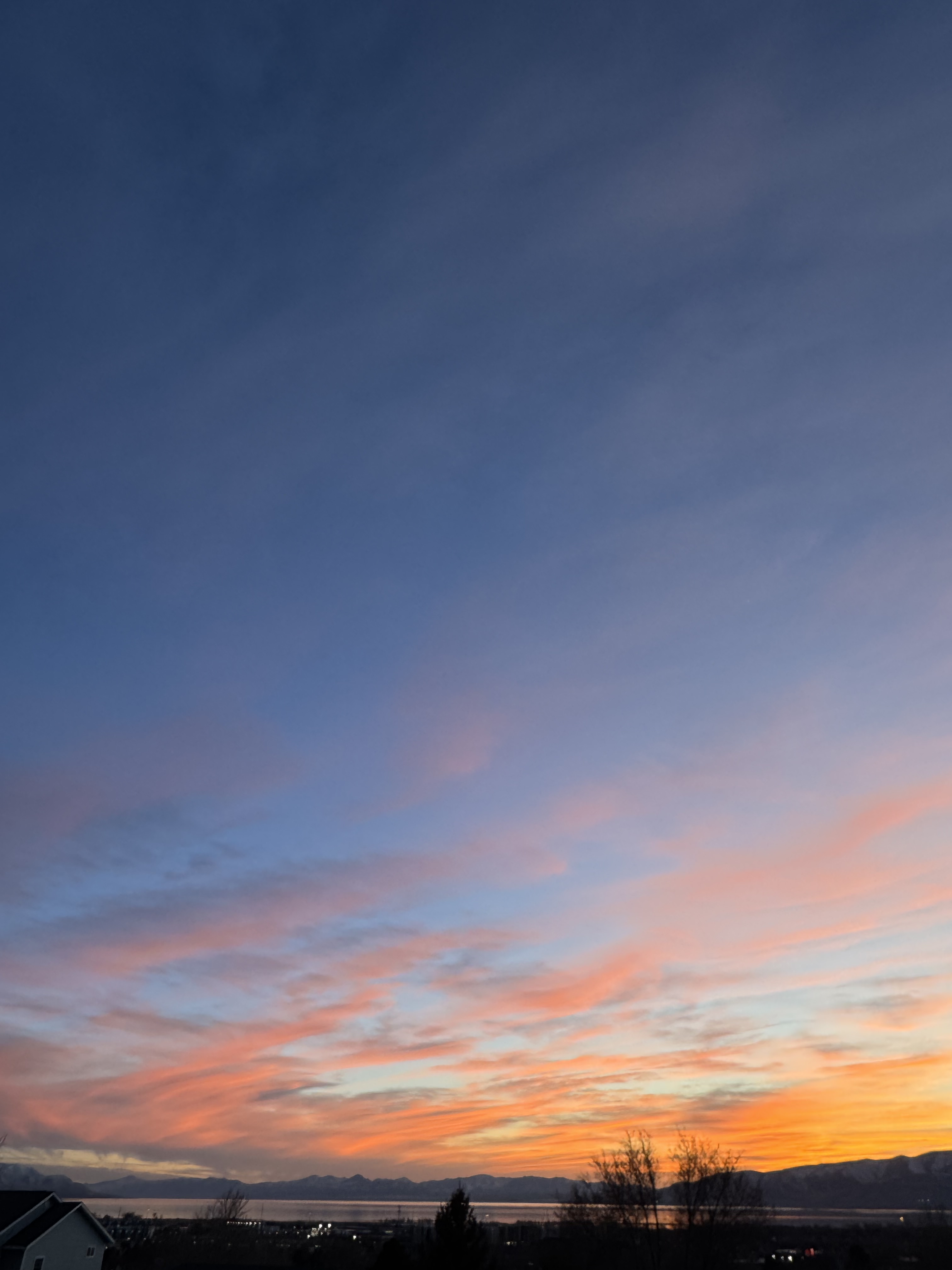
Sunset over Utah Lake. (February 2025)
Sea of Scorpio
Darling, I haven’t yet told you How beautiful your eyes are Like the ocean’s depth, a sea Moved by primordial currents, dark, Yes, below the surface, but there Beautiful, almost infinitesimal Flecks of ochre, golden troves, In the rippling rich blue that Remind me of the entire universe Contained in that chasm, which Is to say soul, kelp ribbons Amber stones, acorn barnacles, Brittle stars brought to surface by Maelstrom. Sign that all the Depths you’ve fathomed where You learned through excruciating Joy and wracking gladness, an Abyss rife with life and pain, Eternal you, there laid bare Inside your beautiful eyes
A torche glitters in her hand, a brightly whishing brand lighting the ways– a choice, the path you take, the path you don’t, all paths you leave behind– they are equally lighted by her candle, paths you can see now and will never be
revealed again, in the flickering breath the shadows cast into the recessed flume, the light loses its brilliance, the gravel of the third way spooled out along the straighter path, and the second road banking darkly into the far side of some
gray and dusty landscape which even the brighted stars cannot now expose, So what does this goddess of the dark night and her burning wooden beam divine, does the curve of her hip signal some portent, message of direction,
no, the way, the path, the journey will not be signaled by another, you must choose, you must contemplate, intuit, and define your bounds your path will be yours, after all, your own, so you must own your choice
wavering again, the flame whispers from some fate-wind ahead, some ancient breath of the beyond, you grip the paper of your healing in your pocket and take one long breath, exhaled in the rising chill, a mist
spurled ahead, looking up into the star-strewn night the weight of the choice comes softly on the shoulders of the traveler, an unseen cloak, take a small but firm step toward the flume, the future
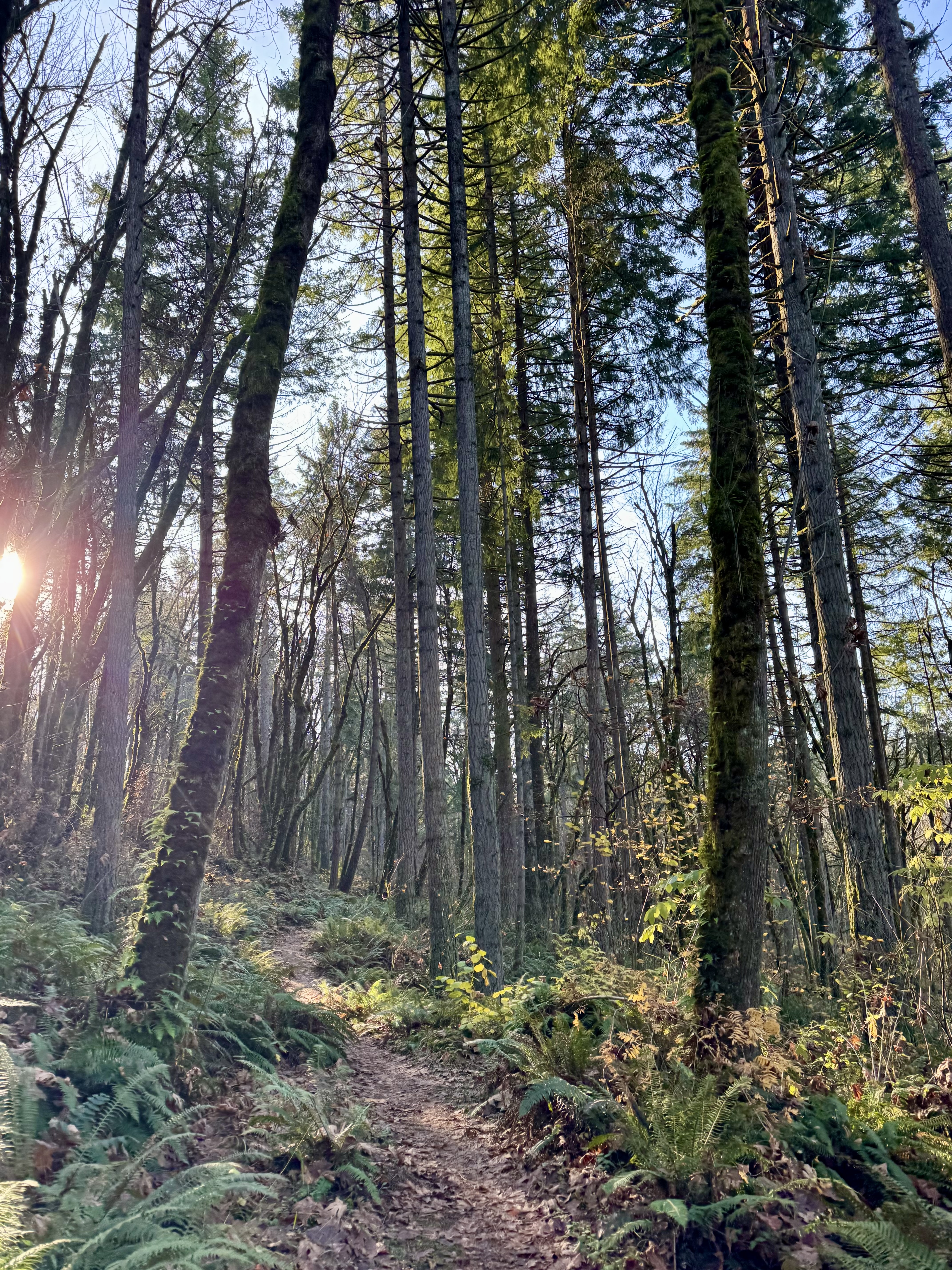
Canemah Bluff Nature Park. Oregon. Image, my own.
Clay
Molded and molding, shaping, shifting, pressure, smooth tension, long lines a steady firmness, spirit of water, sunlight, earth, release, become
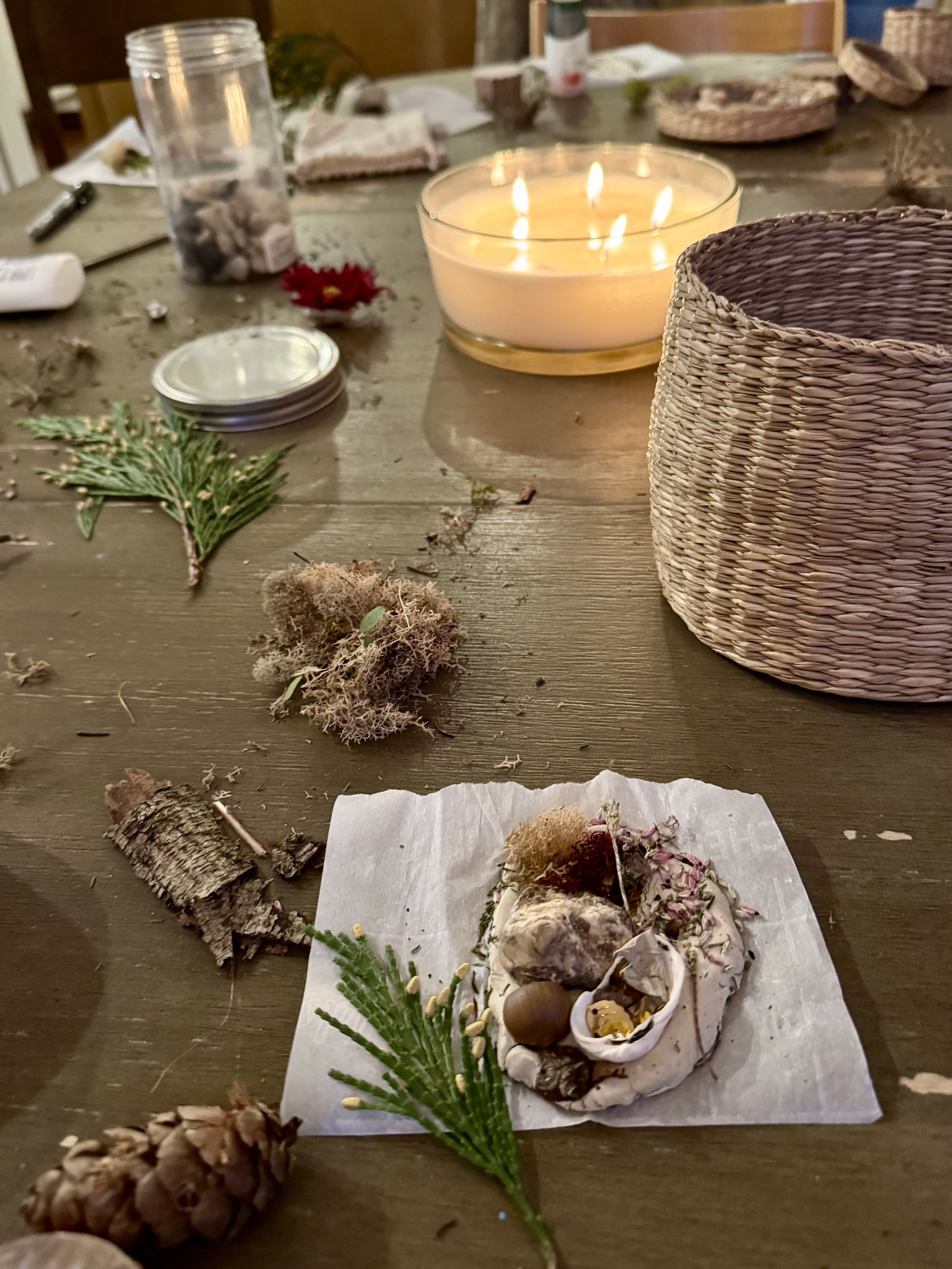
New Moon Amulet. December 2024. Image, my own.
Talisman
Can any thing be magic? Any blob of gold or Pressing of silver, can An object, an item, a Pinecone or umber fleck of Bark be imbued with Power or general chemistry That brings transmutational Ability, alchemy, divination
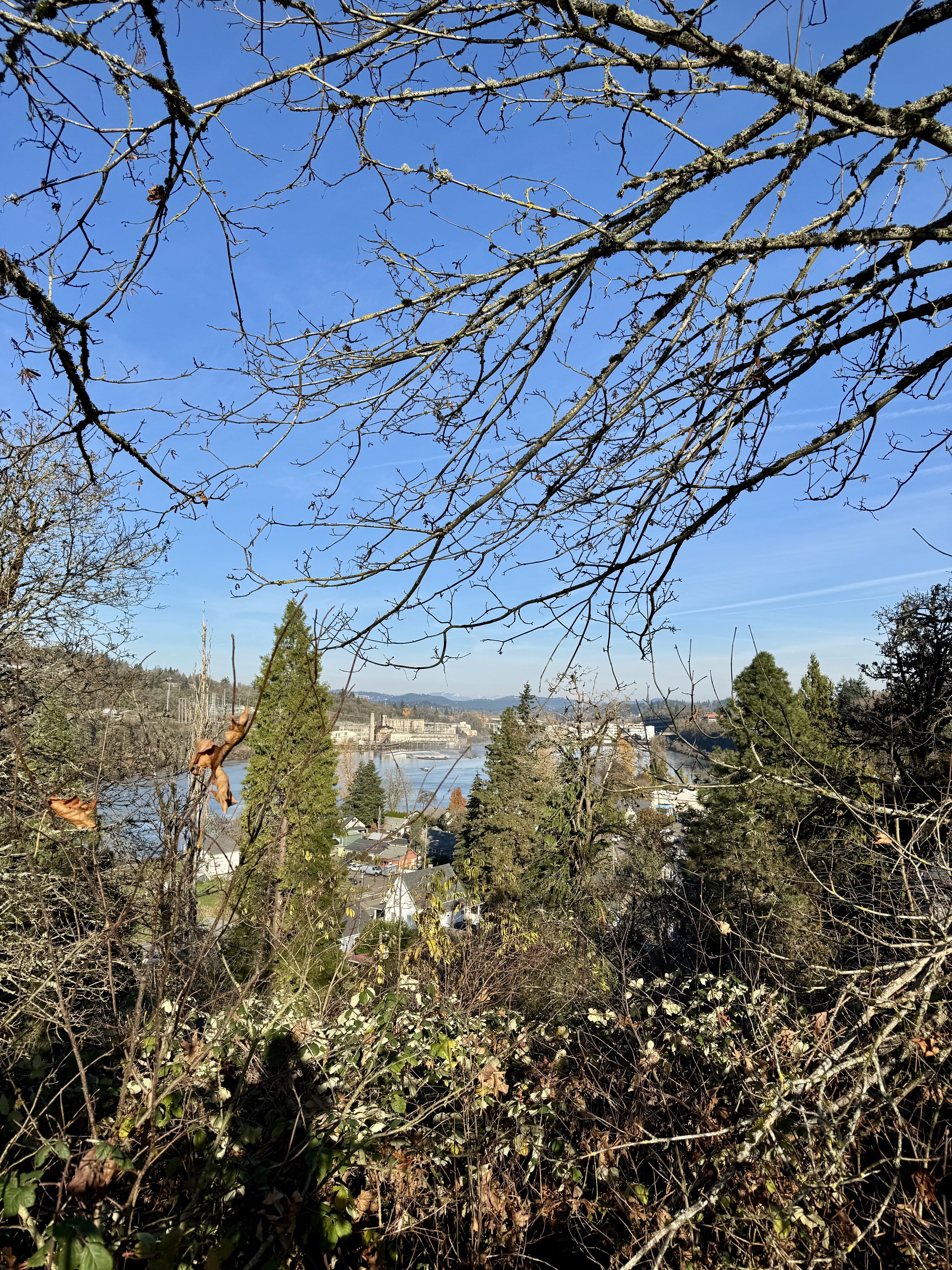
Canemah Bluff Nature Park. Oregon. Image, my own.
Some grief never leaves
And I know this because of arthritis Some grief is permanent, the relationship With a parent that you’ll never have, the Child who never entered your life, the Star that never rose in its proper place There will be some things that leave Mortally permanent scars, situations Which will never be shifted into Redemptive tales. Some scars Will ever be with us to remind us How pain and grief bring understanding Gained in no other way,
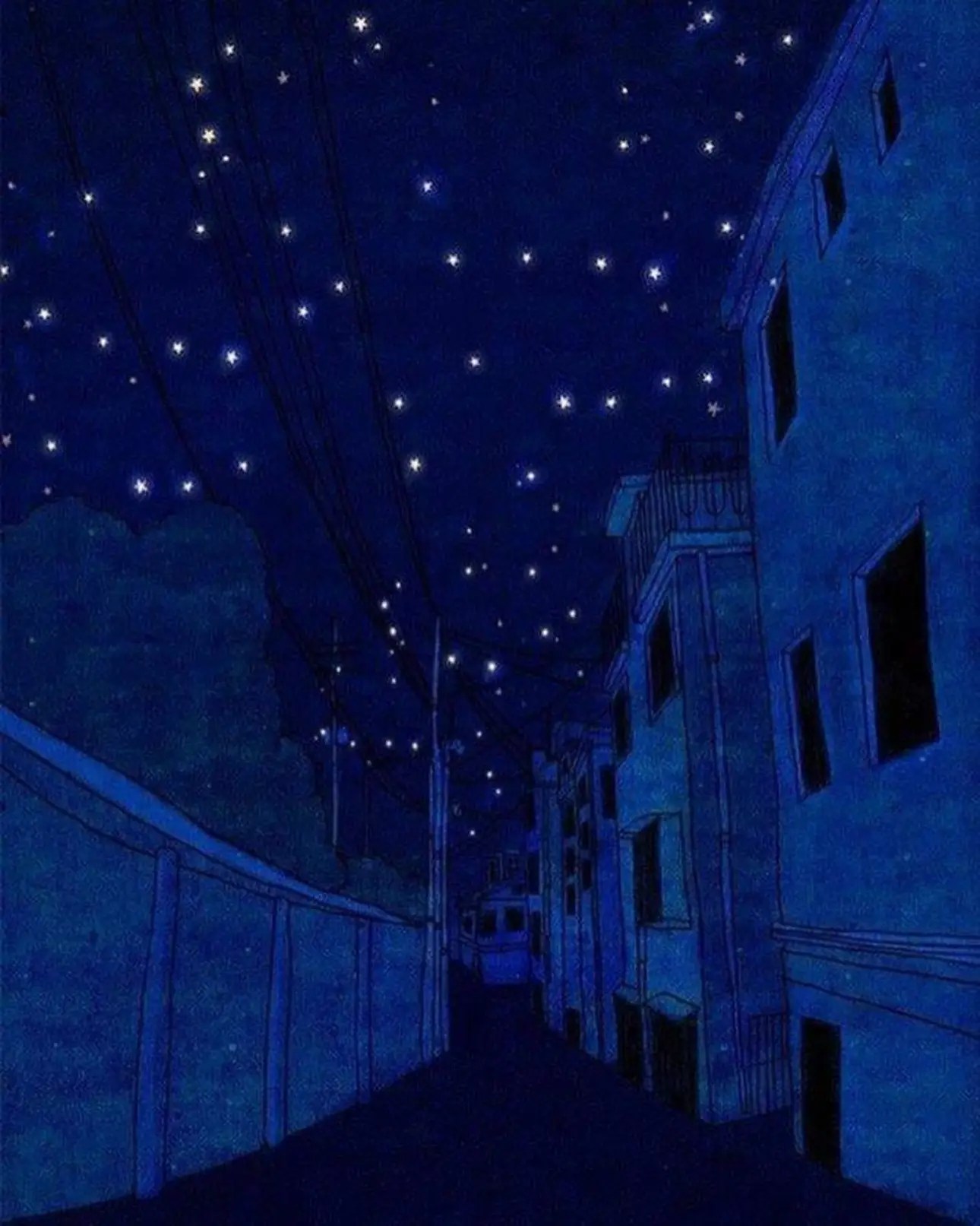
Starlight street at night. Fukuōji Kazuhiko.
Journey
It began to ring true Several steps from where The grief began, the opening of the way, the continued rock and slosh of the water Eyes opened on a world And existence that was nothing Like what tiny kernel of promise In life began as. Nothing like the seed of the idea of the life you thought you’d live, the contrast was searing and startling at first. But then, by gradual degrees, it became whole, sound, founded, and sacred opportunity
I won’t make it. He said. With a seriousness beyond seventeen. I’ll seize up. Freeze. I won’t be able to crawl on the ground to the escape exit, to climb the bookshelf To project myself through the ‘hypothetical’ broken glass where the star Quarterback threw the desk through the shatter-proof window. I won’t move. He said. As his brown eyes swam in a sea of fear and knowing. Lean limbed, Hair the color of a house wren’s feathers, sandy brown. Eyes knowing and wide. I won’t make it.
Desensitization comes from experiencing the same thing over and over and over So it comes as no surprise when there’s another school shooting many teachers Parents students don’t even blink, we don’t even pause to take a breath, to wonder What it would be like if someone brought a gun to our school, what would we do Instead we slip over to social media to hear snippets of the aftermath, we read A New York Times article that offers a couple more of the details of the shooting We go to work early to prepare our lessons and students move through the hallways Seemingly unaffected. But the reality is that we, as a nation, worship guns more Than we worship human life. Isn’t that strange and sad. We worship a mechanism Designed for death—to kill, to end, more than we believe in the sanctity of breath of exist- ence. What are we afraid of?
You will. I reply. You’ll make it. I’ll pick you up. He was small enough I was pretty sure I could Do it. I’ll pass you to the closest person to the window. We’ll jump through the shatters, Shards of glass all over the floor and grass beneath my classroom. We’ll make it. You’ll make It. It was the first time we’d really had to sit in the corner of the classroom, our back To wall, practicing waiting die is one of the most cognitively dissonant experiences I’ve tried Blood beating, pulsating, trembling in my ears. Cheeks hot, heartbeats rise. I won’t make it. He said. And I knew that he was probably right.
Deer Creek Reservoir, Sunset, September 2024. Image, my own.
Wonder
Open-eyed Glimmer Smile that lifts Every part of the Human frame Awe that creeps Into cheekbones That breaths On lips ready For uplift Sacred tilt of The head Stillness of shoulders Confirming Listening Sensing Magic
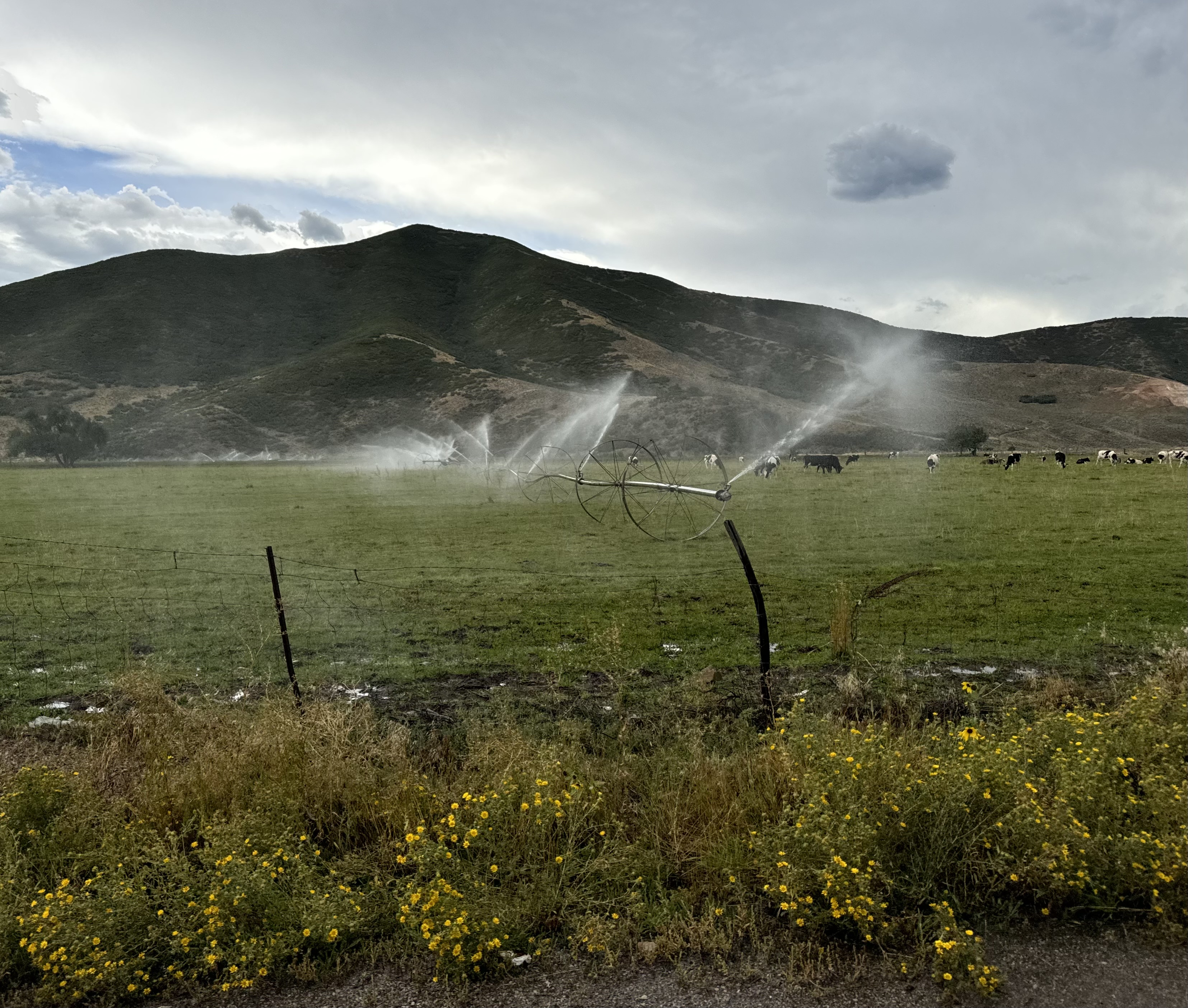
Pasture Plus Cows and Wheel Lines. September 2024. Image, my own.
Bike Pedal, pedal, push Push, huff, huff, up, up, over crest the tipy-top
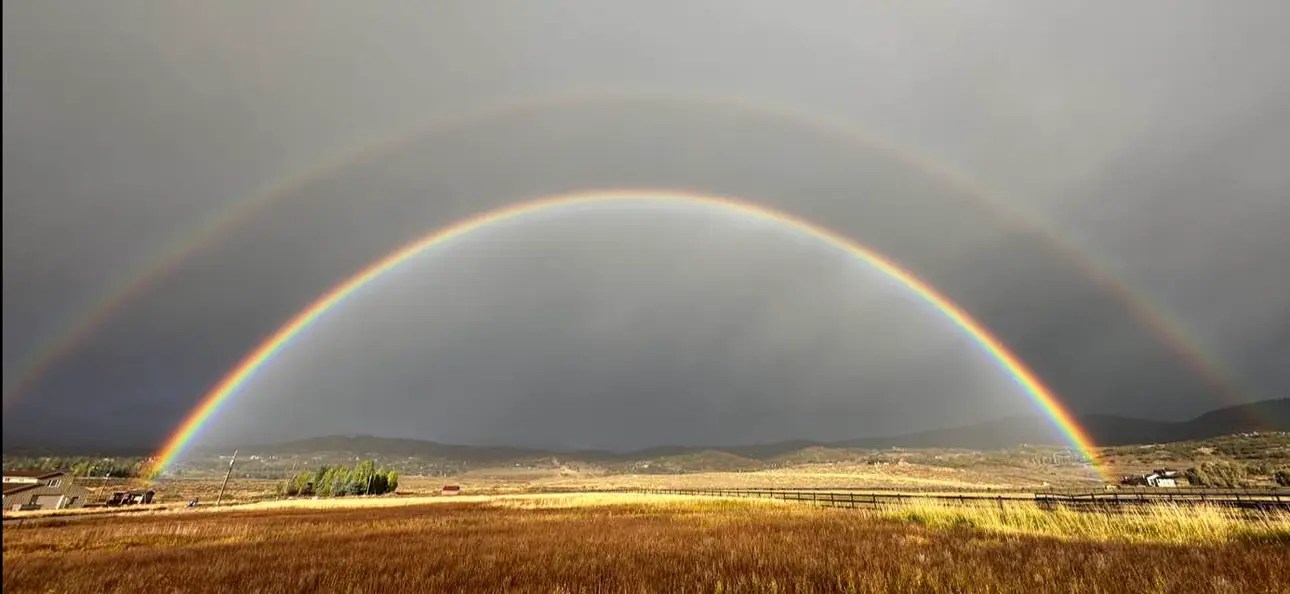
Double Rainbow over Soldier Hollow.September 2024. Image, Corbin Wright.
Sticky
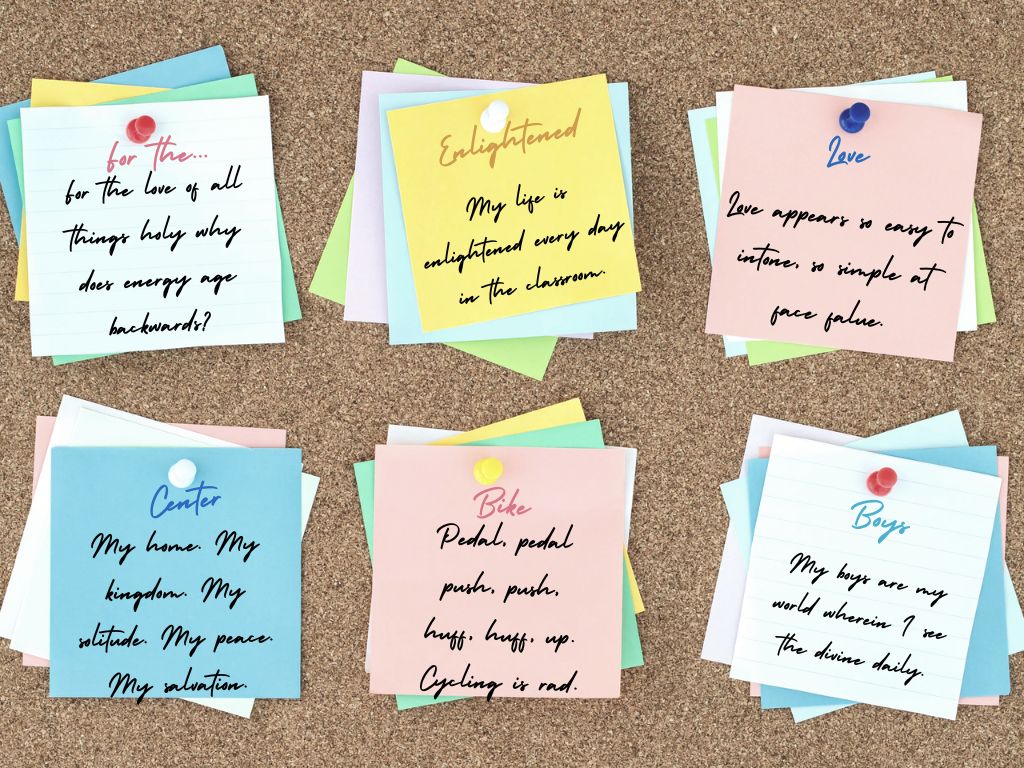
So these poems are actually micro-narratives. You can play with these at the kitchen table. I triple-dog-dare you. The premise is simple. Write a ten, 10, word narrative about yourself. Key: do not overthink this. This is such a fun little enterprise to play with in the 1010 intro to writing class I teach.
Micro Narratives. September 2024. Image, my own. Micro Narratives in Tech. Canva. Image, my own.
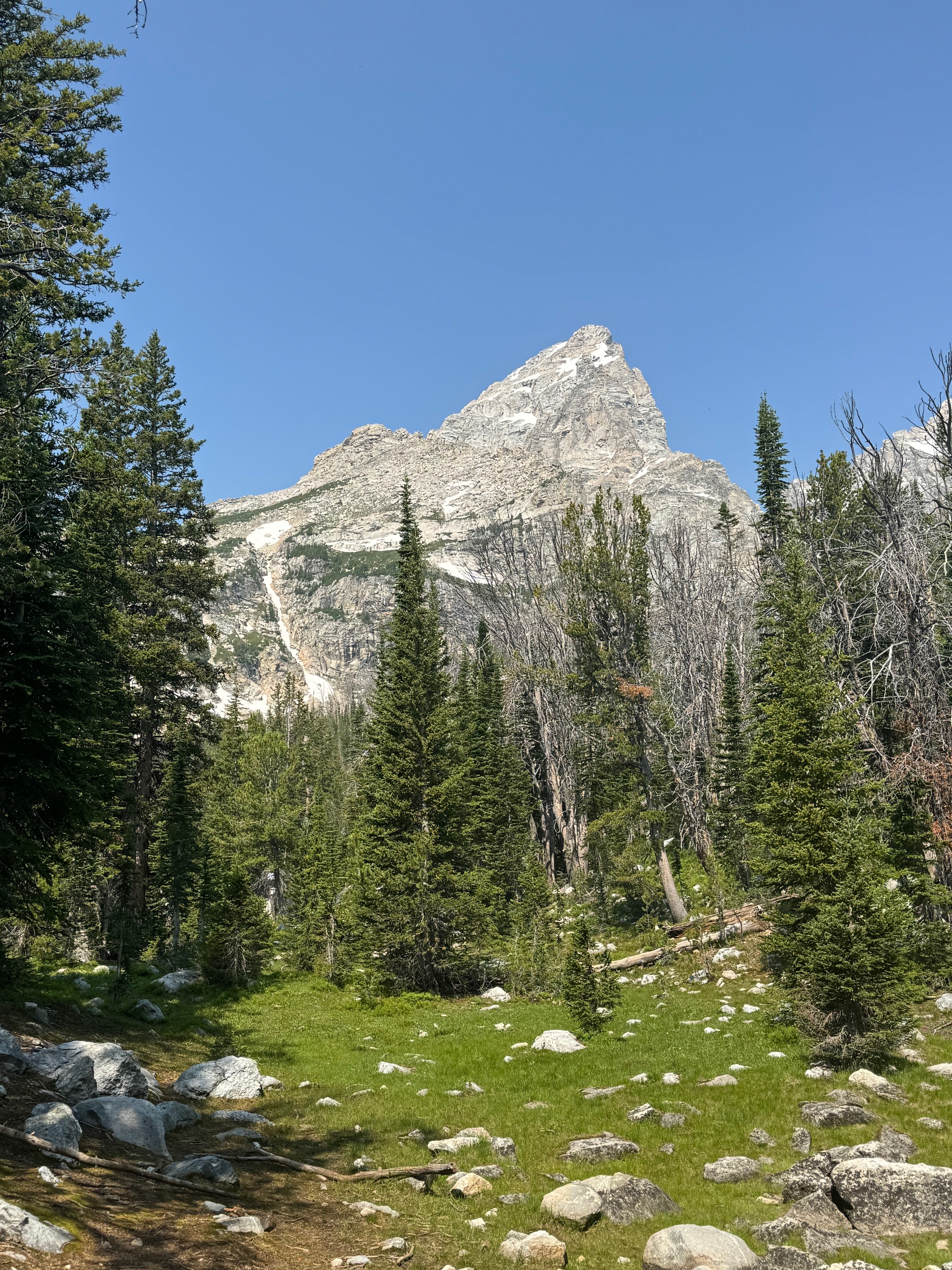
Middle Teton, from the meadow before Surprise Lake, 2024. Image, my own.
—–
Redolent waves of raw, hot pine tannin coursed across my senses in each trough of the trail. My bike and I undulated, at times, from below the root systems to the top of the bole of the Douglas Fir growing along most of the track. Pseudotsuga mensiesii, countless needles seemed to breath in unison in the softly rushing air from bark scabbed boughs to the tip of the tiny glimmering twigs into the understory all around me.
The loamy dirt still held some of the rain that had smattered over us just minutes ago, and then passed just as quickly as it had fallen. As we rode, I could see the soil was darkly composted with old leaves, myriad fir and pine needles. Light filtered through the blackened jade of each needle, twig, bough, and trunk, making shadows long and variegated across the trail.
The moment caught and held, pausing for a breath—one, two, three—sky, trees, breeze, light, earth, leaves. My gaze panned down the next switchback. I reminded myself to attend to the trail ahead of me rather than losing myself in the trees which might end in a disastrous fall. I trained all my focus again on my body, my rhythm, my flow. The rise and fall of the pedals, my eyes focusing two or three feet in front of me, intake of breath and exhalation, gear up for the rise, baby crest then pedal, pedal, gear down for the descent, flatten out my stance.
Churning out the miles I couldn’t help but repeat in my mind—here it is, this is it. It’s this kind of presence that makes human life palpable, enjoyable, full. But it may also be what keeps us from tackling major storms and stumbling on challenges that we face in life’s broader contexts. I am lucky. I can escape to the mountains whenever I please– cooler air, summer rains, mountain lakes, trails and more miles of trails. But so many humans do not have that luxury.
I thought of my boys at home. Thirty or so miles on the back side of the mountain I was ribboning down. They might be jumping on the trampoline, reading on the back patio, watching a Tik Tok on their beds. Their existence is often the perfect burr to return me to why I find climate change action important. In her article, “The Global Temperature Just Went Bump,” dated July 25, 2024, Zoë Schlanger explains that Sunday, July 21st was bested for “hottest day ever recorded on Earth” by the following twenty-four hours, Monday, July 22nd. The hottest day in 1,000 years… “since the peak of the last interglacial period, about 125,000 years ago.”1 Can you believe it? You, I, and my boys just lived it. Let’ s not hold our breath, kids, I’m certain we may see another record breaker this summer. Again, wild.
Maybe we, humanity, feels as though we’re ready to experience a warming period on earth that has been sped up to three times the last warming period. You know, like listening to an audio book on unintelligible chipmunk speed. Maybe we feel that we’re ready for hotter temperatures, more severe storms and weather patterns, shifting moisture bands, and a world that has very little Arctic or Antarctic ice. The impact that we have made on Earth’s climate have created climate shifts over 150 years that are closer to those that warmed the interglacial period Neanderthals experienced over several thousand years.
These scientific observations are mirrored in the human experience my boys and I are living, real-time in our quaint and un-airconditioned 1913 settler’s cabin (renovated, perhaps three different times). Our little home loves to rest in the heat at seventy-eight degrees. I can now tell you from a summer of experience that this ambient temperature is quite tolerable. For me, preferable to an office space frozen to 65 degrees while the outside temps tip towards the 100s. But still twenty or so degrees cooler than the ninety-eight to one hundred and six-degree days outside.
The boys and I are thick into the summer of a system of open windows, open blind louvers at night, queue the fans, open the whole house wide for the cooler nighttime air. Then reverse the process in the morning, at 7:30 a.m.—close the windows, shut the louvers on the blinds, keep the fans running, front porch full-sun in the morning, back porch a lovely ten degree drop at dusk. I think about the folks living in places like Phoenix, Tucson, Jacksonville, Charlottesville, New Orleans, Dallas, Houston, Death Valley, to name just a microcosm of the American cities that have experienced unprecedented heat waves this year.
What if I lived in a climate that never saw cool? What would I do if I were eighty and my air conditioner crapped out in this heat wave? From many folks’ perspectives, it doesn’t look good. George Packer, in a sweeping prospectus of Phoenix, one of America’s fastest growing cities, in his article titled “What Will Become of American Civilization?,” details the heat that killed 644 people last summer in Maricopa county for The Atlantic. Packer explains that those who pay the price for the heat really are the elderly, the mentally ill, the homeless, and “those too poor to own or fix or pay for air-conditioning, without which a dwelling can become unlivable within an hour.” I think of my boys trapped in a little house without AC in a desert without a way to cool down. What a tragedy.
The picture only appears more grim as Packer projects forward, “A scientific study published in May 2023 projected that a blackout during a five-day heat wave would kill nearly 1 percent of Phoenix’s population– about 13,000 people– and send 800,000 to emergency rooms.”2 Nearly one million heat stroked humans? Staggering. The situation even brings Packer a sense of shame that there is a 4,000 person waiting list for homeless persons who desperately want housing vouchers to get off of the street and out of the heat. Literally.
I’ve experienced my own micro shame at the warmth of my little house. Just yesterday I heard my youngest son speaking to his father on the phone, “Yeah, my room’s pretty warm. I’m okay.” I cringe a little and recognize that I’m also lucky enough to be able to install AC in my new-old abode if I were to choose to do so. It appears that from my children’s report, we may be contacting an air-conditioning company soon though my wish is to wait until next summer. I guess I’m willing to see what the next record breaking day feels like. Will my little home break 78 degrees? I may soon know. I’m certain if my boys get hot enough, they’ll also let me know. I’ll hear it from them.
—–
March 19, 2006. Many yesterdays ago, Logan, Utah. It’s early evening, one day before the official calendar date of Spring Equinox. Outside, snow falls through the dim blue haze of twilight. All across Cache Valley’s floor, the heavy wet flakes form standing pools with the slushy consistency of a 7-11 Slurpee. I’m inside writing. When things stop flowing on the page, I sink from the couch to the living room floor and piece together silk quilt squares from Grandma’s shirts, skirts, bathrobes, and mu-mu’s. Remembering is reflexive.
It’s a hard reality to face the fact that humans really have so little knowledge, perspective, or understanding of the future along their linear time-continuums. I didn’t know that the drive Grandma and I took in April 2005 would be our last. I look up from a neon square filled with exotic flowers that look like they’ve been bathed in black light and think back.
The sun’s spring angles were beginning to lengthen the days as I helped her into the passenger’s seat. Settling into the driver’s seat, I eased the car out of ‘park’ and pulled onto Highway 40 traveling Northeast. Warm breezes gently bent the tops of sage brush, bunch grass, paint brush, and river tamarisk.
Grandma asked me to roll down the windows even though she was dressed in long pants and a wool sweater to keep her shrinking frame from getting too cold. The wind flayed her gray curls like fingers, and my own hair whipped, unruly, this way and that. The smell of the baked red earth and burning sage made my teeth almost ache with the sweet biting iron odor. I didn’t know during that drive we were actually going to find hope. I was too young to understand.
Grandma carried an extra air of tired and confined energy about her. Eighty-one years and she was thin and ever thinner each time I’d visit. She had stopped working at the Mormon temple in Vernal each week, and she relied upon meals on wheels for lunch each day. She complained that she really couldn’t even taste the food that she ate. All this was portent of the end. But I returned my attention to the winding road, to the swell of the muddy Green River as it poured out into the sunshine through Split Mountain and the flicker of the leaves and the breeze in the trees around Josie’s cabin where we stopped to have lunch that day.
Once we were ready to leave, Grandma turned to me with an angelic smile and said simply, “Thank you. Today was lovely.” Loss is a funny thing. Often we lose things we love without warning. Standing at the passenger car door, helping Dorothy carefully out of her seat, her sweet hand in mine, I could never know it was the last time I would see her alive.
—–
OCEAN VUONG:
Oh, you know, you realize that grief is perhaps the last and final translation of love. And I think, you know, this is the last act of loving someone. And you realize that it will never end. You get to do this to translate this last act of love for the rest of your life. And so, you know, it’s– really, her absence is felt every day. But because I’m becoming an author again in another book, it is double felt.
And ever since I lost her. I felt that my life has been lived in only two days, if that makes any sense. You know, there’s the today, where she is not here, and then the vast and endless yesterday where she was, even though it’s been three years since. How many months and days? But I only see it in – with one demarcation. Two days– today without my mother, and yesterday, when she was alive. That’s all I see. That’s how I see my life now.
—–
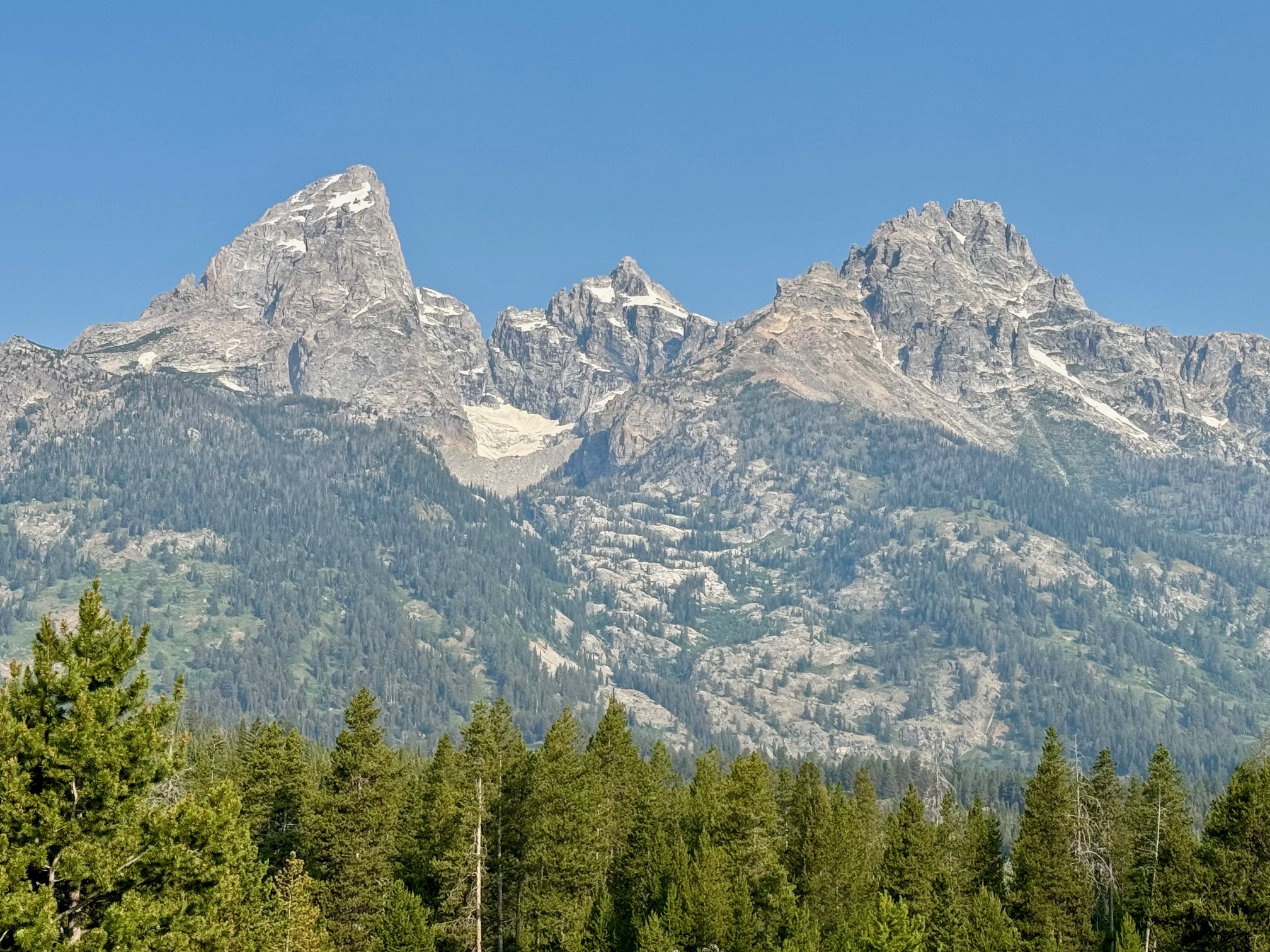
Grand Teton and Mount Owen, Teton Glacier, a tiny little blue striated sandwich in between, 2024. Image, my own.
—-
To reach the cemetery, I drive west across limestone plateaus which rise in graduated benches as Utah’s Great Basin climbs to meet the Uinta Mountains. The Mountain Home cemetery sits atop a ridge in the middle of farms of cattle and fields of alfalfa which are gradually greening on Easter Sunday 2006 as wheel lines rhythmically pulse water across field after field. When I am there, I hope she feels that she is home.
Grandma has two headstones. One slab of stone sits in the Manti, Utah cemetery, the other rests in Mountain Home, Utah. Her bones weren’t laid beside those of her third husband in Manti. Instead, her name, the short version– Dorothy A. Mickelson, is etched into the granite next to his– Clifton Christian Mickelson. I don’t think that her dates- birth or death- were blasted into Cliff’s headstone after she died. Her bones are buried here in Mountain Home. She said once, “I want to wake up among the gentle Farnsworths.” Her second husband’s people. How long will her bones lie there? One hundred years? Two? A millennia? More? I can’t tell.
There’s a kind of hope inked in Grandma’s big black scriptures. Maybe I will see it the way that Ezekiel describes, “there was a noise, and behold a shaking and the bones came together, bone to his [her] bone… lo, the sinews and the flesh came upon them, and the skin covered them… and the breath came into them, and they lived, and stood up upon their feet…” Like, holy shit, an entire human being reconstituted, recombined, resurrected. Incredible. The description of resurrection from an ancient prophet once filled me with joy. But maybe her essence is already carried through the world on dust, atoms, mycelium, and pollen from the flowers and grasses that grow through the graveyard. Now Earth will boast Grandma’s stuff, the simulacra of her life carried on the wind through Mountain Home and the Uinta Mountains.
—-
Reverberation by Megan Dickson
It’s impossible to feel alone soaking in the reverberation of humanity ringing through the great halls of civilization. The echo. The sound. The deconstructed interplay of all those expressions and explications bouncing and bounding around in the domed, arched architecture. Dancing over the simulacra, art, massive and tiny, representative of nothing and everything. The absolute alacrity the beatific joy of each repercussive utterance. Jazz. A fusion of improvisational auditory stimuli. The resounding transcendence of humanity in the envelope of a space. Astonishing.
—-
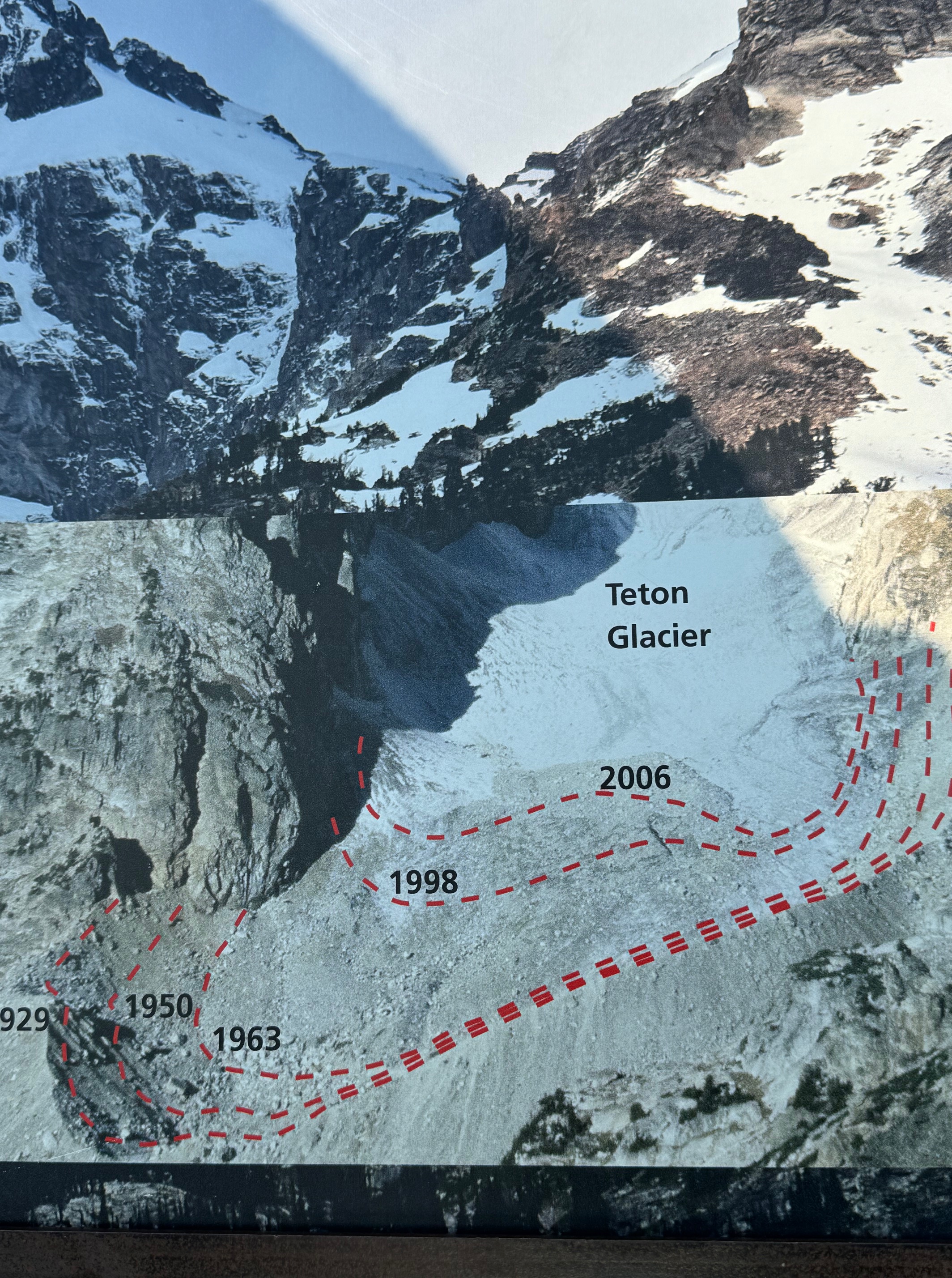
Grand Teton National Park placard showing Teton Glacier’s retreat, 2024. Image, my own.
—-
Glacial recession obviously isn’t confined to Alaska or the poles. Even in Grand Teton National Park, the glacial retreat has been relatively well documented in the 19th century. It simply reminds me that no place on Earth will remain untouched by climate change. To our current understanding, there is no location where humans won’t experience the changes of the ever-warming earth. After hiking up some incredibly steep terrain with my sister a weekend ago, I can attest to how the heat affects humans in outdoor environments that used to be much cooler, even in the summer.
The hike itself up to Amphitheater Lake at 9, 850 some odd feet, is around 2,900 feet of elevation gain overall from the Teton Valley floor. The going is tough. Even for me, and I’m accustomed to life above 7-8,000 feet. I’ve go the lungs and legs for it, but this grade is brutal. The thing that drives you on when you hike is the peak. To reach the top. To look out over the many horizons you’ve melted. Up, up, and up we climbed. Not only did we want to reach the top, the gift was knowing that an icy glacier and snow-melt fed lake awaited us at our destination.
Up, up, and up the mountain. Jaw-droped and wide-eyed at the incredible crags, cliffs, arêtes, and sheer walls at the tipy-top of this incredible range. Mermaid–jump, dive, cool, swim. Down, down, down the mountain to a parking lot so hot that the waves of heat rise from the white gravel rocks making the horizon look like a circus mirror mirage. What does it all mean? The other reason to climb, hike, bike, or generally get outside is to leave the rush and pressure and unanswered questions of humanity behind.
To sync back into the rhythms of the Earth that have kept, housed, harbored, and nourished all life on this glorious planet for thousands upon thousands of years. Except this time, like a broken record, I can’t get the image of the recession of Teton Glacier out of my head. The reality is really ruining my vibe. Thought ridden, and wanting to focus on the moment, I pull off the narrow trail onto a rough patch of mountain meadow. I take deep cleansing breaths and remind myself that the answers humans need and seek from science, from sociology, from art, from politics, and from each other must be reached together– as a collective. When my personal understandings of how I can help to limit or roll back climate change become more clear, I will pivot. The simple wish is that humanity will have enough time to make changes in a world that seems perched on the precipice of climate disaster. Right now, all I can do is hope.
*This is the final essay in a series about climate change from one humble human perspective. The losses we stand to face in the future feel more real, more palpable each heated day of this record breaking climate summer– 2024. To my people: thank you for reading, liking commenting, and sharing. I am so grateful for the journey that writing creates– writer and reader in community together. You can read my other essays here on my website. Hope (Alaska), Hope (and Ice), Hope (and Earth), Hope (and Loss), Hope (and Love), Hope (and Fire), Hope (and Now).
—-
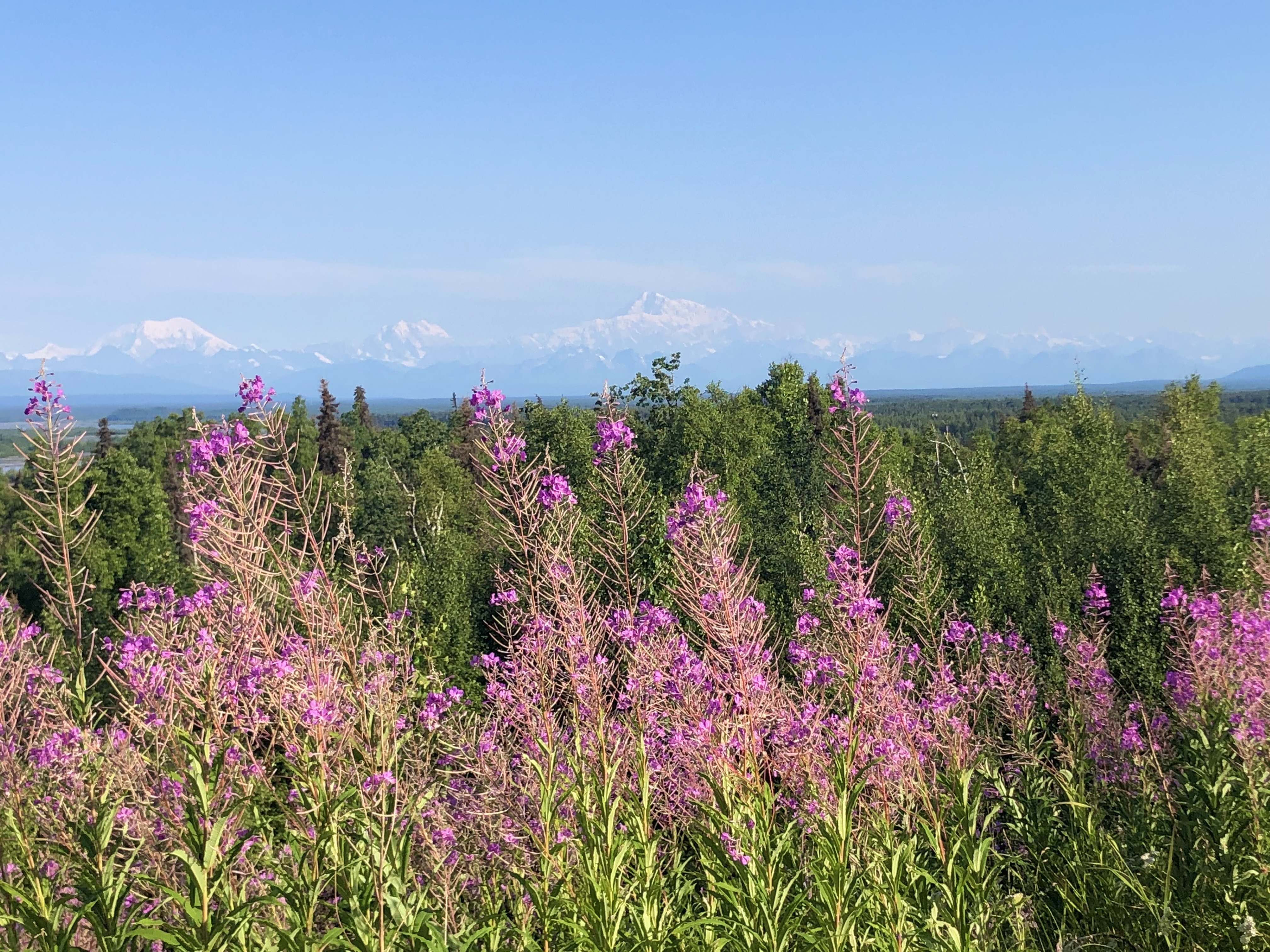
Denali, the Great One, and Fireweed. Taken from Talkeetna, Alaska, 2019. Image, my own.
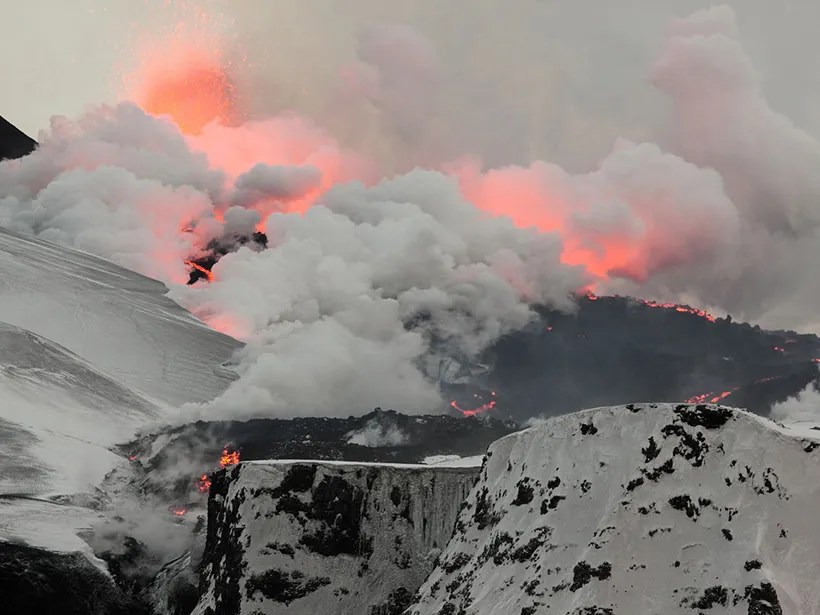
Scientists used white plumes of steam like these to track lava from the 2010 Eyjafjallajökull eruption as it melted the glacier. Credit: Boaworm, CC BY 3.0
——-
Eschatology by Megan Dickson
Life took us to the edge of the known universe
this brink, this precipice, on a red dirt plateau, all rust-verged and jagged, like a tear in heart tissue, like broken bone projecting through soft skin.
skin, bone, sinew often don’t break cleanly so there, on that terrifying cliff, we looked out into the blackness and saw that it was our own
dotted with infinite, swirling stars, nebulous arms of our galaxy, folded across that night, that nothing. we realized the instant we stepped to the fathomless limit
all the light we carried in our core could somehow save us, from this end. So into the starry, inky ebony we leapt, being careful to be sure that we crossed over the boundary between
everything we’d known, into every night we’d ever feverishly dreamed. this jump, this real act of self-preservation flung us into
the heart of the unknown cosmos and there we were to greet ourselves at the gates of our unknowing. we opened the tiny, golden latch on the
impossibly large, swinging metalwork gate, stepped slowly, quietly over the threshold of revelation, everything open and waiting for us in that pitchy gloam still had
to be sensed– felt, touched, tasted, smelled– not physically, but by the fingers of the formerly known soul that now bore this greater knowing. this
was not the end but the beginning. a larger excursus on the limitless infinite than we had previously known. we’ll never know if there
was only one way to this beginning– the ledge, the leap, the jump– our tiny, finite, blink of a guess gives us the idea that, no, there are
many precipices, many pinnacles, many paths to the infinite edges of the unknown into new reaches of galactic consciousness– seeing and knowing more than we
could possibly have imagined yesterday
——-
What will happen when there is no ice left in our house? What will the warming Earth mean for humans and animals? Now, nearly twenty years from some of my most intense life experiences, travel, and living in Alaska, I finally realize that the difficulty with this moment of continuing glacial recession is that it is so very difficult for humans to push past their one-hundred-year lifespans to see beyond to the systems that shape not only our now, but our future.
I’m the first to raise my hand and express that this kind of complex information is difficult for the lay-person to process. So how do we make science, scientific facts, and continued scientific hypothesis and discovery on climate change more bite sized, more commonplace, more palatable. The ignorant me doesn’t have a ready answer for this.
Will we overheat and roast as the seas engulf us before we grasp the stunning reality that we need to move from believing that humans can harness Earth and her resources rather than humanity taking more careful notes on how Earth regulates her own systems?
Are we at the 911 phase of this journey? I scarcely think anyone knows. This summer, 2024, has felt hotter than ever. However, feelings don’t really translate into hard scientific evidence. But my “feeling” is backed up by science. July 21, 2024 was the hottest day ever recorded on planet Earth.1
——-
Fanning the yellowed pages under my thumb, the book fell open easily in my hands to the front inside cover. Plastered under a handwritten note was a sticker of a galaxy spiraling in a sea of black, and under its outstretched arms were printed the words, “Ex Libris Kenneth A. Farnsworth.” From the library of my father. He had been the one who scrawled the message above the sticker, “Mom, with love and gratitude for turning me on to this ‘good stuff’.”
Tenderly, I traced the edges of the sticker, and drew my fingers across the fading ink. This small volume was an important relic from my grandmother’s life, a testament to her love of the written word, to the way she not only relished poetry and prose but had also passed this love on to her children and grandchildren. I thought that the book looked centuries old, an age cracked spine and what looked like a hand stitched binding were beginning to peel apart leaving bits of cheese cloth, paste, and leather showing in between. The worn leather exterior bore the title, stamped in gold ink, One Hundred and One Famous Poems. The copyright read Riely & Lee 1958. I guess relic, old, and antique were relative terms.
For instance, I had mistakenly assumed that ideas surrounding the greenhouse effect, and global warming were part of “new science,” or discoveries made recently relative to my lifetime. The reverse is true. Some of these calculations dated back over a century which makes them almost archaic in my humble perspective. Some of the poets in Grandma’s book– Dickinson, Browing, Emerson, Whitman, Longfellow, Wordsworth– had lived during the time when the first scientific theories about what is now termed the “natural greenhouse effect” were being developed. Englishman John Tyndall is credited with the discovery of greenhouse gases in 1859. He drew a simple comparison, “Just as a dam causes a local deepening of the stream, so our atmosphere, thrown as a barrier across the terrestrial rays, produces a local heightening of the temperature at the earth’s surface.” This wasn’t new science it was old news.
On page 81, Lucy Larcom’s poem titled, “Plant A Tree,” sounded like a worthy credo for an early American environmentalist. She had died just one year before Swedish chemist Svante Arrhenius began testing his theories that coal burning was changing the character of earth’s atmosphere. Larcom wrote, “He who plants a tree… Plants a hope.” In 1894, a year after Larcom’s death, Arrhenius hoped to determine the effect on earth’s climate in the unlikely event that greenhouse gases like carbon dioxide emitted from coal burning ever doubled. His conclusion: if the greenhouse gases doubled, earth’s temperature would rise.
So if basic climate science isn’t new, why has it taken such a long time for humans to perceive, address, or pay attention to these warnings from scientists? The answers are certainly multi-layered: the relatively short time-span of human life, the heated politicization of climate change, the fact that scientific knowledge is not based on speed but on thoughtful interrogation, the fact that we know that Earth has experienced many climate epochs and mass extinctions in its deep past. Climate scientists including glaciologists, often ask very specific questions of climatic change in very narrow systems. Another reason may be that it can be very difficult to determine when humans should intervene in their environment.
In fact, an article in The Atlantic2 this July, offers some insight and ideas about human intervention into glacial preservation, in short, geoengineering. Ross Anderson interviews Slawek Tulaczyk about his projects on Thwaites glacier in Greenland and on the Western Antarctic ice sheet where he has come to believe that one of the only ways that ice, and perhaps Earth, can be saved from ‘catastrophic’ sea-level rise is to give humans more time to grapple with climate change; therefore, Tulaczyk proposes that humans attempt to stop ice sheet from floeing. His hypothesis and process go well beyond all geoengineering feats that have been attempted on Earth this far. In lay terms, Tulaczyk suggests that we pump water out from underneath large glacial ice sheets in hopes that they will readhere to the underlying bedrock. Tulaczyk believes that humans could keep massive ice shelves intact, and in essence, keep them from separating, melting, and causing sea-level rise.
There on my bed, a weird quantum meeting took place. I imagined Robert Frost listening to these glaciologists, then returning home to send the Intergovernmental Panel on Climate Change (IPCC), President Jim Skea, these famous lines,
SOME say the world will end in fire,
Some say in Ice.
From what I’ve tasted of desire
I hold with those who favor fire.
But if it had to perish twice,
I think I know enough of hate
To know that for destruction ice
Is also great
And would suffice.
Fire, ice, ice, fire. From first-hand Northern climate immersion, I would still have to go with the first. I’d say fire.
Geldingadalagos, Eruption at Geldingadalir Iceland, 2006, credit: Mangus Johannsson
——
Two days after my grandmother’s funeral, my fingers brushed the soft sheen of one silk square of quilt. Bright mauve lilacs, butter daffodils, and blush sweet peas undulated across the small cubes of fabric. I drew a cubed piece of leopard print fabric to my nose, hoping to catch even a faint breath of her. A gaudy half-moon of colorful Klein blue silk shone in front of me masking the neutral brown tones of the living room carpet in my parents’ home in Duchesne, Utah.
She would have worn any one of these silk creations anywhere. That was the best part. Sure grandma had the shirts that were reserved for church, but it was just as common to find her out behind the house in the garden sweating under a wide blue sky, a broad brimmed straw hat, and a silk shirt splashed with brazen colors clashing in contrast to the hue of her pants. Perfectly garish.
My sisters and I quietly continued our work. Grabbing a shirt from the silky mound behind me, this one a deep emerald green I remembered how at Christmas she had once worn it with a pair earrings stuck through the collar her idea of “jazzing up” an ensemble. Ostentatious octogenarian that she was, we were cutting all of her shirts into quilt squares, though no one in the family, children or grandchildren, had ever made a quilt.
There were plenty of decisions surrounding her death that caused familial disagreement– her obituary, her headstone, her viewing. Most of these squabbles came from the amalgam of contrasting beliefs, values, views, and lifestyles manifest in her posterity. But everyone seemed to want to hold on to these shirts and other articles of clothing sometimes so threadbare, frayed, unraveling that only a few small quilt squares could be saved.
*(This is the latest in a series of essays here on Refined + Rugged. They include: Hope (Alaska), Hope (and Ice), Hope (and Earth), Hope (and Loss), Hope (and Love). I’m exploring what it means to be human in a time of unprecedented climate change. As the world warms, and humans begin and continue to adapt to these massive climate changes in our lifetime, what will this mean for our environment, our Earth, our children, and our grandchildren. As always, thank you for reading, commenting, liking, sharing, and generally pondering these questions with me. Love, Megan)
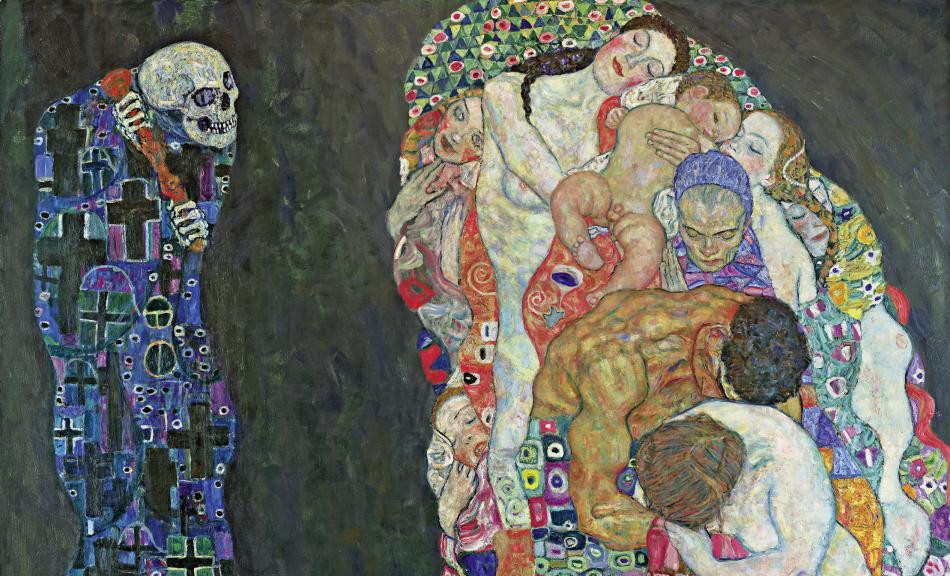
Death and Life, Gustav Klimt, 1910, Leopold Museum, Vienna, Austria. This “life” is comprised of all generations: every age group is represented, from the baby to the grandmother, in this depiction of the never-ending circle of life. The solitary, darkly dressed figure of death stands on the left.





 Refined + Rugged