And now I bow In the nave I built with my Own hands A force of will Maybe, and of Hope, and strength And love, and Power, and good Ness and weak Ness and sacrifice And longing and Grief and beginning I kneel before this Altar to my dreams Before I burn It down, before The doing and Undoing pulse Through my being And there it is Again, my knowing In the unknowing That this temple This altar this Divine expression Must ignite, must Burn, must be made Into ash, and thereby Made into everything That comes after– The garden, the Synagogue, the holiest Holy, of all the sacred Spaces, filled with the Breath, the Fire of the Divine Universe intoned In your throat, in your Heart, in your center Melted to make Way for something New
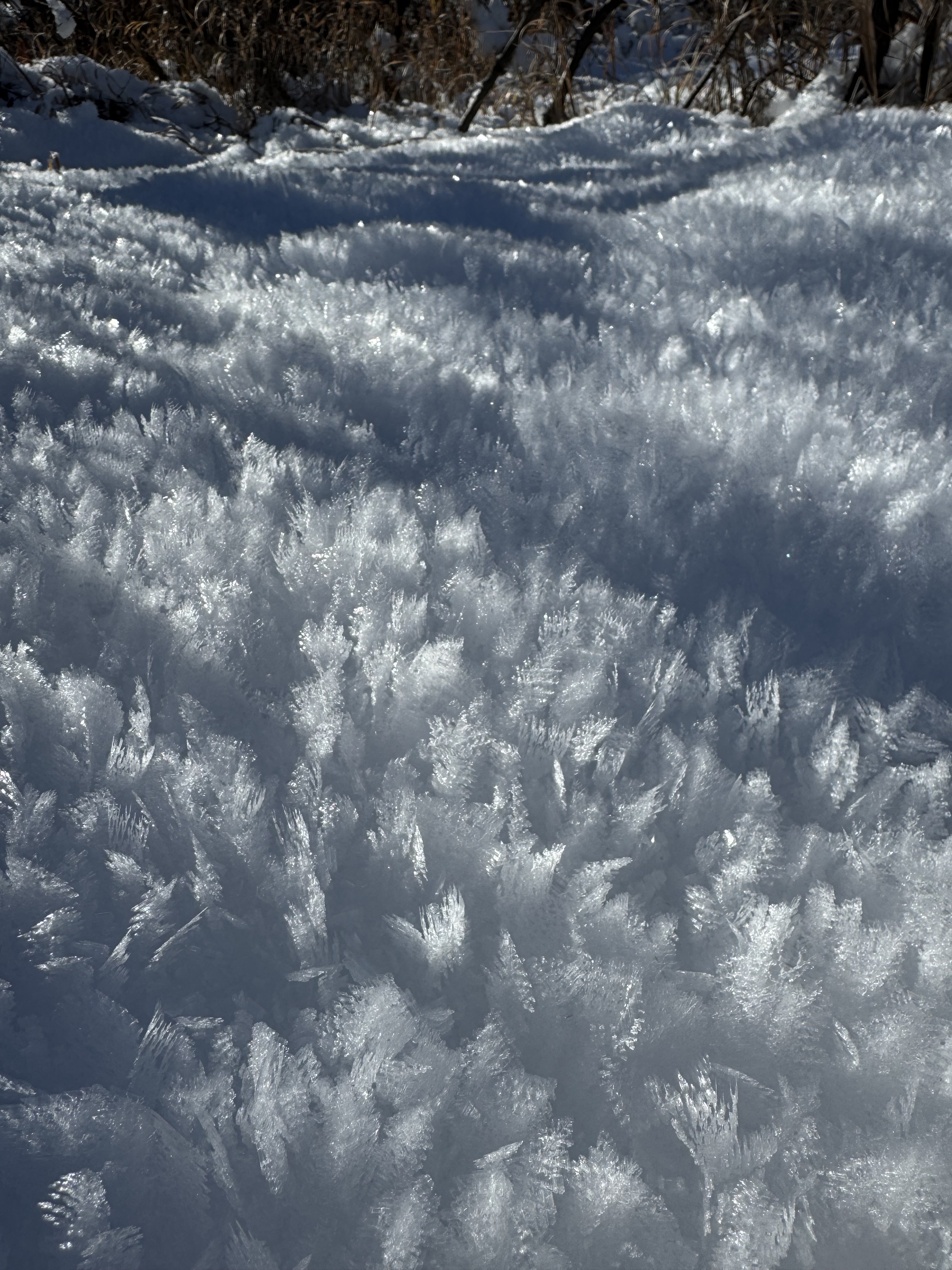
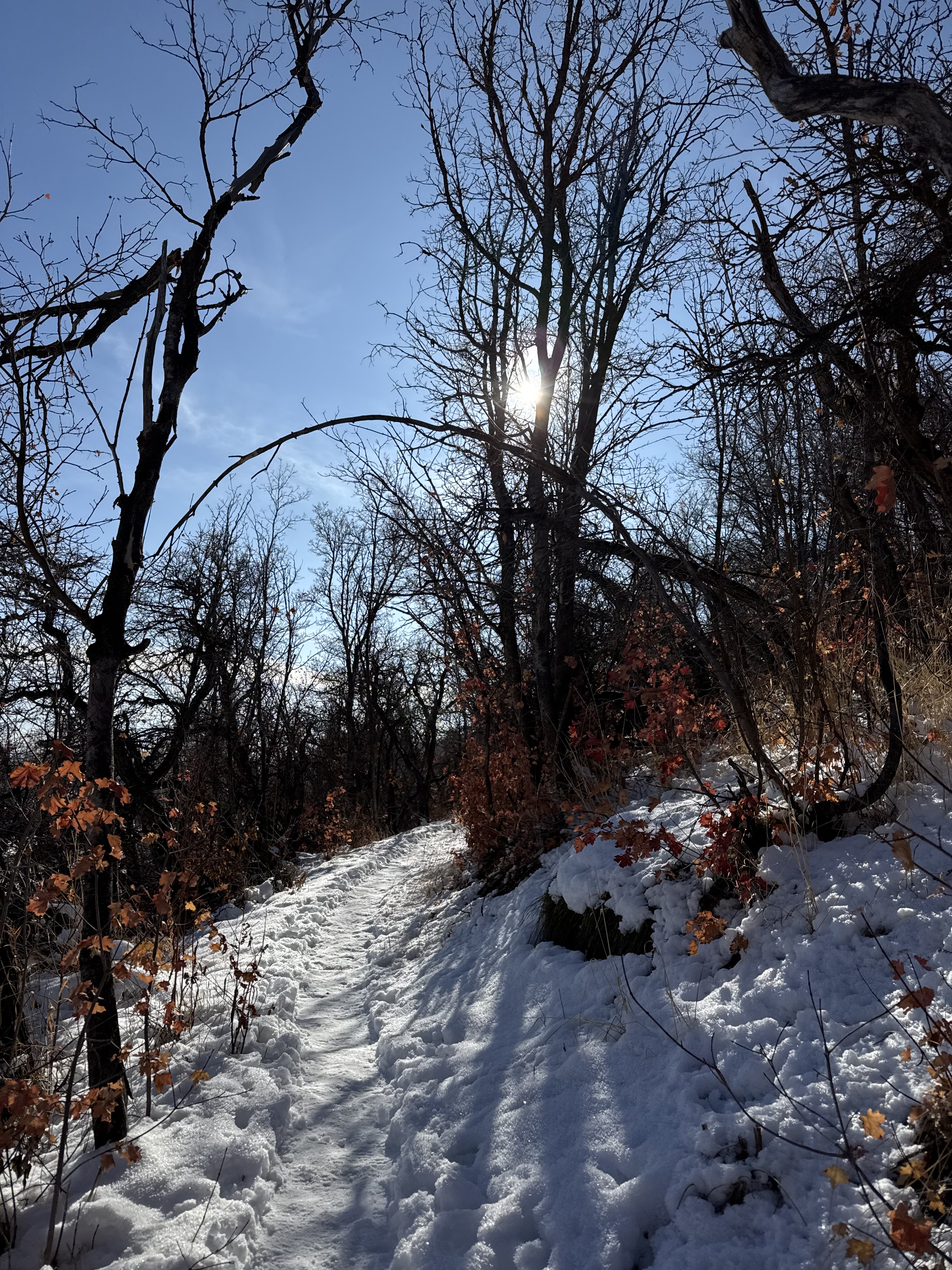
Wintery walk. Image, my own.
Gift
Sometimes the memories And myths that were woven Into your childhood become Magic again to your arcing Soul. The songs that break Forth in trumpets. The Prayers that end in good Tidings. The trees all Dressed in snow and stars Light against long December Nights which beg gathering And joy-filled repasts
Aspen and snow. Image, my own.
Roads Taken
Two roads diverged in a snowy wood And knowingly, quiet and somber I stood, looking out on the starry, moonlit way then took the path that had already been trod
With careful foot-fall through the hoary frost, after the ribbon of travelers who’d crossed the fork in the road, the decision place And rather than test the dark and the cold
I took the chance to walk along where others had gone, and bend my care instead to perceiving the moment, the present The here, the now, the trees and the fences
I shall be telling this in an age from maiden, to matron, to crone, to sage, I took the road that many had paved And made it my journey, anyway
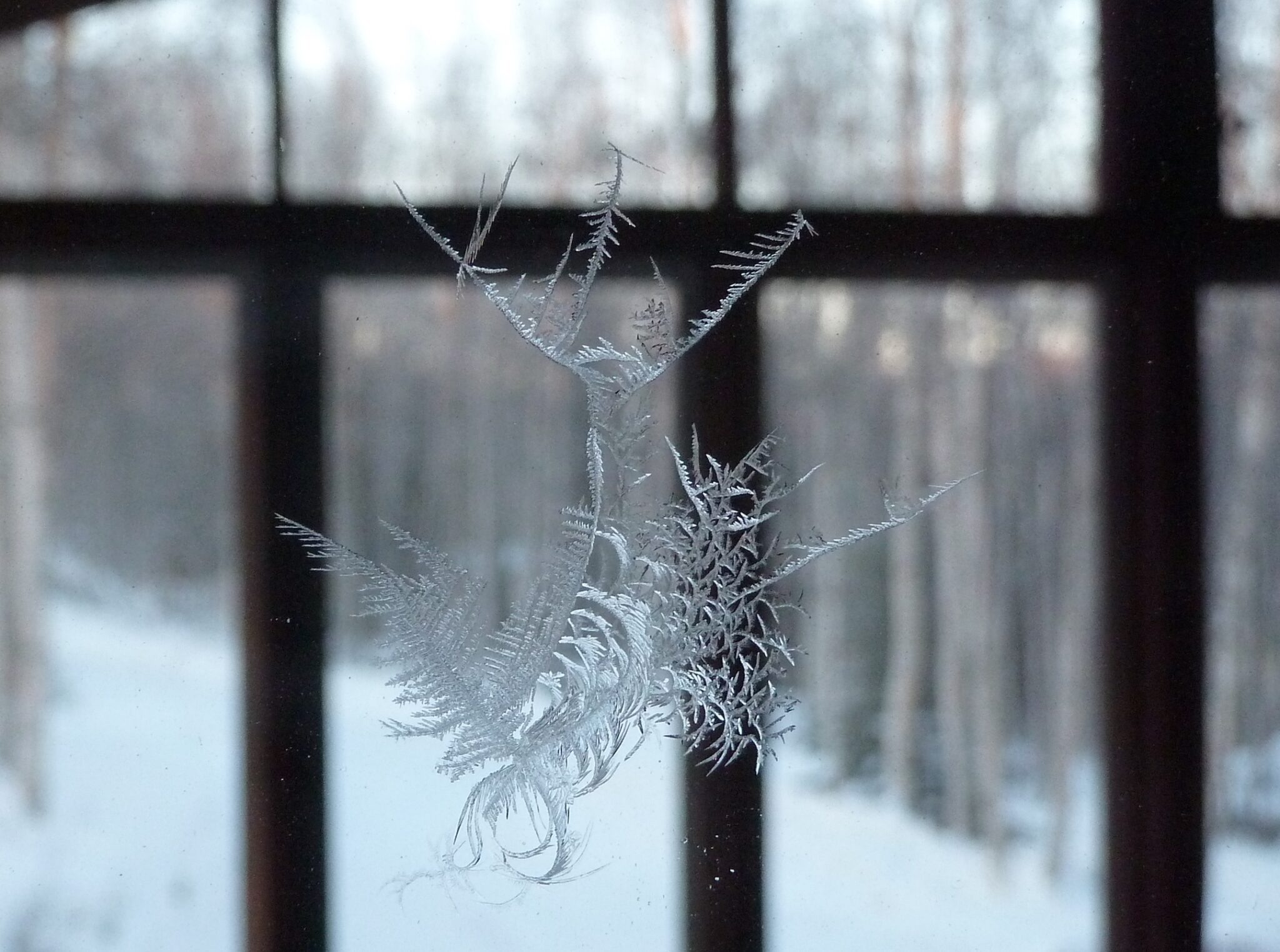
Fern Frost. Photograph: Skip Via, West Valley Naturalists.
Braid
dark and light strands of fermion behavior spin good evil if they exist tethered whole to the same fate maybe driving Dirac’s trick as truth every particle we are made of even distantly is woven, connected to the cosmological horizon, all tangled up, simultaneously unspun strand by strand into infinity
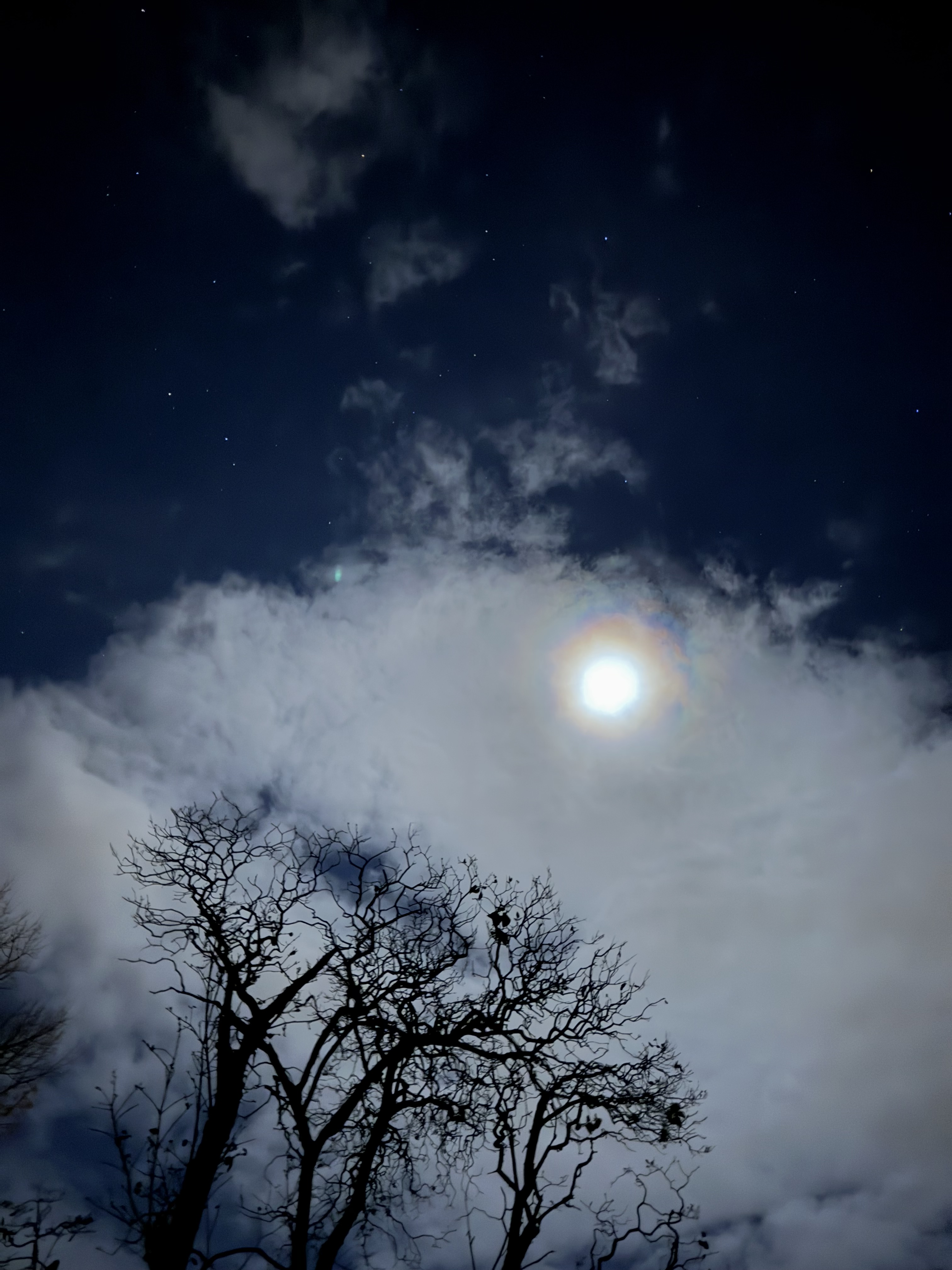
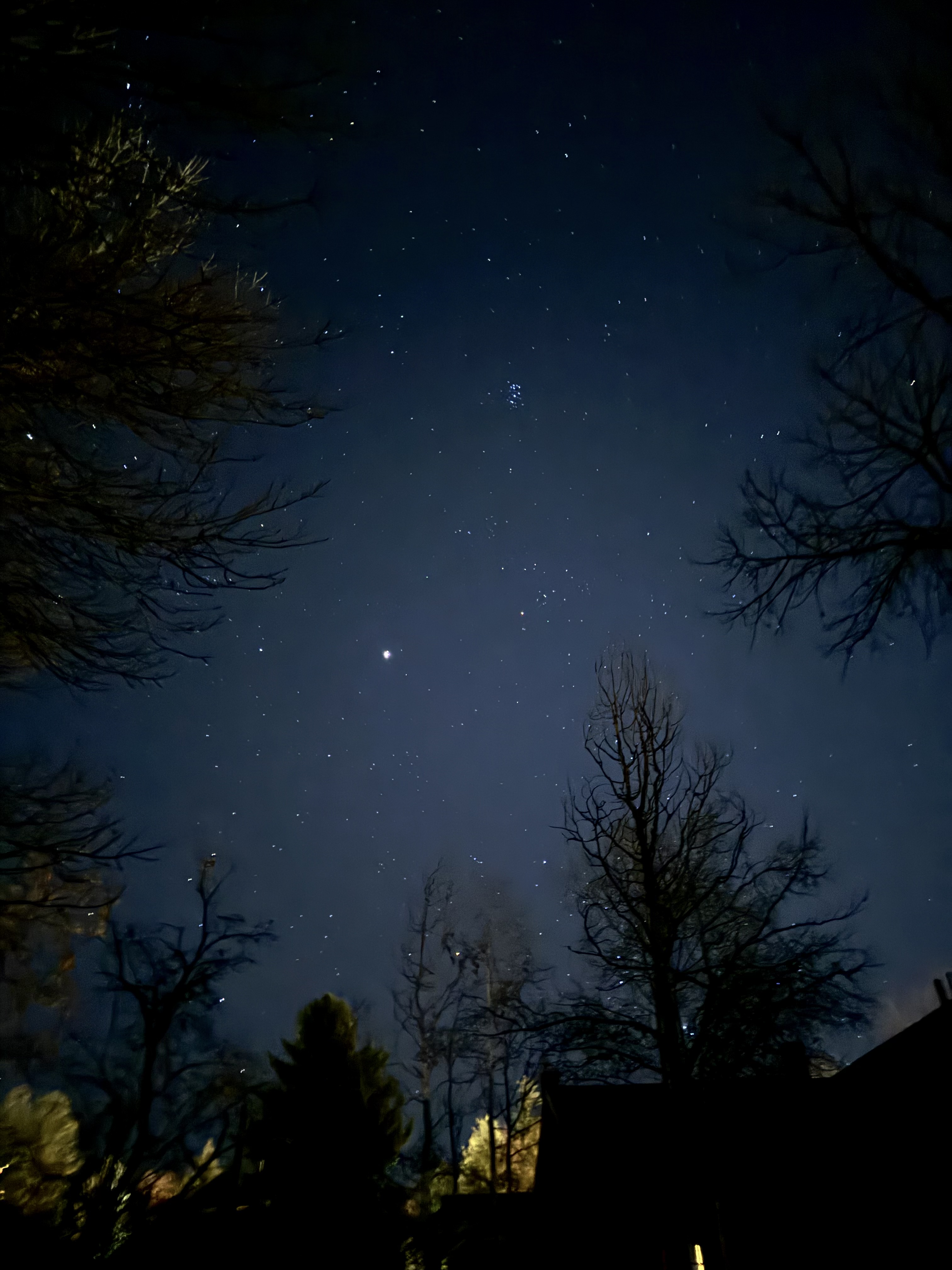
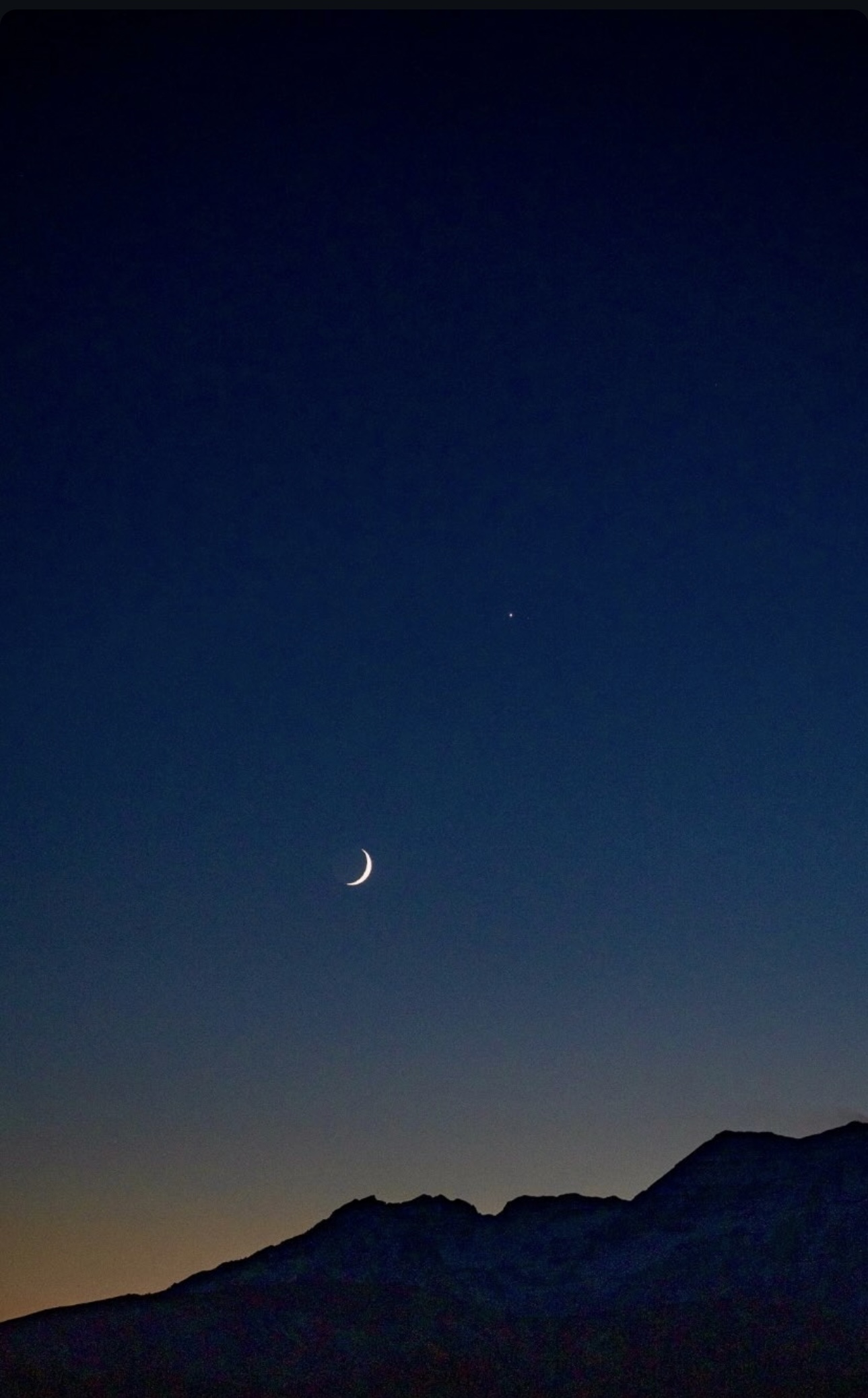
Jupiter and the Pleiades. November. Northern Hemisphere. Image, my own.
Holocene
When the sky lifts, so lapis and milky blue, Your ocular senses are overwhelmed The owl calls out, into and through the pencil- Sketched branches of the cottonwood, then Down from the neighbor’s roof, as the golden
Sky continues to lift into day, a flat aquamarine The stark lines of leafless branches against The air stand beckoning, the promise and Possibility of new– growth, change, revivification Glittering diamonds of momentary snow still
Hold winter’s mystery. We do not know what We will be when the new buds come, but only What is– this moment, this tree, this Possibility of everything, anything Makes our heads spin and swim
Bounded by our humanness, mortality Consequence, but dazzled by all that is In us– the roads we’ve wandered, mountains We’ve scaled, journeys taken and joyed over And travailed. So much unknown
It still feels like the owl is a good omen Round white face, deep open amber eyes, wide And night-visioned, all the flecks and freckled feather patterns of each wing spread against dawn and dusk Gifts that portent deaths and lives to come
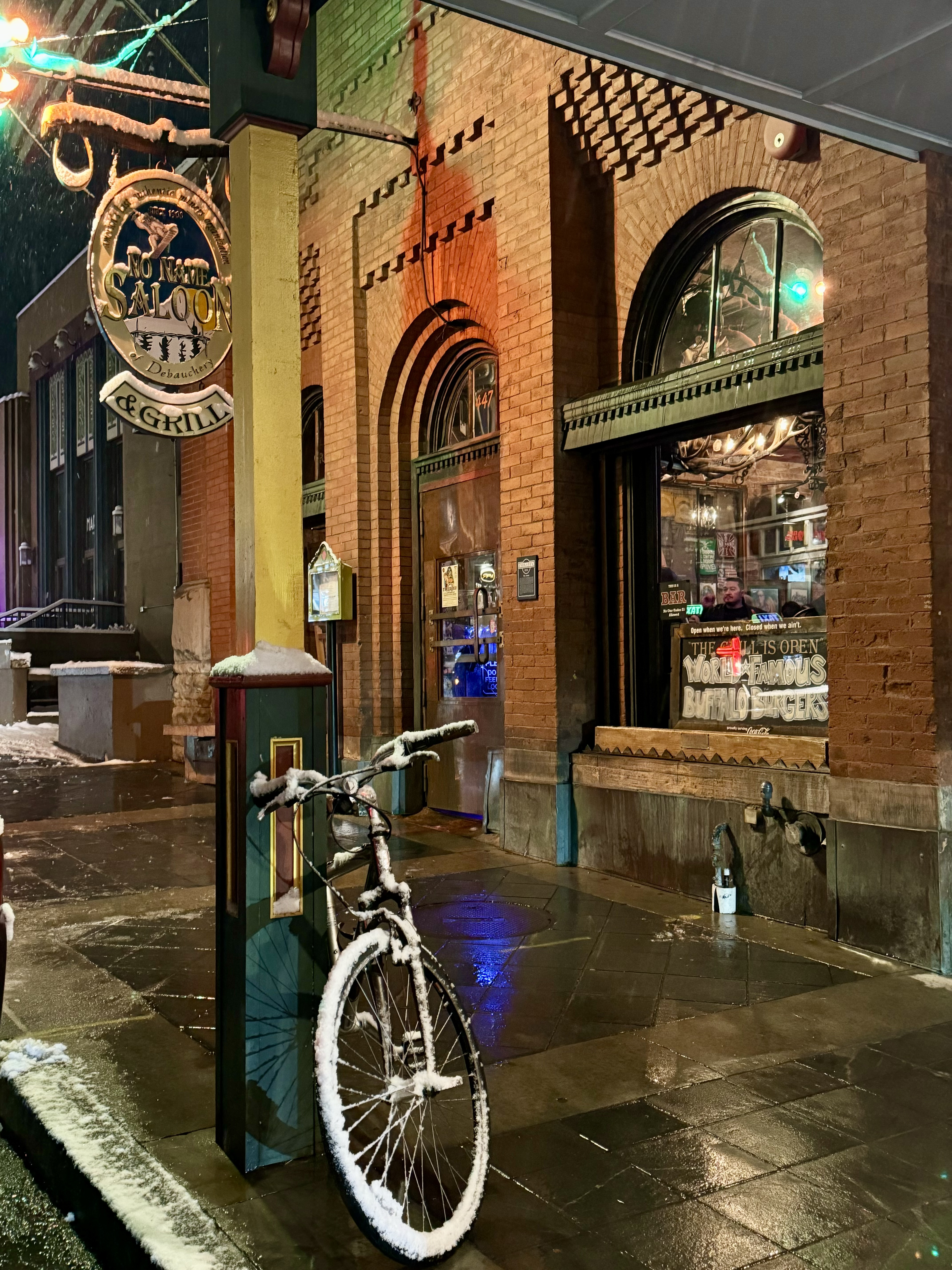
No Name Saloon. Park City. Image, my own.
Shoes
When your shoes wear out run like hell through tulip fields Take off to the mountains Climb every geologic Formation Just to Prove You’re alive You can You’re not dead… yet You still want To spend that moment with the crickets under night’s blackness only the stars know you’re there
When your shoes are worn out you take your daughter to the gravel pit and train your camera lens on the North Star tripod so still to prove you know where you are going even though you Don’t you depress the shutter let the sky bleed in for hours and all you are left with is time
No time left But you have those Shoes to remind you to keep you on your journey Home– Through– Around– To– To that time When the cosmos smudged its glory across the lens of your camera Film Still the most sure sign that the stars will fall in to center North Balance bringing these stars to you
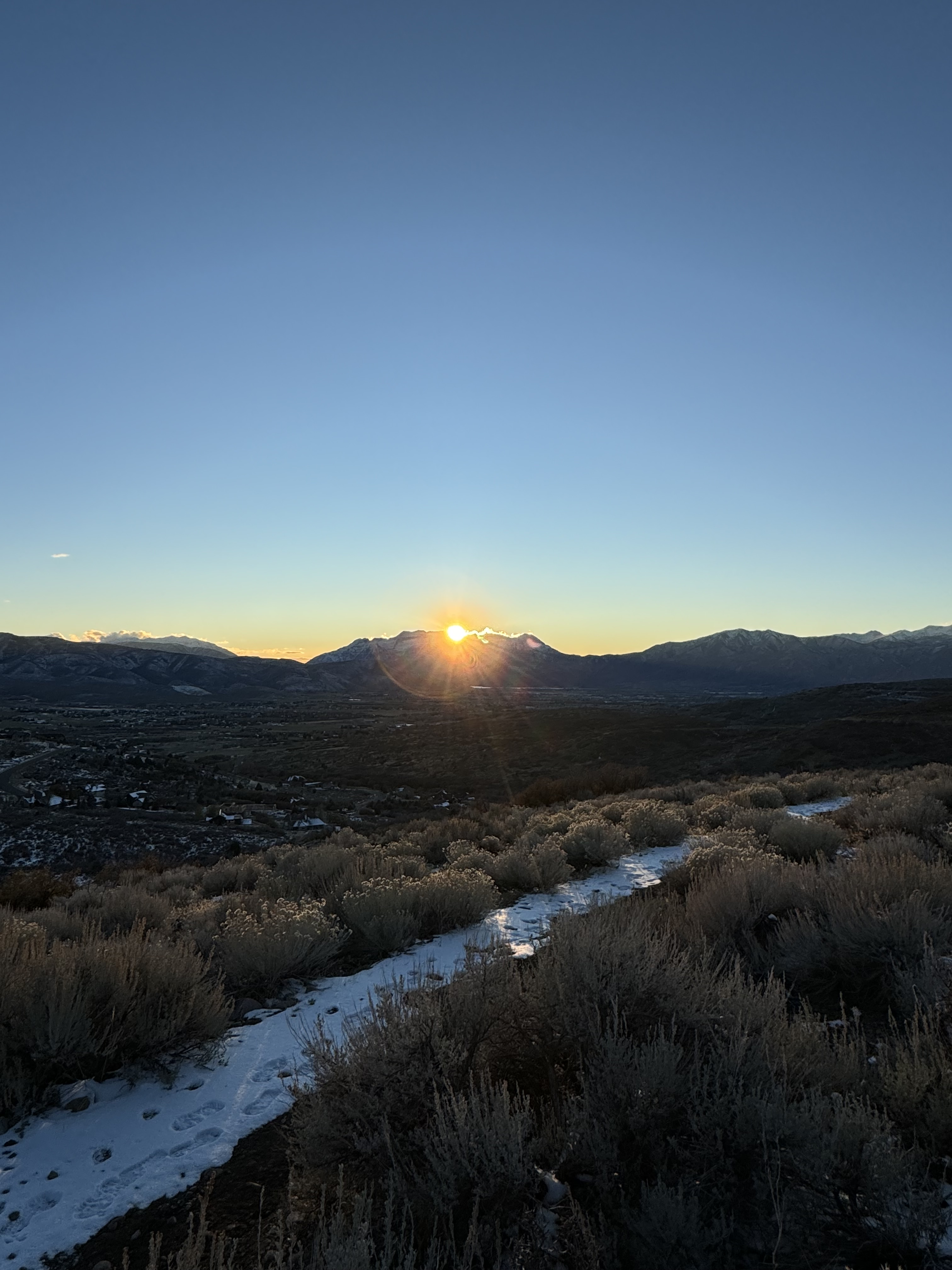
Autumn Sunset. November 2024. Image, my own.
Question(s)
For all those who question: Borders Boundaries Countries Alliances Allies Friends Enemies Economies Lovers Children Fools Frauds Race Place Faith
I love you
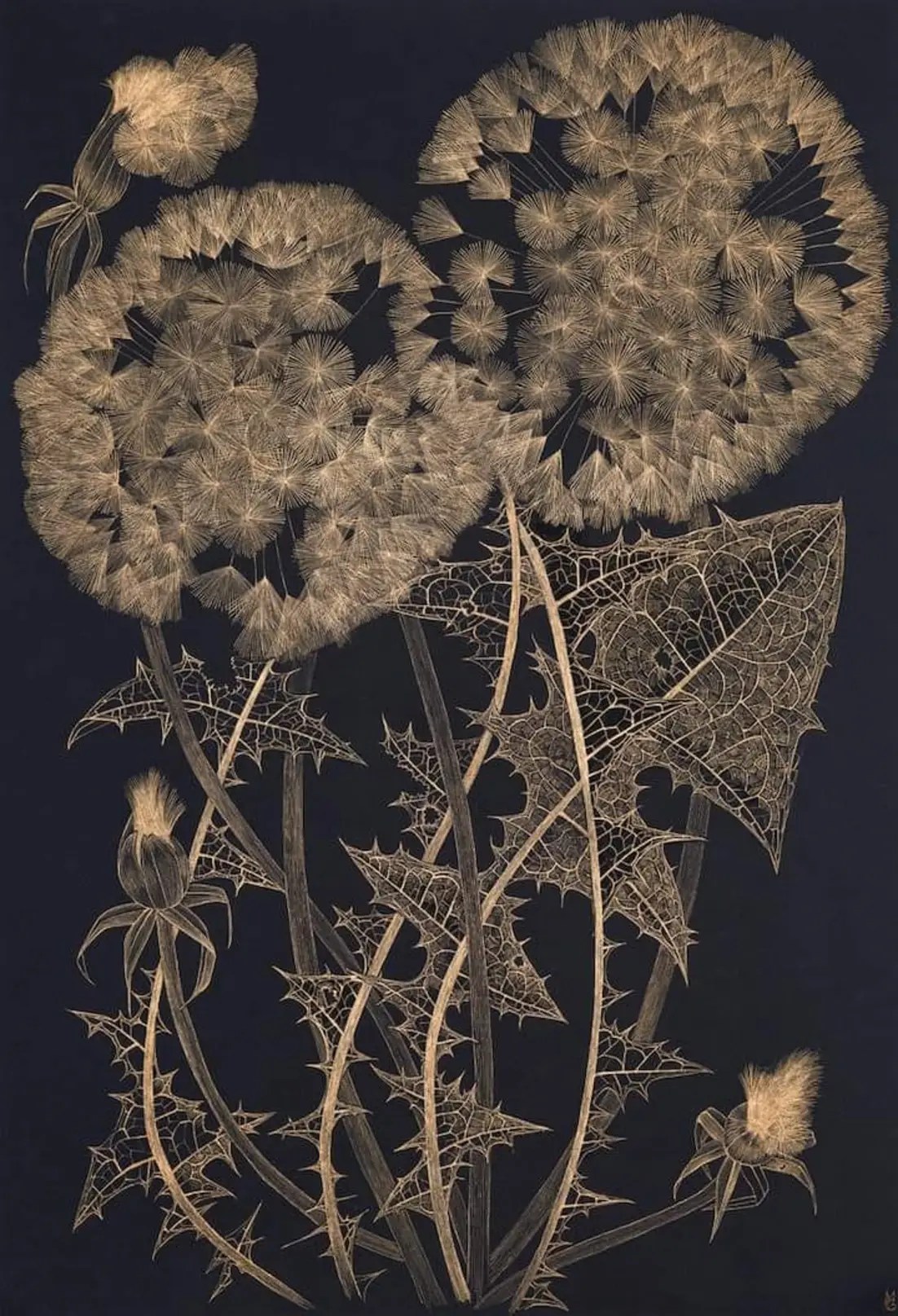
Winter Dandelion. Acrylic on heavyweight cotton paper. Margo Elizabeth Glass. 2024
Night Guide
When Ursa Major dips so low In the Northern Hemisphere that Only her two guiding stars are Visible in the deep of darkness Black, the seven sisters start to rise Pleiades, in silent winter’s night as Cassiopeia, queen, stands out above The calm chill also pointing her way to our Closest cosmic simulacrum Andromeda The stars are there, uncaring and seemingly Cold, distant even impossibly far, and yet Known, seen, perceived though the crickets Haven’t made a sound, the air, nearly Incorporeal breaths of rest, sleep, A thousand dreams take flight
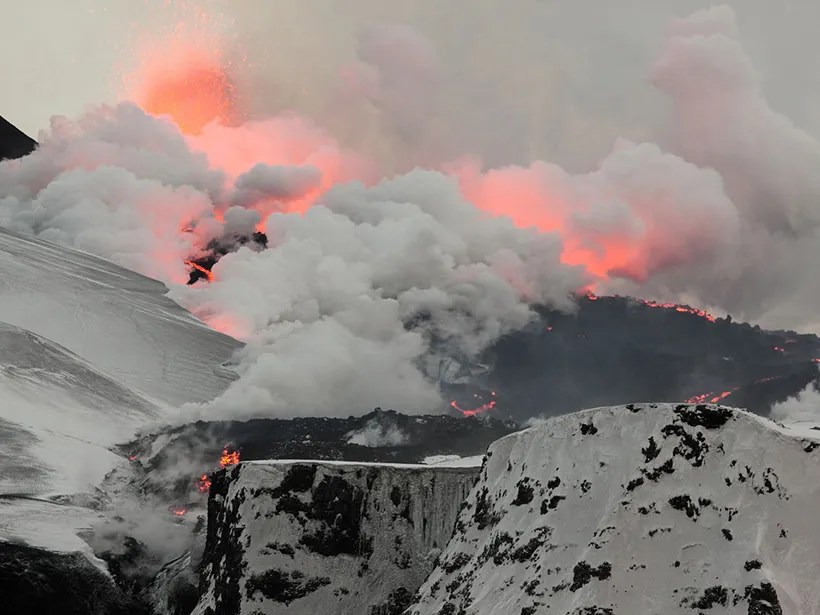
Scientists used white plumes of steam like these to track lava from the 2010 Eyjafjallajökull eruption as it melted the glacier. Credit: Boaworm, CC BY 3.0
——-
Eschatology by Megan Dickson
Life took us to the edge of the known universe
this brink, this precipice, on a red dirt plateau, all rust-verged and jagged, like a tear in heart tissue, like broken bone projecting through soft skin.
skin, bone, sinew often don’t break cleanly so there, on that terrifying cliff, we looked out into the blackness and saw that it was our own
dotted with infinite, swirling stars, nebulous arms of our galaxy, folded across that night, that nothing. we realized the instant we stepped to the fathomless limit
all the light we carried in our core could somehow save us, from this end. So into the starry, inky ebony we leapt, being careful to be sure that we crossed over the boundary between
everything we’d known, into every night we’d ever feverishly dreamed. this jump, this real act of self-preservation flung us into
the heart of the unknown cosmos and there we were to greet ourselves at the gates of our unknowing. we opened the tiny, golden latch on the
impossibly large, swinging metalwork gate, stepped slowly, quietly over the threshold of revelation, everything open and waiting for us in that pitchy gloam still had
to be sensed– felt, touched, tasted, smelled– not physically, but by the fingers of the formerly known soul that now bore this greater knowing. this
was not the end but the beginning. a larger excursus on the limitless infinite than we had previously known. we’ll never know if there
was only one way to this beginning– the ledge, the leap, the jump– our tiny, finite, blink of a guess gives us the idea that, no, there are
many precipices, many pinnacles, many paths to the infinite edges of the unknown into new reaches of galactic consciousness– seeing and knowing more than we
could possibly have imagined yesterday
——-
What will happen when there is no ice left in our house? What will the warming Earth mean for humans and animals? Now, nearly twenty years from some of my most intense life experiences, travel, and living in Alaska, I finally realize that the difficulty with this moment of continuing glacial recession is that it is so very difficult for humans to push past their one-hundred-year lifespans to see beyond to the systems that shape not only our now, but our future.
I’m the first to raise my hand and express that this kind of complex information is difficult for the lay-person to process. So how do we make science, scientific facts, and continued scientific hypothesis and discovery on climate change more bite sized, more commonplace, more palatable. The ignorant me doesn’t have a ready answer for this.
Will we overheat and roast as the seas engulf us before we grasp the stunning reality that we need to move from believing that humans can harness Earth and her resources rather than humanity taking more careful notes on how Earth regulates her own systems?
Are we at the 911 phase of this journey? I scarcely think anyone knows. This summer, 2024, has felt hotter than ever. However, feelings don’t really translate into hard scientific evidence. But my “feeling” is backed up by science. July 21, 2024 was the hottest day ever recorded on planet Earth.1
——-
Fanning the yellowed pages under my thumb, the book fell open easily in my hands to the front inside cover. Plastered under a handwritten note was a sticker of a galaxy spiraling in a sea of black, and under its outstretched arms were printed the words, “Ex Libris Kenneth A. Farnsworth.” From the library of my father. He had been the one who scrawled the message above the sticker, “Mom, with love and gratitude for turning me on to this ‘good stuff’.”
Tenderly, I traced the edges of the sticker, and drew my fingers across the fading ink. This small volume was an important relic from my grandmother’s life, a testament to her love of the written word, to the way she not only relished poetry and prose but had also passed this love on to her children and grandchildren. I thought that the book looked centuries old, an age cracked spine and what looked like a hand stitched binding were beginning to peel apart leaving bits of cheese cloth, paste, and leather showing in between. The worn leather exterior bore the title, stamped in gold ink, One Hundred and One Famous Poems. The copyright read Riely & Lee 1958. I guess relic, old, and antique were relative terms.
For instance, I had mistakenly assumed that ideas surrounding the greenhouse effect, and global warming were part of “new science,” or discoveries made recently relative to my lifetime. The reverse is true. Some of these calculations dated back over a century which makes them almost archaic in my humble perspective. Some of the poets in Grandma’s book– Dickinson, Browing, Emerson, Whitman, Longfellow, Wordsworth– had lived during the time when the first scientific theories about what is now termed the “natural greenhouse effect” were being developed. Englishman John Tyndall is credited with the discovery of greenhouse gases in 1859. He drew a simple comparison, “Just as a dam causes a local deepening of the stream, so our atmosphere, thrown as a barrier across the terrestrial rays, produces a local heightening of the temperature at the earth’s surface.” This wasn’t new science it was old news.
On page 81, Lucy Larcom’s poem titled, “Plant A Tree,” sounded like a worthy credo for an early American environmentalist. She had died just one year before Swedish chemist Svante Arrhenius began testing his theories that coal burning was changing the character of earth’s atmosphere. Larcom wrote, “He who plants a tree… Plants a hope.” In 1894, a year after Larcom’s death, Arrhenius hoped to determine the effect on earth’s climate in the unlikely event that greenhouse gases like carbon dioxide emitted from coal burning ever doubled. His conclusion: if the greenhouse gases doubled, earth’s temperature would rise.
So if basic climate science isn’t new, why has it taken such a long time for humans to perceive, address, or pay attention to these warnings from scientists? The answers are certainly multi-layered: the relatively short time-span of human life, the heated politicization of climate change, the fact that scientific knowledge is not based on speed but on thoughtful interrogation, the fact that we know that Earth has experienced many climate epochs and mass extinctions in its deep past. Climate scientists including glaciologists, often ask very specific questions of climatic change in very narrow systems. Another reason may be that it can be very difficult to determine when humans should intervene in their environment.
In fact, an article in The Atlantic2 this July, offers some insight and ideas about human intervention into glacial preservation, in short, geoengineering. Ross Anderson interviews Slawek Tulaczyk about his projects on Thwaites glacier in Greenland and on the Western Antarctic ice sheet where he has come to believe that one of the only ways that ice, and perhaps Earth, can be saved from ‘catastrophic’ sea-level rise is to give humans more time to grapple with climate change; therefore, Tulaczyk proposes that humans attempt to stop ice sheet from floeing. His hypothesis and process go well beyond all geoengineering feats that have been attempted on Earth this far. In lay terms, Tulaczyk suggests that we pump water out from underneath large glacial ice sheets in hopes that they will readhere to the underlying bedrock. Tulaczyk believes that humans could keep massive ice shelves intact, and in essence, keep them from separating, melting, and causing sea-level rise.
There on my bed, a weird quantum meeting took place. I imagined Robert Frost listening to these glaciologists, then returning home to send the Intergovernmental Panel on Climate Change (IPCC), President Jim Skea, these famous lines,
SOME say the world will end in fire,
Some say in Ice.
From what I’ve tasted of desire
I hold with those who favor fire.
But if it had to perish twice,
I think I know enough of hate
To know that for destruction ice
Is also great
And would suffice.
Fire, ice, ice, fire. From first-hand Northern climate immersion, I would still have to go with the first. I’d say fire.
Geldingadalagos, Eruption at Geldingadalir Iceland, 2006, credit: Mangus Johannsson
——
Two days after my grandmother’s funeral, my fingers brushed the soft sheen of one silk square of quilt. Bright mauve lilacs, butter daffodils, and blush sweet peas undulated across the small cubes of fabric. I drew a cubed piece of leopard print fabric to my nose, hoping to catch even a faint breath of her. A gaudy half-moon of colorful Klein blue silk shone in front of me masking the neutral brown tones of the living room carpet in my parents’ home in Duchesne, Utah.
She would have worn any one of these silk creations anywhere. That was the best part. Sure grandma had the shirts that were reserved for church, but it was just as common to find her out behind the house in the garden sweating under a wide blue sky, a broad brimmed straw hat, and a silk shirt splashed with brazen colors clashing in contrast to the hue of her pants. Perfectly garish.
My sisters and I quietly continued our work. Grabbing a shirt from the silky mound behind me, this one a deep emerald green I remembered how at Christmas she had once worn it with a pair earrings stuck through the collar her idea of “jazzing up” an ensemble. Ostentatious octogenarian that she was, we were cutting all of her shirts into quilt squares, though no one in the family, children or grandchildren, had ever made a quilt.
There were plenty of decisions surrounding her death that caused familial disagreement– her obituary, her headstone, her viewing. Most of these squabbles came from the amalgam of contrasting beliefs, values, views, and lifestyles manifest in her posterity. But everyone seemed to want to hold on to these shirts and other articles of clothing sometimes so threadbare, frayed, unraveling that only a few small quilt squares could be saved.
*(This is the latest in a series of essays here on Refined + Rugged. They include: Hope (Alaska), Hope (and Ice), Hope (and Earth), Hope (and Loss), Hope (and Love). I’m exploring what it means to be human in a time of unprecedented climate change. As the world warms, and humans begin and continue to adapt to these massive climate changes in our lifetime, what will this mean for our environment, our Earth, our children, and our grandchildren. As always, thank you for reading, commenting, liking, sharing, and generally pondering these questions with me. Love, Megan)
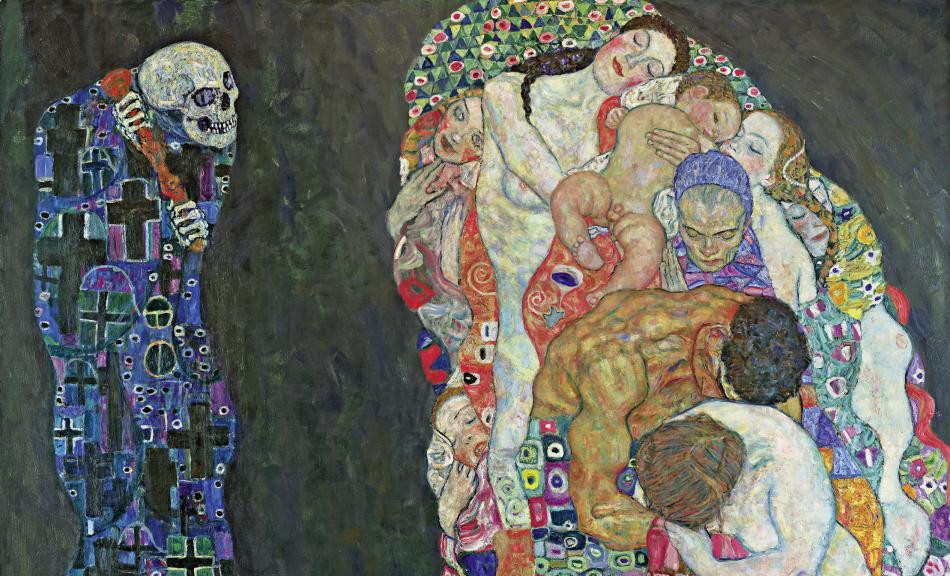
Death and Life, Gustav Klimt, 1910, Leopold Museum, Vienna, Austria. This “life” is comprised of all generations: every age group is represented, from the baby to the grandmother, in this depiction of the never-ending circle of life. The solitary, darkly dressed figure of death stands on the left.
No. 3/13 Mark Rothko, image courtesy of the MOMA, taken by me (2024).
I let the receiver drop onto the cradle with a clatter. 2,642 miles from home, I was working in Skagway, Alaska, my fourth summer up North. The bright smell of May air mingled with the reality of Dorothy’s near-end. Silence engulfed me, swallowed me whole. Memory overcame me, overflowed me. I lay fetal on the hotel bed, waiting for tears to stop running over the bridge of my nose. The universe forgot me.
The phone conversation had yielded spare details. Grandma had been in the bathroom, when she had passed out. Aunt Jan heard her moan as she sunk onto the floor. Finding Grandma unconscious in the bathroom, Jan and my youngest brother Alex had helped to carry her into her bedroom and tried to revive her. After a 911 call, she had been taken to Ashley Valley Medical clinic in Vernal, Utah. Discovering she’d had a stroke, her doctor recommended that she be transported one hundred and seventy-two miles west to the University of Utah Medical Center, in Salt Lake City. She was there now in intensive care.
——-
Dying by Megan Dickson
it was the time of dying yet color still held, sunflowers paused grass, variegated green rest was coming the fall, the browning leaves and roots stems bore that truth the mountain, dusty gray yesterday was dressed in snow again today pinking wreaths of clouds and icy indigo striations of oncoming dusk some death is good the power of it real and raw, and magic turning over seasons the smell of fires, newly burning
——
The retreat of Portage Glacier is not an isolated event as anyone who follows climate science know. But it feels different when you are a first-hand witness as I have been witness to it all over Alaska and Canada. I rattle off a list of the names of retreating glaciers I can remember in my head: Exit Glacier- Seward; Portage Glacier, Goodwin Glacier- Anchorage; Matanuska Glacier- Palmer; Harding Glacier, Denver Glacier- Skagway; Douglas Glacier- Haines; Mendenhall Glacier- Juneau; Hubbard Glacier- Glacier Bay; Grewingk Glacier- Homer. All of them melting at an increasingly alarming rate, some as much as fifty-five feet per year. I want them to stop, halt, pause.
The scene in Alaska is not simply a norm, it is the global glacial rule– melt, recede, retreat. To reach the face of Portage Glacier now, versus the literal “Nature in Situ: A Still Life Display” that I saw at the Visitor’s center in 1988 when I was seven, guests of the park must take a boat around the far side of Portage Lake. Piles of natural gravel called push moraine often stagnate the gray glacial melt water, apostrophized with small bergs and the shrinking face of a rapidly receding glacier. Elizabeth Kolbert, in her article for the New Yorker, 2005, “The Climate Of Man”, in three parts, details a similar experience in Iceland.
Kolbert writes of seeing Svinafellsjökull, in southern Iceland, for the first time, “In the gloomy light, the glacier looked forlorn. Much of it was gray– covered in a film of dark grit.” I could picture Kolbert’s lone form, a small human staccato on the dark sweep of the barren silt field. Her body bent before the ice wall of Svinafellsjökull trying shelter her face from gusts of rain driven by the railing, merciless wind. She continued, “If I returned in another decade, the glacier would probably no longer even be visible from the ridge where I was standing. I climbed back up to take a second look.” Her heaviness met and mixed with my own.
The scientists that Kolbert interviewed regarding climate change don’t simply survey glacial surface ice, they study its core. She synthesizes, “Ice cores from Antarctica contain a record of the atmosphere stretching back more than four glacial cycles—minute samples of air get trapped in tiny bubbles—and researchers who have studied these cores have concluded that fully half the temperature differences between cold periods and warm ones can be attributed to changes in the concentrations of greenhouse gases. Antarctic ice cores also show that carbon-dioxide levels today are significantly higher than they have been at any other point in the last four hundred and twenty thousand years.” Kolbert details that evidence of the climate crisis is irrefutable.
Hope left me. Portage Glacier continued to melt, retreating into the seam in the valley it created between the Chugach and Kenai mountains. If earth’s glaciers continue to melt away at their current rate, roughly half of them could be gone worldwide by 2100. As ice melts, sea levels will rise and Hope, Alaska, may swim and then be swallowed up in the rising tide. Alaska, indeed the whole world, is emerging from the ice.
——-
The last week of May 2005 dragged by. Waiting, waiting, waiting. I listened to hear the phone call of her death. Each day her retreating spirit pressed more heavily on my reality. I couldn’t breathe. I felt like an extra in a cheesy episode of one of her favorite science fiction television shows. I could see myself turning to Star Trek’s Data, the emotionless android and saying, “Her life-force is ebbing away.” Deadpan and emotionless, he would look back at me without reply and blink twice.
I could understand Data’s blank stare. The actuality that she was dying drew a disconnect between the picture in my head and the reports that I heard over the phone from family members, Mom and Dad mostly. Mom related to how Uncle Bob sat quietly playing hymns on his harmonica on a chair next to her bed, and when he had stopped for several seconds Grandma’s hand had shot out to touch his knee. Startled, he asked, “Do you want me to keep playing?” Her fingers had lightly pressed again against his leg. He picked up the harmonica and continued on with renewed vibrato.
But the next phone call, the family would be planning the funeral service as if she were already dead. “We picked out the casket.” “We got a copy of her will.” “We talked to the funeral home.” Those weren’t things you did for the living. I could picture her body-shell lying peaked, motionless on the all-white hospital sheets, could hear the blips of monitors and her shallow, rasping breath, could smell the faint odor of purchased-in-bulk antiseptic cleanser vainly trying to cover the stench of urine and bile– dying. My stomach churned as my mother described the care center that they were planning to move her body to so that she could live out her final days in “peace.”
I desperately wanted to know what was going on in my Grandmother’s core. Was she in pain? Did she need help? Did she feel peace? Though they were with her every minute, my family had no answers for these questions. I became angry, exploded, “What the hell! Why does everyone talk about her as if she is already dead if she is still alive?! It’s gotta be one or the other. She’s either dead, or she’s alive. Which is it?” The words fell too fast for thought and traveled dead-weight across the wire. “Here. Talk to your father,” Mom said.
——-
One Art by Elizabeth Bishop
The art of losing isn’t hard to master; so many things seem filled with the intent to be lost that their loss is no disaster.
Lose something every day. Accept the fluster of lost door keys, the hour badly spent. The art of losing isn’t hard to master.
Then practice losing farther, losing faster: places, and names, and where it was you meant to travel. None of these will bring disaster.
I lost my mother’s watch. And look! my last, or next-to-last, of three loved houses went. The art of losing isn’t hard to master.
I lost two cities, lovely ones. And, vaster, some realms I owned, two rivers, a continent. I miss them, but it wasn’t a disaster.
—Even losing you (the joking voice, a gesture I love) I shan’t have lied. It’s evident the art of losing’s not too hard to master though it may look like (Write it!) like disaster.
——-
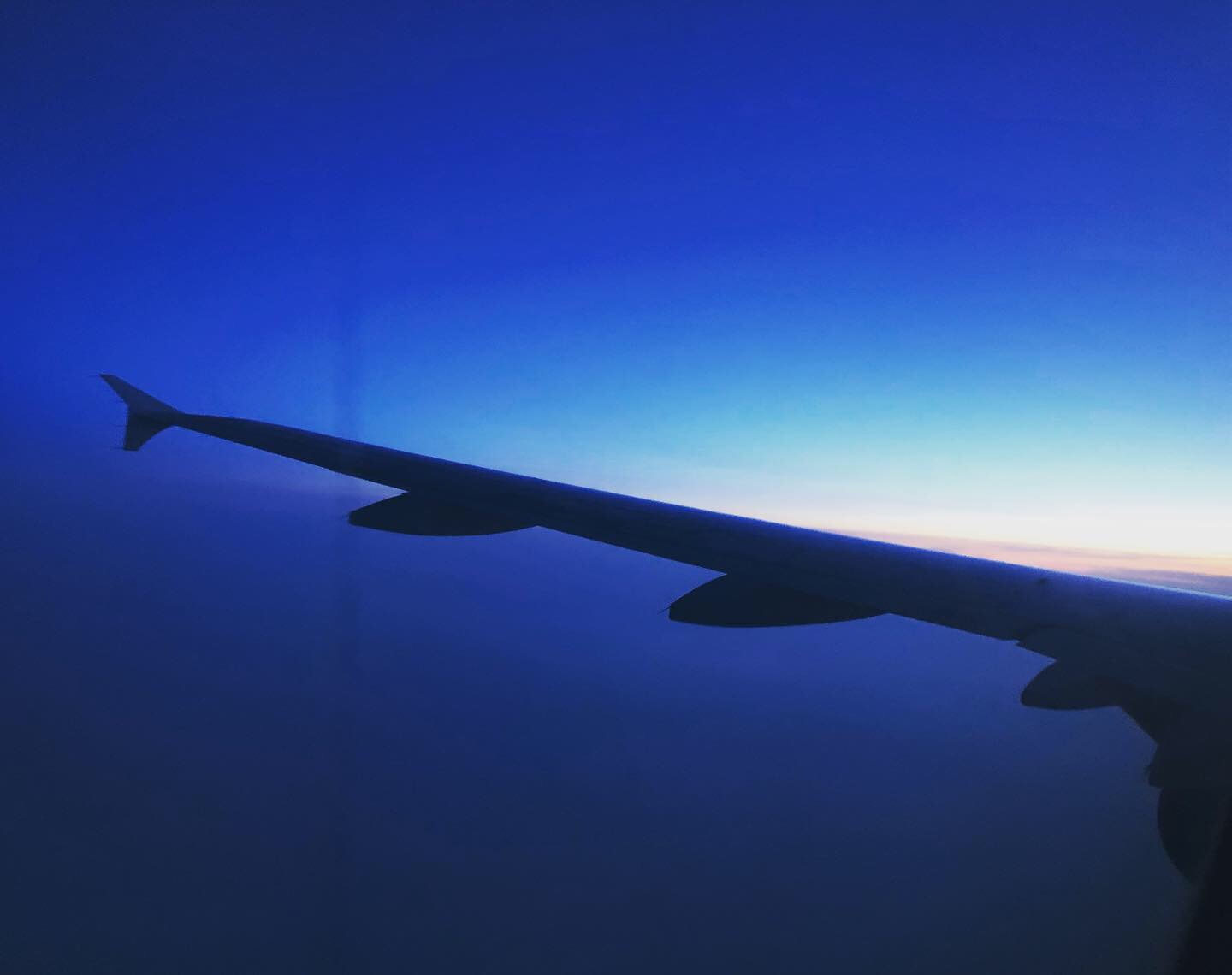
And then she was gone. I caught the red-eye, departing Ted Stevens International Airport, Anchorage, Alaska at 12:30 am, May 31, 2005. Destination, Salt Lake City, Utah. My small window framed a cobalt crown of deepening blue sky. Underscored by dying red the sunset bled into arms of outstretched orange, the purple horizon blurred the line between land and sky. The light died as I flew home to say goodbye.
*(This essay is part of a series of essay about love, loss, climate change, and what shape those experiences take on the human level. You can read my previous essays, poems, and reflections here: Hope (Alaska), Hope (and Ice), Hope (and Earth). Thank you for reading, commenting, liking, and sharing.)
Flight from ANC Anchorage, Alaska, Ted Stevens International Airport to SLC Salt Lake City, Utah (2019) image, my own.



 Refined + Rugged