Home

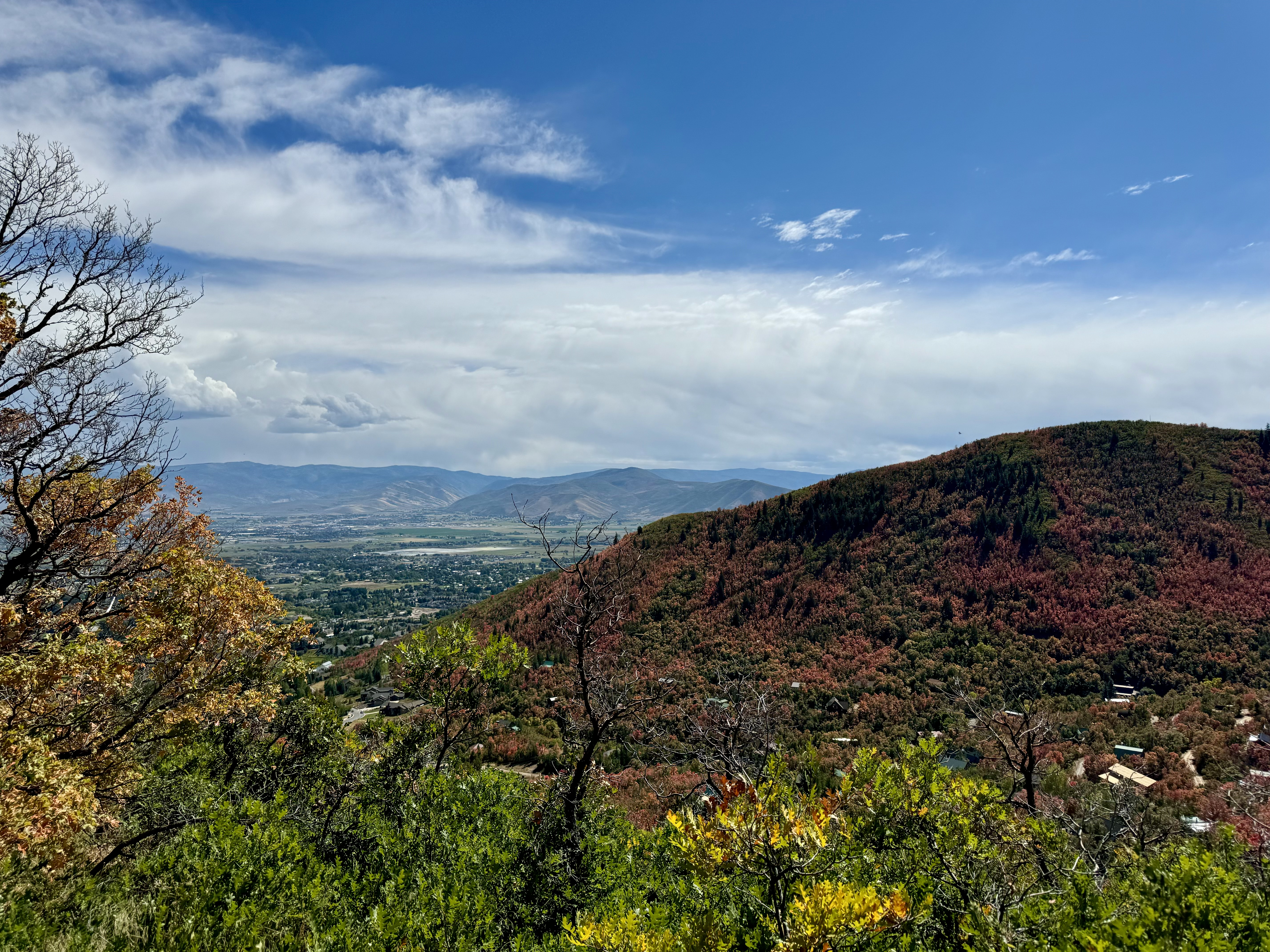
Autumn, overlooking Midway, Utah. Image, my own. September 2024.

Respiration

autumn of last year,
I found myself watching my babies
breath, in sleep, in dream

deep, cadenced pulls of oxygen
fueling all parts of their frames,
their beautiful hearts keeping time

children’s eyelashes soft, curled
the color of milk chocolate,
individuated so perfectly against the

delicate skin of their cheeks,
I wept as their chests rose and fell
at the joy of watching them breath

constant, paced, churning, these fist-sized
hearts, muscling, pushing life-giving nutrients
through their precious, peaceful forms

at night, it gave me peace,
the assurance that everything was
alright, the play of pulmonary veins filling

with nitrogen, argon, all mixed in with O2
being sent to the heart from the lungs
hearts filling the upper left atrium

the heart, house of refreshment, dispersing
the blood rich with food back into the body
through the lower left ventricle

this circle saved me, literally, again and again
imagining how the autonomic, metronomic
rhythms of the heart allowed them to rest

into dream, into sleep, into measured
breaths, into the rising of the inner
oceans, breathing peace
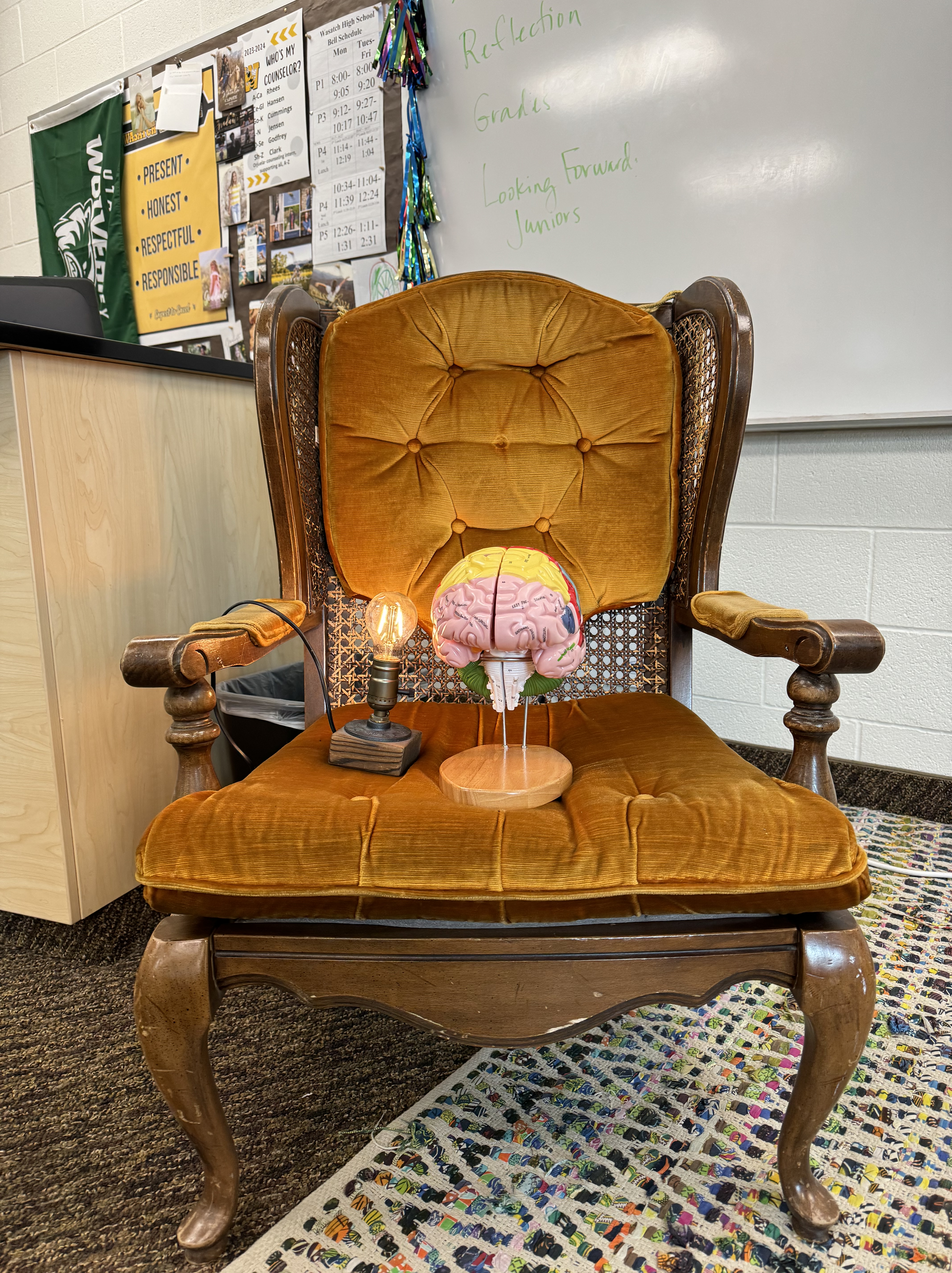
Brain, Lightbulb, Plush Chair. Image, my own. May 2024.

Hippocampus

When my students check out a book from the library
I often encourage them to make a bookmark
Any ratty scrap of paper will do, a plus if it is neon pink
We use this slip of paper to mark where we have
Read, where we are reading, where we have been,
Where we are going. The brilliant thing is that having
A placeholder, having a signpost, having a demarcation
To show how far you have come and how far you must go
Is another kind of marker. It is a memory marker. In print,
In pulpy bound cellulose and black ink, hold in your hand,
Sniff with your nose, the real goodness of paper is that
The brain creates even more memory pins for this
Medium. So now, you are reading a book, but your
Brain even remembers, memorizes, the geography
Of the page. Where did you see that perfect sentence,
At the top of page 67, How far into the book was the
Rising action, the falling sequence, your brain takes in the
Terrain of the page—the paragraph, the thickness of the
Pages you’ve consumed thus far, becomes another kind of
Topography. So intricately is our existence connected–
Touch, sight, smell, taste—all being remembered
Brain cells, neurons, communicating with each other
Regarding the climax of the story, through an elegant
Electrochemical system. A change in the electrical charge of
One cell as you read and integrate the signs and symbols
On the page into a larger story, triggers the release of
Chemicals called neurotransmitters across synapses.
The neurotransmitters are then taken up by dendrites of the
Neuron on the other side of the synapse where they
Trigger electrical changes in that cell. The geography
that print books, and bookmarks represent only strengthens
This circuit, a story arc sweeping into the hippocampus as a
Permanent resident in some synapse of your 100 billion neurons

Crane House Stained Glass. Image, my own. August 2024.

Heart
“So much held in a heart in a lifetime.” -Brian Doyle

I won’t ever be a surgeon
But sometimes I imagine a
heart beating in a human
under the purposeful glare of
a surgical lamp. And I
have a moment to inspect
this beautiful organ with
my own eyes as it pushes
blood throughout the body
I can visualize the thick membrane
of the ventricular septum–
lengthening and shortening in
precise time, the casing
which divides the right
and left heart, the chambers,
the heart walls, muscles,
really, that send the blood
coursing through your body
with constant contract-relax reflexes
a miracle with every beat
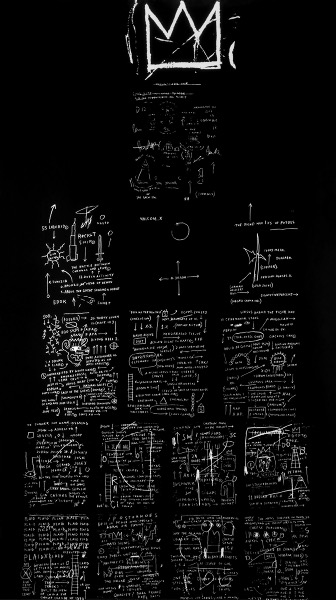
Jean-Michel Basquait, Tuxedo, 1983

Nervous System

I am trying to get my words wrapped around my autonomic nervous system
I am trying to describe how it feels to see a photo where I once existed and have been erased
I am trying to describe the pang, the thousand natural shocks that flesh is heir to
As Hamlet intoned, unlike Hamlet, I’m not trying to leave this life. Here’s my stab.

When I’m in fight or flight, it is harder for me to wrap my words around my nervous system.
It’s those moments when I could really just use a hug– skin to skin, arms enclosing
my body, keeping me safe and calm, a quilt. Instead, in flight I feel as though the
part of my body that is involved in the flying or fighting is nearly numbed, gone, absent

For example, if a man walks in on his wife making love to someone else, his brain, right behind
His eyes may become so activated that it feels as though a horse bucked his skull from the
Inside, like eating far too much pea-colored wasabi paste in one bite, which actually
happened to me, I’m sorry to return to sushi, but it was my first time, and BAM!

Right between the eyes, if I believe that I am being abandoned, left, discarded, my entire lower gut is activated with one million energy worms, I crawl with that nearly breathless, tingle that radiates
Through the rest of my body as I try to wrap my words around my nervous system for safety
But, in fact, I should probably lean in. Accept. Sit with it. Just the other day, when a pang really

Struck me, took me by surprise, in my solar plexus, and then the breath catching, the spin,
And the whole system, consciousness, in shock, straight from the amygdala, I thought, well good,
I think this gives me the chance to decide what comes next. The brain through the body gets
first dibs on the experience, but I am learning to quiet my reaction, trace the source

Of the shock, I am trying to get my words wrapped around my autonomic nervous system
And what I am telling you is that I am trying to describe how it feels, so that I can hijack my hypothalamus, but that is impossibly ridiculous, that my wish is that no will ever have to
feel this way again, which might be the end of our species, so let’s keep flying out of our bodies
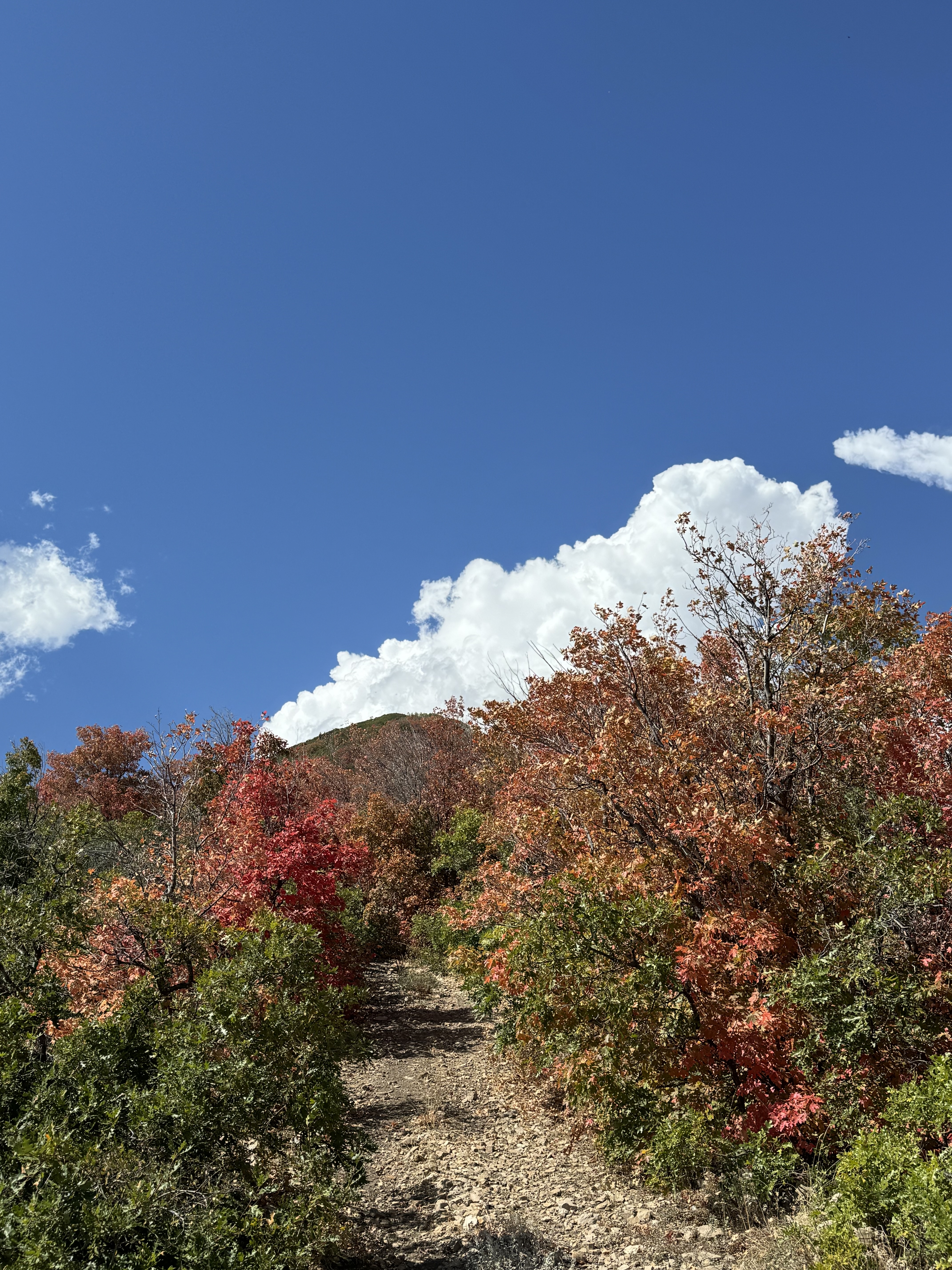
Autumn, Wasatch Mountains, Image, my own. September 2024.

See

Have you ever watched someone learn something closely? With your raw, open eyes, irises spiked wide with color, this is where miracles lie. In my classroom, students flow in and out of the physical space all day. Water. But there are moments that transcend the quirky ephemera we plaster the walls to increase engagement. Air. Like the quiet that falls on the room when you discuss the concept that maybe Thomas Aquinas was right, and you could come face-to-face with the divine on the pages of an essay you read in English class. Mountain. Perhaps you witness the that burst of energy come across someone’s being when they lift the palm sander at the finish of the final face of the joinery for their rustic bureau in woods class, when the firing is finished in the pottery studio, when the piece of silver has been hammered to perfection. Fire. Those words and worlds and ways will always be part of your fiber, your sinew, your resilience, your learning in a sorrowful, beautiful world.

Ramón y Cajal, Cajal Institute, Madrid, Spain.


My Turn: Student Safety and Gun Safety

unnamed

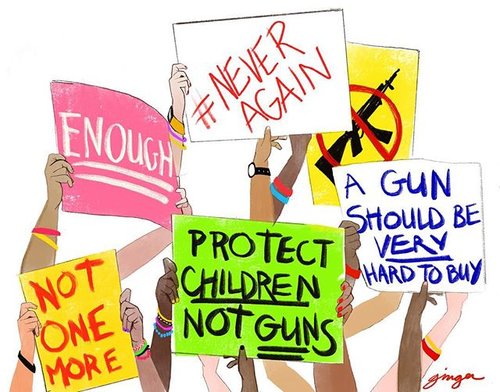
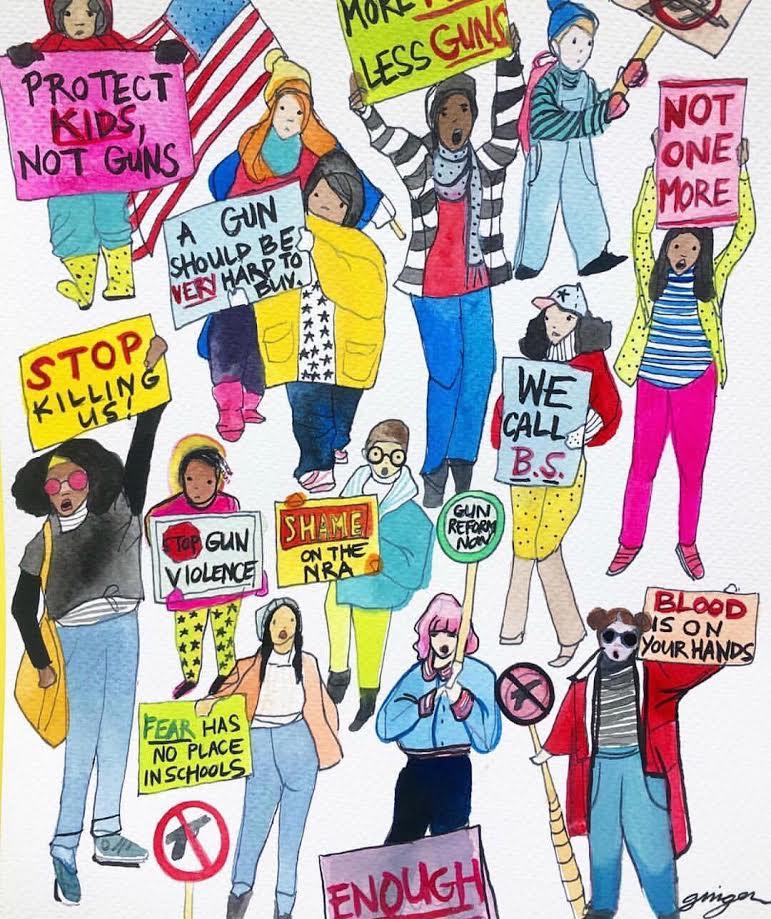
Image: Ginger Williams Cook

I want to take you all with me on my journey last week. It is a road that I should have foreseen when I took a job as a teacher, when I turned my education into educating. But I have to be frank, and tell you that I did not clearly see that I would one day be communicating a classroom plan to each and every one of my students as to how we would “Run, Hide, Fight”– the mantra of school shooting safety.

I want you as fellow parents, and grandparents, and citizens, and teachers, and administrators, and police officers, and lobbyists, and politicians to know what it felt like to stand in front of a classroom of students and tell them that what I want most for them when they come to school is their safety and their continued ability to earn an education that will carry them into the world as thoughtful, hard-working, problem-solving, critical reasoning, readers, writers, thinkers, and speakers who are career and college ready.

I want you to know that I saw both depth of understanding and depth of fear, both depth of care and depth of concern, both the need to be loved and the need to show love, both the desire to be safe and the desire to ensure the safety of others in my students’ eyes as we spoke. If you were standing next to me in my classroom this week, your faith in humanity would have grown three sizes those days.

I hope it won’t surprise you that not one of my students rolled their eyes when we talked about our classroom safety plan. Not one of them asked why we had to engage in such a boring assignment, or if they could take a nap, or if we could talk about something else. None of the usual millennial stereotypes we place on this generation of youth. Yes, I get all of these non-plused reactions to the daily English concepts, learning assignments, creative activities, and formative assessments I give in my classroom. I’m not offended by this in the least. I teach high school English. It’s not everyone’s favorite subject, and six hours in a school desk could put anyone on the verge of a needing a nap. But not one mention of an out, an alternative, an apathetic reply shows you how important this topic is to our youth.

My students were keenly listening, hyper aware, compellingly conversational, profoundly questioning, solution creating, statistic gathering. I know one thing for sure– after this week-and-a-half spent discussing the ways we could best hide in silence, with cell-phones off, not a word uttered, backpacks filled with computers and books placed over our hearts as a best defense against bullets– my students want to live.

But listening to the rhetoric and the maligning of the essential questions about gun control, mental health, and school safety in our country I really have had to ask myself, “Do we want the same thing for them? Do we want my students to live?” Your faith in humanity may have shrunk a bit too at the apathetic responses from representatives, politicians, and spokespersons who upheld the status quo so unmoved by the honest expressions and questions of grief from our youth and their parents.

Why can my students see that the conversation does not logically need go to the extreme of revoking the Second Amendment, but that it would be reasonable for us to speak about universal background checks, and cooling-off periods, and training for the opportunity to buy a firearm? Why does the conversation become the fact that more people die in cars than by gun-shot wounds before we talk about banning assault weapons and making bump stocks illegal?

Why does the conversation become the idea that if guns are regulated they will no longer be available to citizens but only to criminals rather than discussing common sense methods of mental health screenings for those who want to purchase firearms? Why does the conversation become arming teachers and other militant policies that include more guns rather than examining societal support of those who struggle with conditions of mental illness? Do we worship the Second Amendment and its economic and political gains more than the principles of life, liberty, and the pursuit of happiness? Because from my vantage point this week, we do.

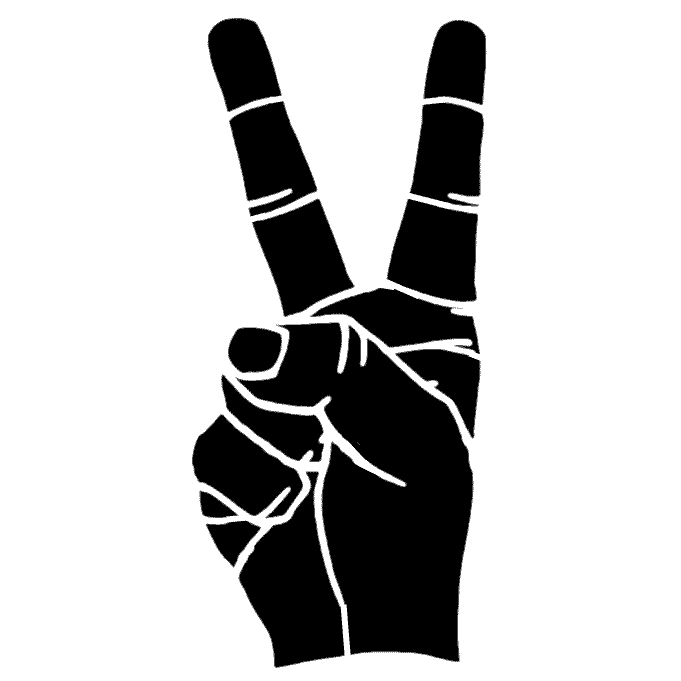
Because if all I have in my tool-kit is to continue to train students to duck low and move swiftly to the back of the room. That I will look out into the hall to bring passing students into our classroom the way Scott Beigel did when he was shot. That I will lock and barricade the door with a tall wooden pallet that ironically bears a peace sign. That we will break the glass in the window, hurling desks at it if need be, and exit out as swiftly as we can toward the street. That they need to run as fast as they can to the road without stopping. It feels akin to telling students to “duck and cover” in the event of an atomic bomb, with the full knowledge that all that will be left is their nuclear shadow as a reminder of their existence.

I want you to know these details because I want you to know that I want each and every child in my classroom to live. We talked in specifics. But are we as a society going to work together to ensure that safety? Now is the time that will tell. “Would you carry a gun, Mrs. Dickson?” my students asked, his hazel eyes serious, his mouth poised in a firm straight line once the question exited his mouth. He wanted to know if I would carry a weapon at school, if I would get a concealed carry permit to bring a weapon into my classroom. He didn’t ask in rancor or in pleading. He simply wanted to know what I would do to save him and his classmates in the event of a mass shooting.

What would I do? I had already asked myself this question many, many, many times from the day that the massacre happened at Marjory Stoneman Douglas High School in Parkland, Florida to the day that a student threatened the school I teach in on social media. What would I do to keep my students safe?

It was one of those moments where time took on an eternal quality– still, gaping, telescoping toward my need to answer him. “I didn’t take this job to be in law enforcement, or to carry a gun,” I replied. “You have asked me a deep and philosophical question. I do not believe in guns for the taking of human life. You want to know if I would carry a gun to protect you, but I want to know why [a teacher] carrying a gun would be our first line of defense on your behalf?”

Perhaps it felt like a dodging, ducking, pivot, a non-answer like the many politicians and spokespersons we’ve heard from this week.  Maybe it felt to him like I fractured that student’s trust. My students, who will have to trust in my coping mechanisms in the event that a deleterious person plans our death, deserve answers. But I do know my answer to his question. “No.” No, I will not carry a weapon on a high school campus.

The words Alfonso Calderon, survivor of Parkland’s school shooting, rang in my ears, “That’s a terrible idea… As far as I am aware, teachers are meant to be educators. They are meant to teach young minds how to work in the real world. They are not meant to know how to carry AR 15s, they are not meant to know how to put on kevlar vests for other students or for themselves. This is not what we stand for. We stand for small policy changes, and possibly big ones in the future. Because right now I am pretty sick of talking about teachers being armed. That is not even a possibility in my mind. I would never want to see that and neither do they want to do that.”

I care about each and every one of my students deeply. Yet when an administrator asks me “How are your kids?” like Rebecca Berlin Field, I immediately jump into my role as mother to two young boys at an elementary school that seems impossibly far, and feels unpredictably vulnerable and reply, “I was so grateful for the Principal and over thirty staff and faculty who welcomed each and every student to school today. They were standing on the curb in six degree weather when my husband dropped my boys off.” Then realizing my mistake, I quickly say, “Oh, you mean my students. They are scared.” Because this question reaches further than the doors of my high school onto elementary campuses where tiny humans go to learn and to be safe, too.

How will we protect those young students like those in Sandy Hook? I realized this week that it is my turn. If I believe that laws should change, or that monies should be appropriated in a different or particular way, or that students should be protected it is my turn to step up and voice these opinions.

It is my turn to stand beside these brave students from my high school who are looking for real and actionable change to come from the debates surrounding the Parkland, FL shooting. Small changes in national policy can lead to big changes in the safety that exists (or doesn’t) in our schools. It is my turn to be part of solutions that keep my children safe every day at school. The debate doesn’t need to be mutually exclusive, citizens can and do have the right to bear arms, alongside more reasonable regulation of these weapons. We can allocate funds for more sustained support of the mentally ill. We don’t have to throw our hands up in defeat simply because we’ve been asked to do something difficult. If I tell my students every day that they can do hard things, then I should be able to do hard things too. I hope as a parent, a grandparent, a teacher, an administrator or a concerned citizen you’ll consider speaking out on these matters.

static1.squarespace

001-Peace-Sign-Hand