Home

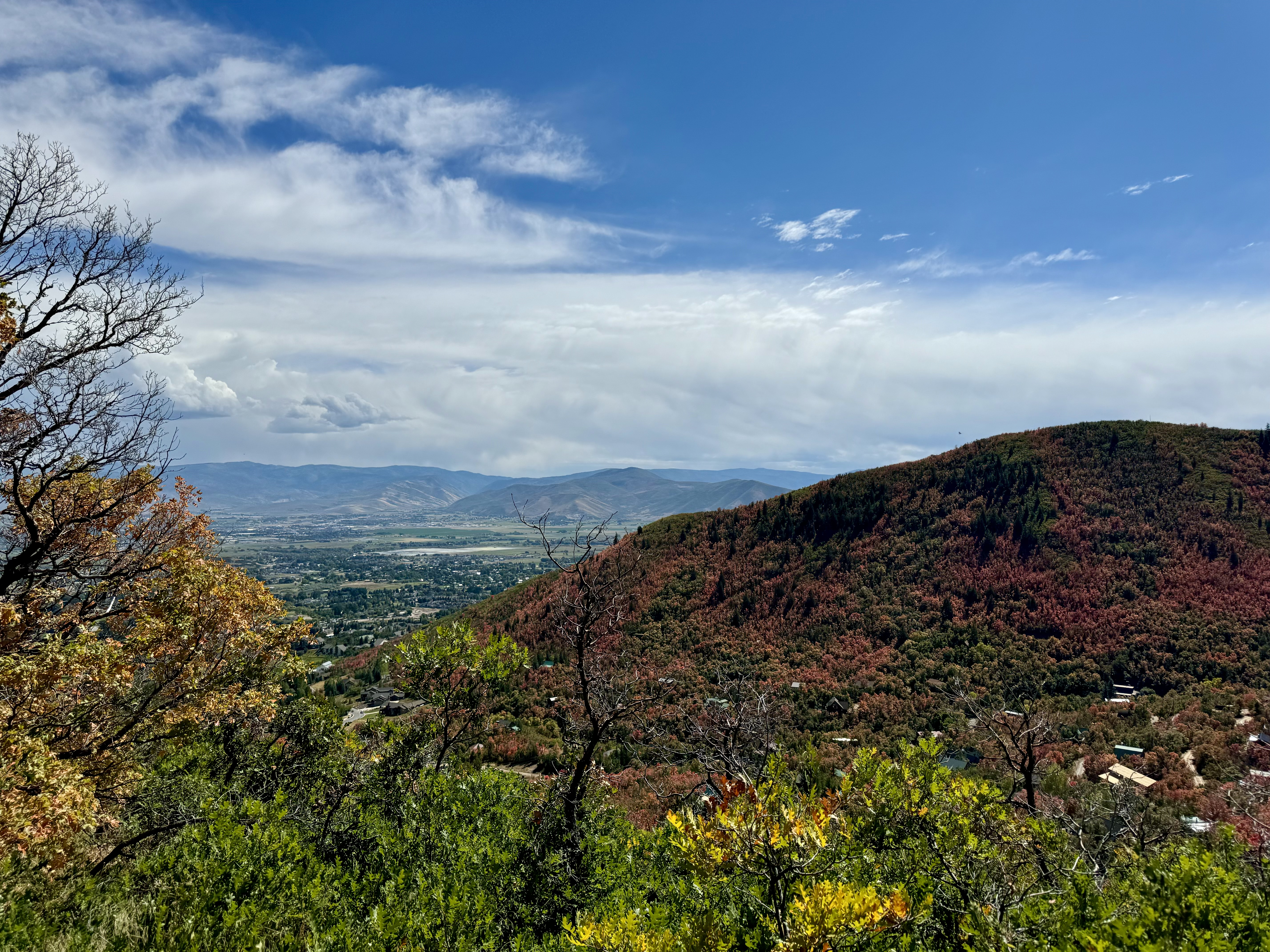
Autumn, overlooking Midway, Utah. Image, my own. September 2024.

Respiration

autumn of last year,
I found myself watching my babies
breath, in sleep, in dream

deep, cadenced pulls of oxygen
fueling all parts of their frames,
their beautiful hearts keeping time

children’s eyelashes soft, curled
the color of milk chocolate,
individuated so perfectly against the

delicate skin of their cheeks,
I wept as their chests rose and fell
at the joy of watching them breath

constant, paced, churning, these fist-sized
hearts, muscling, pushing life-giving nutrients
through their precious, peaceful forms

at night, it gave me peace,
the assurance that everything was
alright, the play of pulmonary veins filling

with nitrogen, argon, all mixed in with O2
being sent to the heart from the lungs
hearts filling the upper left atrium

the heart, house of refreshment, dispersing
the blood rich with food back into the body
through the lower left ventricle

this circle saved me, literally, again and again
imagining how the autonomic, metronomic
rhythms of the heart allowed them to rest

into dream, into sleep, into measured
breaths, into the rising of the inner
oceans, breathing peace
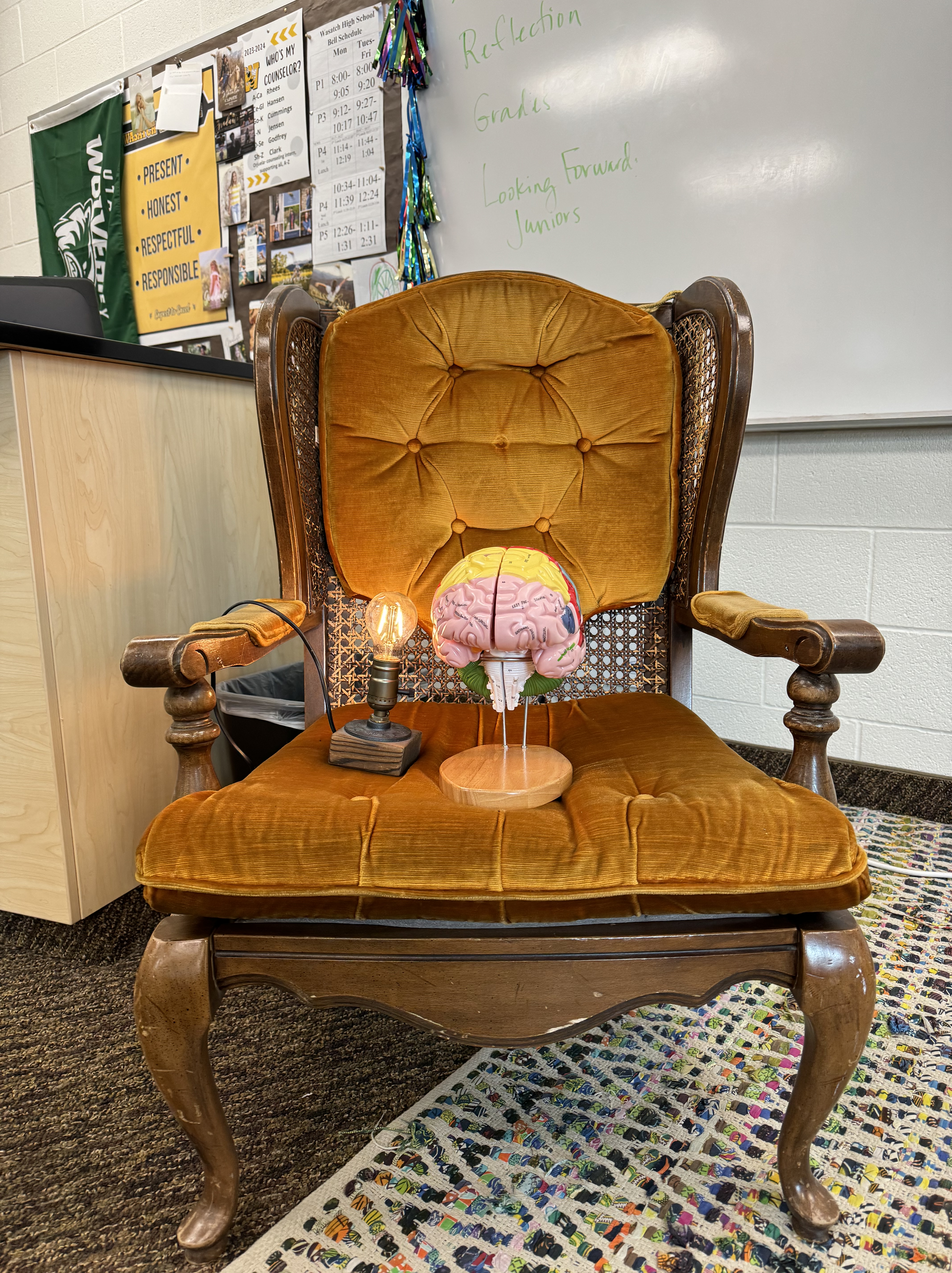
Brain, Lightbulb, Plush Chair. Image, my own. May 2024.

Hippocampus

When my students check out a book from the library
I often encourage them to make a bookmark
Any ratty scrap of paper will do, a plus if it is neon pink
We use this slip of paper to mark where we have
Read, where we are reading, where we have been,
Where we are going. The brilliant thing is that having
A placeholder, having a signpost, having a demarcation
To show how far you have come and how far you must go
Is another kind of marker. It is a memory marker. In print,
In pulpy bound cellulose and black ink, hold in your hand,
Sniff with your nose, the real goodness of paper is that
The brain creates even more memory pins for this
Medium. So now, you are reading a book, but your
Brain even remembers, memorizes, the geography
Of the page. Where did you see that perfect sentence,
At the top of page 67, How far into the book was the
Rising action, the falling sequence, your brain takes in the
Terrain of the page—the paragraph, the thickness of the
Pages you’ve consumed thus far, becomes another kind of
Topography. So intricately is our existence connected–
Touch, sight, smell, taste—all being remembered
Brain cells, neurons, communicating with each other
Regarding the climax of the story, through an elegant
Electrochemical system. A change in the electrical charge of
One cell as you read and integrate the signs and symbols
On the page into a larger story, triggers the release of
Chemicals called neurotransmitters across synapses.
The neurotransmitters are then taken up by dendrites of the
Neuron on the other side of the synapse where they
Trigger electrical changes in that cell. The geography
that print books, and bookmarks represent only strengthens
This circuit, a story arc sweeping into the hippocampus as a
Permanent resident in some synapse of your 100 billion neurons

Crane House Stained Glass. Image, my own. August 2024.

Heart
“So much held in a heart in a lifetime.” -Brian Doyle

I won’t ever be a surgeon
But sometimes I imagine a
heart beating in a human
under the purposeful glare of
a surgical lamp. And I
have a moment to inspect
this beautiful organ with
my own eyes as it pushes
blood throughout the body
I can visualize the thick membrane
of the ventricular septum–
lengthening and shortening in
precise time, the casing
which divides the right
and left heart, the chambers,
the heart walls, muscles,
really, that send the blood
coursing through your body
with constant contract-relax reflexes
a miracle with every beat
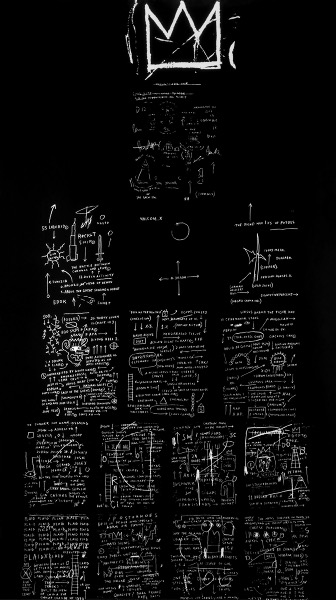
Jean-Michel Basquait, Tuxedo, 1983

Nervous System

I am trying to get my words wrapped around my autonomic nervous system
I am trying to describe how it feels to see a photo where I once existed and have been erased
I am trying to describe the pang, the thousand natural shocks that flesh is heir to
As Hamlet intoned, unlike Hamlet, I’m not trying to leave this life. Here’s my stab.

When I’m in fight or flight, it is harder for me to wrap my words around my nervous system.
It’s those moments when I could really just use a hug– skin to skin, arms enclosing
my body, keeping me safe and calm, a quilt. Instead, in flight I feel as though the
part of my body that is involved in the flying or fighting is nearly numbed, gone, absent

For example, if a man walks in on his wife making love to someone else, his brain, right behind
His eyes may become so activated that it feels as though a horse bucked his skull from the
Inside, like eating far too much pea-colored wasabi paste in one bite, which actually
happened to me, I’m sorry to return to sushi, but it was my first time, and BAM!

Right between the eyes, if I believe that I am being abandoned, left, discarded, my entire lower gut is activated with one million energy worms, I crawl with that nearly breathless, tingle that radiates
Through the rest of my body as I try to wrap my words around my nervous system for safety
But, in fact, I should probably lean in. Accept. Sit with it. Just the other day, when a pang really

Struck me, took me by surprise, in my solar plexus, and then the breath catching, the spin,
And the whole system, consciousness, in shock, straight from the amygdala, I thought, well good,
I think this gives me the chance to decide what comes next. The brain through the body gets
first dibs on the experience, but I am learning to quiet my reaction, trace the source

Of the shock, I am trying to get my words wrapped around my autonomic nervous system
And what I am telling you is that I am trying to describe how it feels, so that I can hijack my hypothalamus, but that is impossibly ridiculous, that my wish is that no will ever have to
feel this way again, which might be the end of our species, so let’s keep flying out of our bodies
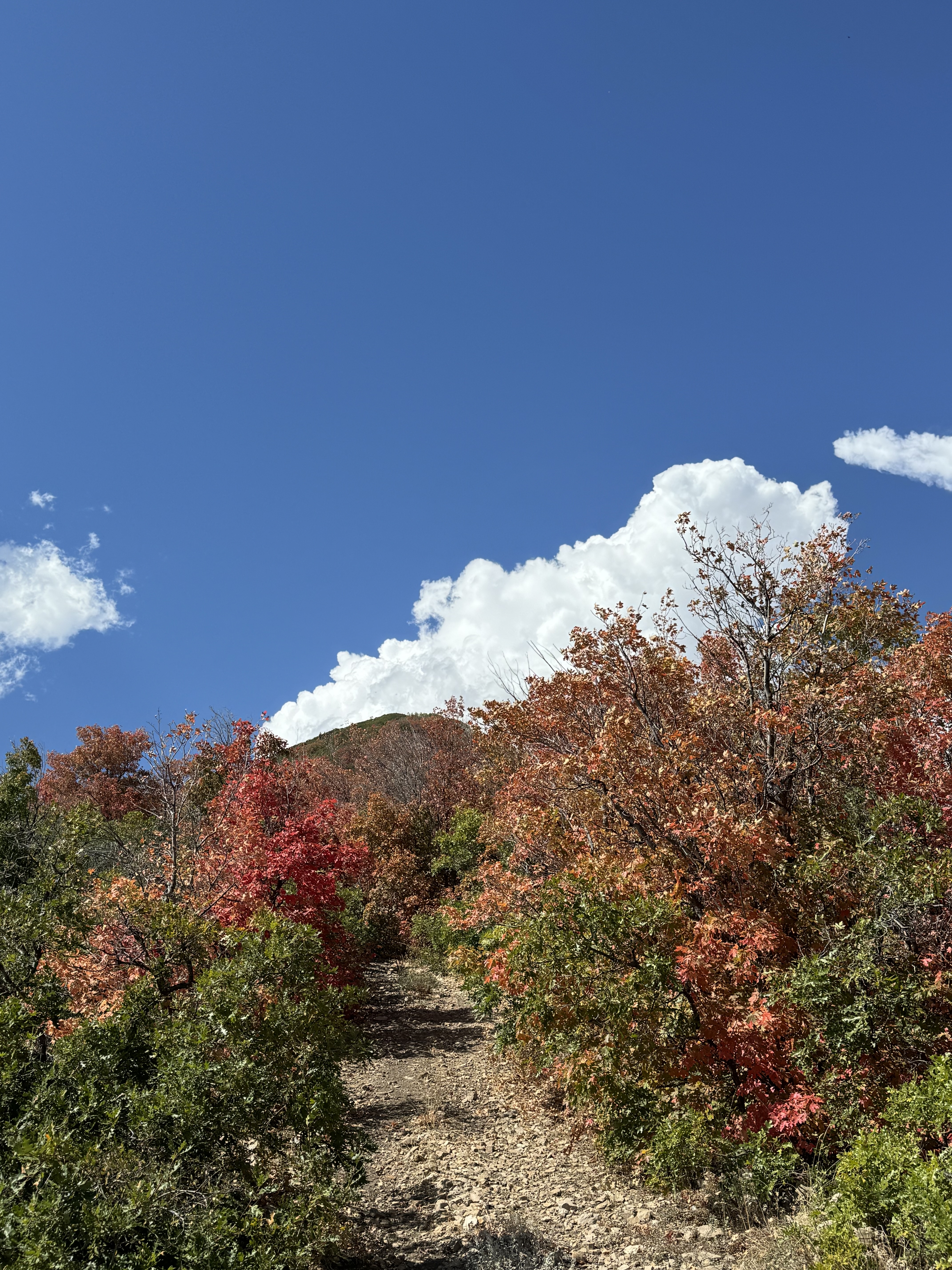
Autumn, Wasatch Mountains, Image, my own. September 2024.

See

Have you ever watched someone learn something closely? With your raw, open eyes, irises spiked wide with color, this is where miracles lie. In my classroom, students flow in and out of the physical space all day. Water. But there are moments that transcend the quirky ephemera we plaster the walls to increase engagement. Air. Like the quiet that falls on the room when you discuss the concept that maybe Thomas Aquinas was right, and you could come face-to-face with the divine on the pages of an essay you read in English class. Mountain. Perhaps you witness the that burst of energy come across someone’s being when they lift the palm sander at the finish of the final face of the joinery for their rustic bureau in woods class, when the firing is finished in the pottery studio, when the piece of silver has been hammered to perfection. Fire. Those words and worlds and ways will always be part of your fiber, your sinew, your resilience, your learning in a sorrowful, beautiful world.

Ramón y Cajal, Cajal Institute, Madrid, Spain.


Hope (and Ice)

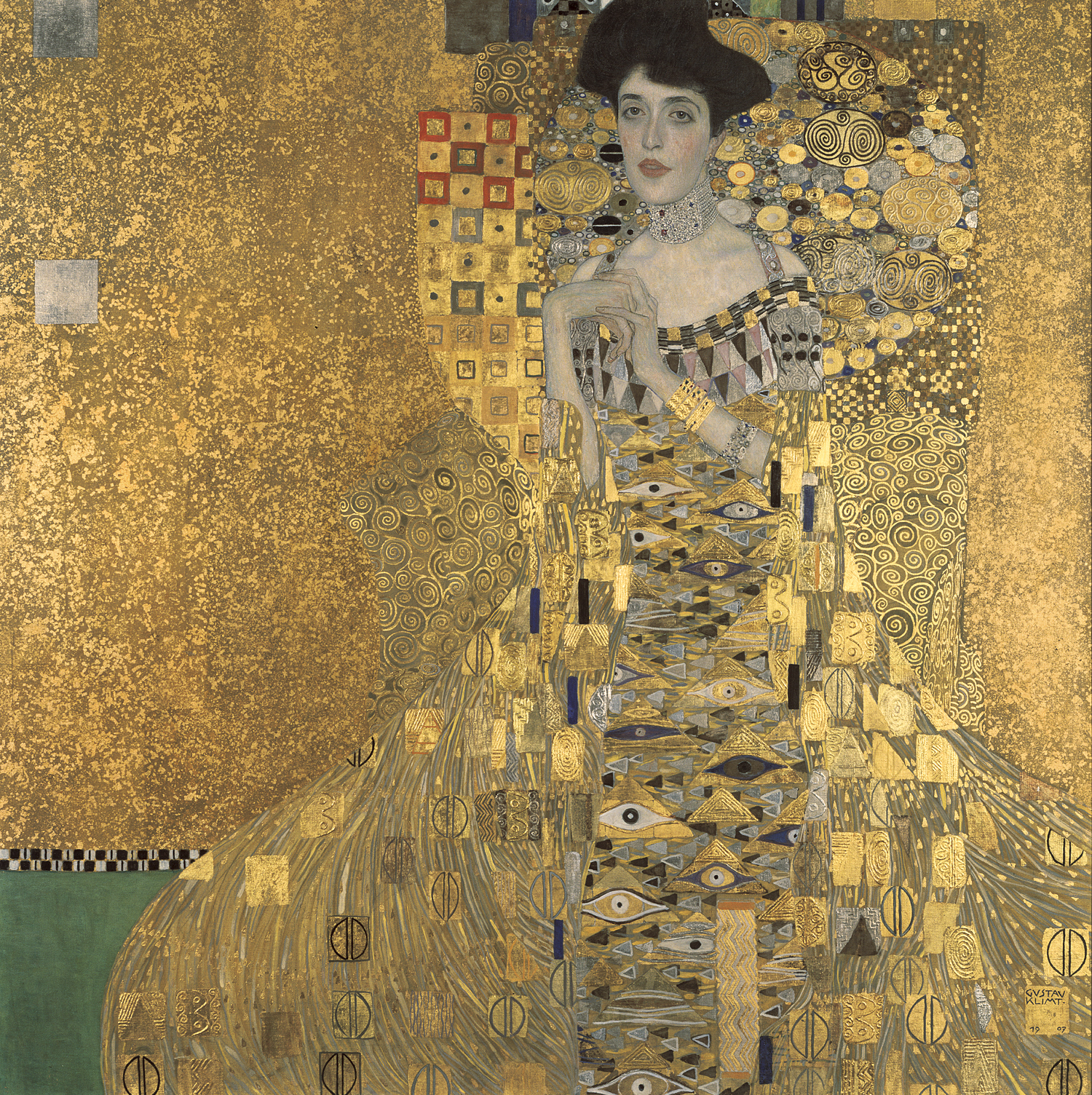
Portrait of Adele Bloch-Bauer I , 1907; Gustav Klimt; Oil, gold, and silver on canvas
Neue Galerie, New York

The Matriarch, Grandma Dorothy dressed in a gold lamé housecoat each year for Thanksgiving dinner. The table, set with rose china, was laid out long in her small basement apartment. Poised and gracious in her kingdom, she sat at the head of the table and smiled at each child and grandchild as we voiced gratitude for our blessings. She, in turn, gave thanks for “all of you.” 

Regal, despite the crippling arthritis which attacked her bony sylph of a body, she held herself with an aristocratic air. Her back stayed straight with practiced posture through two total knee replacements, three husbands, four births, and five decades of single motherhood. Her studied gait had slowed, but still kept its polished flow from her days at the Presbyterian Girls School in Missoula, Montana, where Bertha Harriett, her mother, had insisted her only daughter be enrolled.

Dorothy’s hands gave one clue to her impatient internal pace; slender, knuckley, and nubbed, they were never still whether fluttering in her lap, tapping the tabletop, or brushing out a rhythm on her thigh. Another clue to her core came from her eyes. Bright and clear, her hazel eyes couldn’t hide all her knowing. They blinked and batted, magnified behind her glasses which earned her the nickname Granny-Bird. Beyond the constant pain of fibromyalgia which inflamed all her soft tissue, my grandmother carried the wit and wisdom that only a lifetime of studied learning can teach and only a sage can repeat.

“I just ache all over,” she explained.

When I was twenty-three and she was seventy-nine, she was diagnosed with lupus. In near-constant pain, I drove her an hour to her primary care physician. She said to the doctor seriously, “Fix me.” Holding her hands outstretched as if in child’s pose, palms up, in release and submission to the pain, in hope for healing. Then looked him piercingly in the eye until he admitted with a stutter that none of her ailments had a cure, a salve.

There was no fix, no hope. Regaining his composure, he whispered to her quietly, “We are a horse and we are a rider. The horse grows old, tired and pained; the rider is young forever.” So, she continued to wince and sigh in her sleep and persisted in walking slowly, majestically enough so the burden wouldn’t show much.

—–

—–

No longer seven, Holland America Line Westours brought me back to Alaska in 2000 as a nineteen-year-old tour director. My job was to guide tour groups ranging in size from twenty to fifty people on nine-day land tours between Anchorage and Skagway, Alaska. The distance covered on each tour was somewhere around 812 miles, 1,624 round trip. 

During the second week in May, the tour director trainees converged on the Anchorage Hilton. I’d never been a room with so many extroverts. The uniform for that year was khakis and red shirts, and the majority of our training as tour directors consisted not of classroom instruction, but taking the actual tours that our guests would take when they arrived in Alaska.

A typical first day in a Holland America cruise-tour package included a stop at the Alaska Native Heritage Center, a brief city tour, followed by a trip out to Portage Glacier. Our fifty-five-passenger motor coach ferried the group the forty-five miles or so to the Visitor’s Center. There is no better way to see Alaska than from the windows of a motor coach. Greyline, Holland America, claimed the window had been engineered by Kodak, and I thrilled as I gazed on Alaska for the second time. 

Twelve years of nostalgia struck as we reached the Visitor’s Center, and I hurried off the bus into the building without a glance toward Portage Lake. Though I was now nineteen, it was as if I was there for the first time. With the other tour directors, I took a seat in the theater for Voices from the Ice. I was excited for my companions; I thought I knew the finale.

The movie ended, the screen rose, the curtain parted, and behold… a lake. There was no glacial face, no snout. No grand finale. No blue terminus of ice to awe at. Nothing but a dingy, mud-gray, motionless lake, dotted with giant melting ice cubes.

—–

—–

Skagway became Alaska’s first incorporated city on June 28, 1900, boasting 3,117 residents. The population has fallen steadily ever since, and the 862 year round residents remain set at sea level at the mouth of the Lynn Canal, the deepest fjord in North America. The “Gateway to the goldfields!” continues to be Skagway’s modern claim to renown. The famous picture of gold miners and fortune finders treacherously clambering over the “Golden Staircase”, grand piano included, is set right outside of Skagway in the now non-existent town of Dyea.

The land surrounding Skagway rises abruptly from the ocean with White Pass Summit hitting 3,292 feet just 37 miles North of town into sub-arctic alpine tundra, think scrawny, wind and ice-bitten trees and tiny kettle lakes. But Skagway City’s climate is temperate coastal rain forest, think lush top-soil and muskeg, thick fern foliage, and dense forests just outside city limits.

 I run. Chugging South down the Klondike Highway into the town of Skagway, I keep my eyes trained on Harding Glacier. This small hanging glacier, nestled in the armpit of Harding peak across Taiya Inlet from Skagway, has almost melted out of existence over my five summers in Alaska. Alarms sound off through my senses, as my feet scud over old glacial silt which lies alongside the road, “Fire!” Watching the midnight sun rise hotter and hotter in the Northern sky each summer has fueled my fear. 

Finishing my run, I stand sweating, in ninety-degree heat on Broadway’s boardwalk, the main drag in downtown Skagway. This heat just isn’t quite right. A mere four blocks wide twenty-three blocks long, tourists clog every artery of Skagway’s downtown district, weaving in and out of open store doors, gawking through shop windows. Down at the docks there’s only parallel parking for mammoth cruise ships that pull-in and drop their load of 3,200 passengers per boat, per day.

With five berths, the math is easy, these ships can release 16,000 people or more into town on any given summer day. None of them seem too concerned about the fate of Harding Glacier or the Juneau Ice Field. I see the signs of glacial recession everywhere. What should we do? Imagination plays a “what if” video clip: I turn to the man in the green fishing vest and dockers khaki shorts standing next to me on the boardwalk. He’s quickly licking the myriad of drips from a pecan praline double cone he just purchased from Kone Kompany, held tightly in his fist.

In my imagination, I unload, “Sir, I know you’re on vacation” I pull out my imaginary microphone, begin diplomatically, “but does this heat scare you? You know, we’re in Alaska, the North country? Do you believe in global warming? Does it look to you as if this blue ice is a bit uncomfortable in this unbearable heat? Look, everything is melting, you, me, your ice cream cone, the glacial ice. Which boat did you come in on, the Diamond Princess, Empress of the Seas, the Volendam, Carnival Spirit? Did you enjoy awing all the way up the Lynn Canal this morning from your deck chair at the blue ice hung across the shoulders of the Chilkat and Coast Mountains?  Nature dressed up just for you, sir. Do you want your grandchildren to be able to see what you saw? I really want my children to experience Alaska the way I did, glaciers and all. What should we do?” 

There it is.  Even though the scene played out in my mind instead of in real-time, I feel better. Sounding the global warming alarm. It’s not a him thing, or a me thing, it’s a we thing. Which doesn’t make the situation of Arctic warming any better, but it sure does make me feel a whole lot better to pass the blame on to the guy in the flop-backed fishing hat, or at least share it with him.

—–

Grandma was with me, lying on the purple silk bedspread in her room like a queen. I, her five-year-old courtier, heard the tiny tinkling tick of each bead hanging over her lavender pillows as my head parted them to rest on her shoulder. Opening a worn copy of The Tales of Old Mother West Wind, Grandma flipped to “The Tale of Johnny Fox.” We read for what seemed like days in a world where the wind had a name, and her animated baby breezes played tricks on the rabbits, beaver, and foxes who always seemed to get caught in the bluster.

At age six, I watched her morning routine. A garish multi-colored silk mu-mu, draped loosely over her small shoulders, got pinched under the little bulge of her belly then fell long to the floor. A tall glass of skim milk, burned buttered toast, bowl of soggy mini-wheats, all crumbed and dripped over a crossword puzzle. After breakfast, she’d shower and then stand naked and wrinkled, puffing loose folds of skin with talcum powder while listening to the tenor whine of the Bible on her old black tape recorder.

Even when I was eight, long after my parents were sleeping, I’d tip-toe into her bedroom and watch late-night reruns of MASH, The Love Boat, Star Trek the Next Generation, and eat bread-in-milk from mugs with spoons. She too was a night owl, and she’d sit next to me on her water bed, smelling of vitamin E oil and half-dry finger nail polish, her gray curls preserved for the night in a paisley scarf. I’m too young to understand that one day, I’ll lose her forever.

*(This is the second in a series of braided essays and poems about love, loss, ice, life, and what our world faces as we experience climate change at the human level. Here’s the first essay: Hope (Alaska). Thanks for reading!)

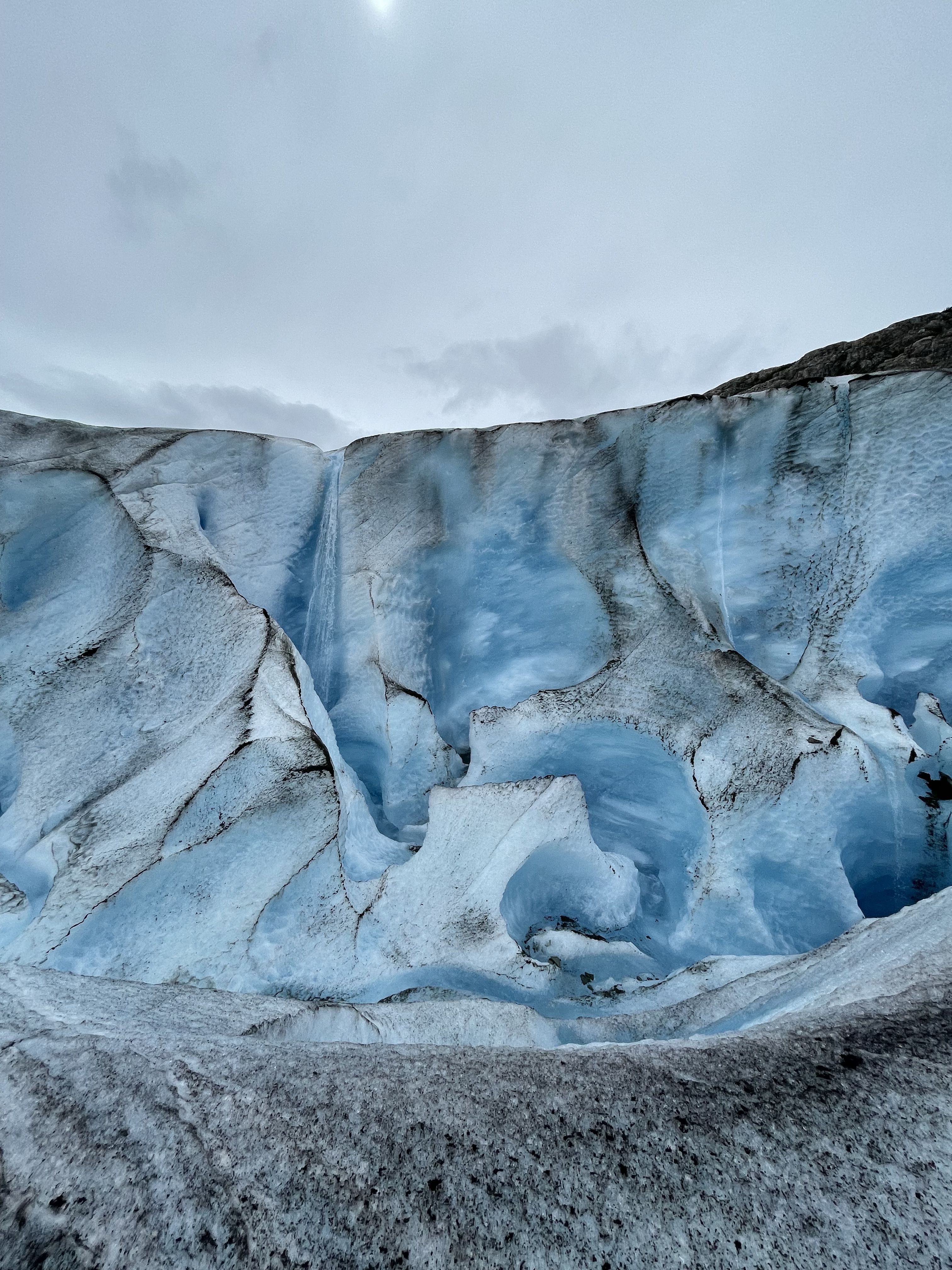
Terminus of the Meade Glacier, Juneau Ice Field, July 2022. Image, my own.

Living Room Remodel: Boho Eclectic

IMG_1936

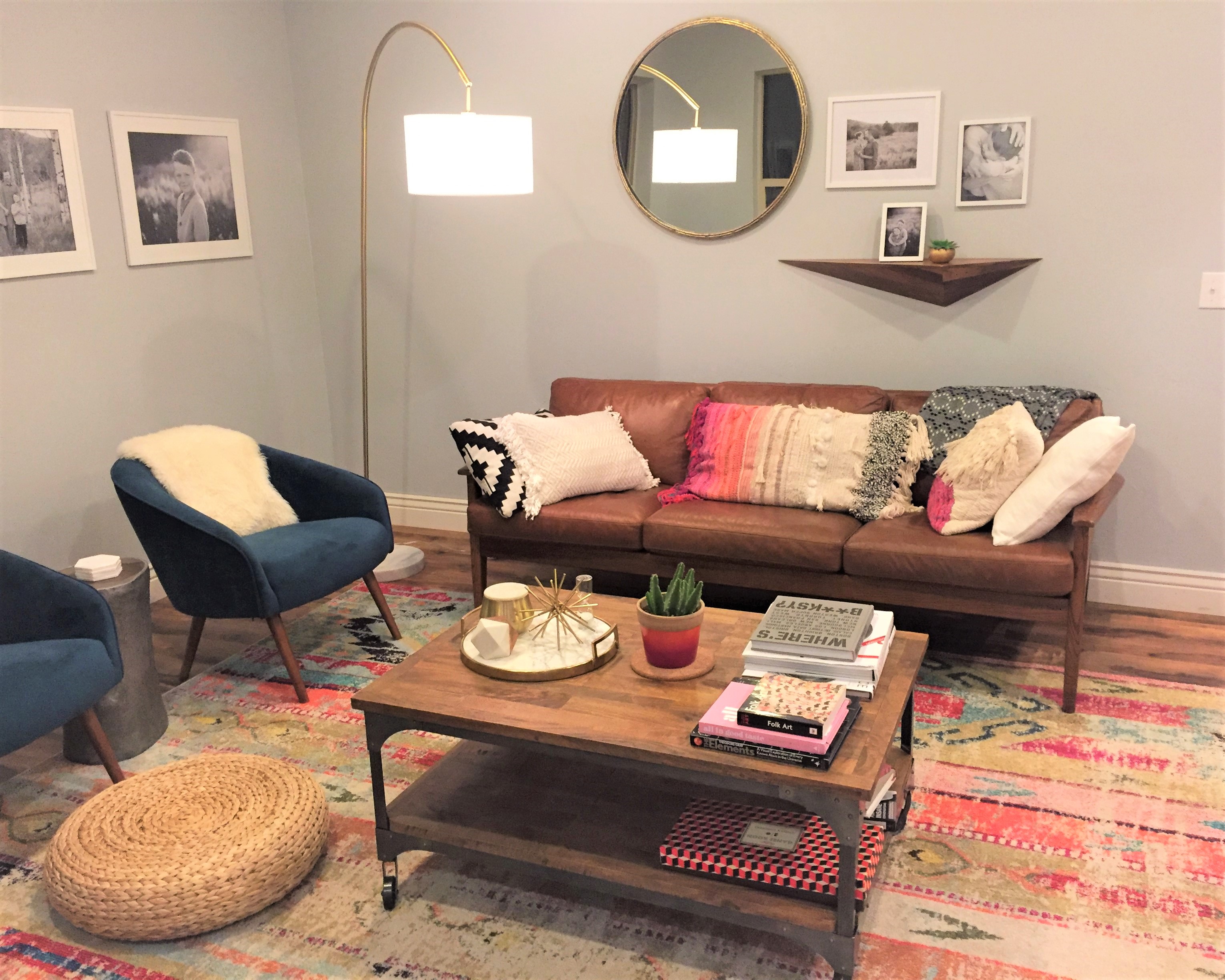
When we moved into our new home I wanted to bring some added warmth and texture into our living spaces, especially the living room. Our previous home had a smallish living room that also served as the TV room (more on this later, as we haven’t even unpacked our TV and it has made me so very happy!).

One of the things I disliked about the previous space is that it seemed to serve as more of a walkway to the kitchen and dining room than it did as a living space. The furniture was nice, in fact we have only really added a few pieces in this new home. But it lacked a certain cozy comfortability I hoped to bring to this new abode.

Adobe Spark (10)

The first thing we updated in our living room was the flooring. The house originally had carpet in all of the rooms except the kitchen. We replaced the living room carpet with laminate flooring. We decided to go away from the dark, dark wood we had in our previous house and instead go with a more natural walnut colored floor. I couldn’t be more happy with our choice. The floor is the perfect warm neutral tone I was looking for, it shows much less dirt and wear (hello two dogs), and I feel as though we’ll be happy with our choice for years to come!

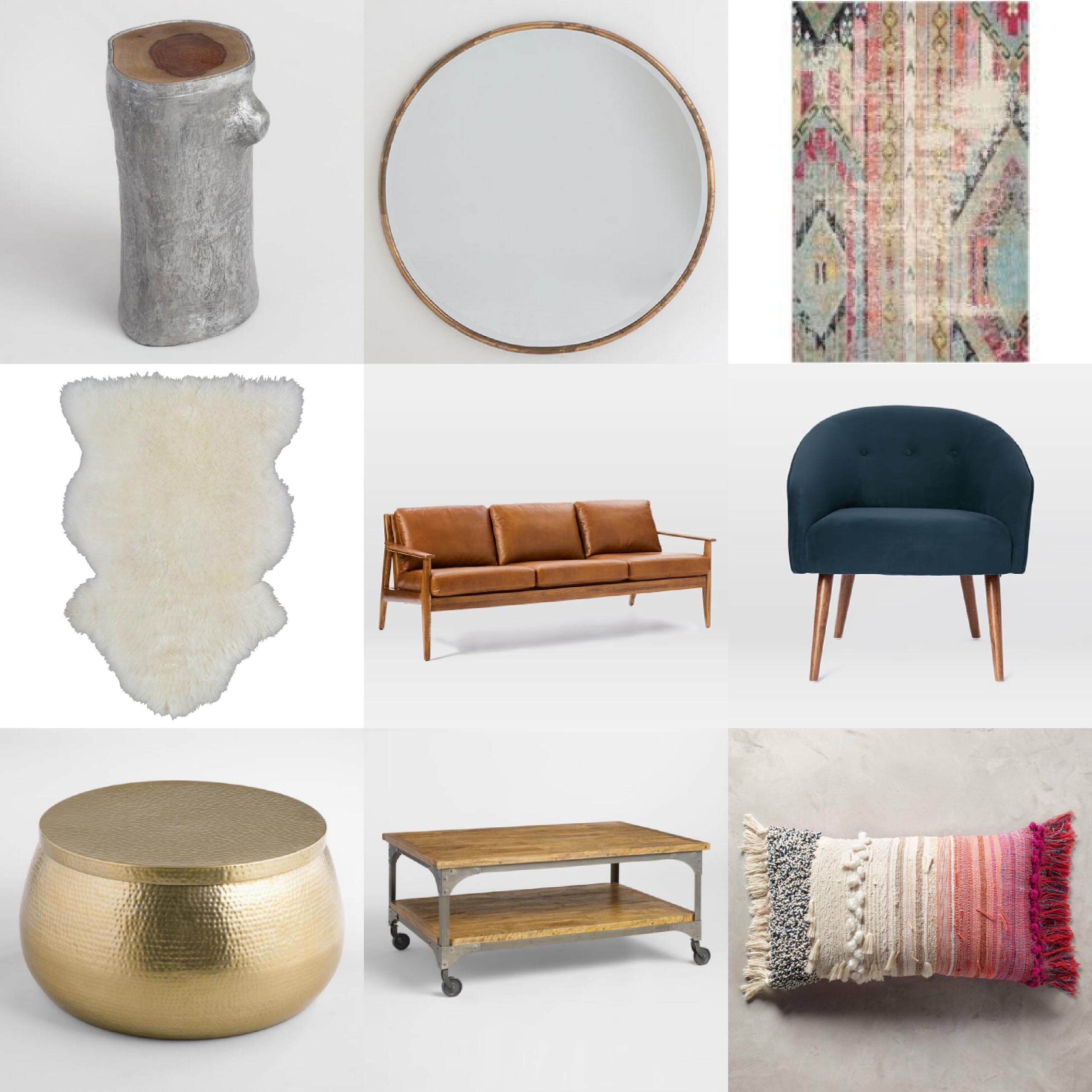
I’ve already explained that one of the updates in our house was the new rug  top right in the picture above. It was a happy mistake because I originally purchased for the dining room but it was WAY too big for that room. In all honesty, we got the rug, realized it wouldn’t fit, rolled it out in the living room, and it hasn’t moved since! In fact, it was really the first piece that we put into our new home post new paint and flooring.

IMG_1799

NEUTRAL BASICS

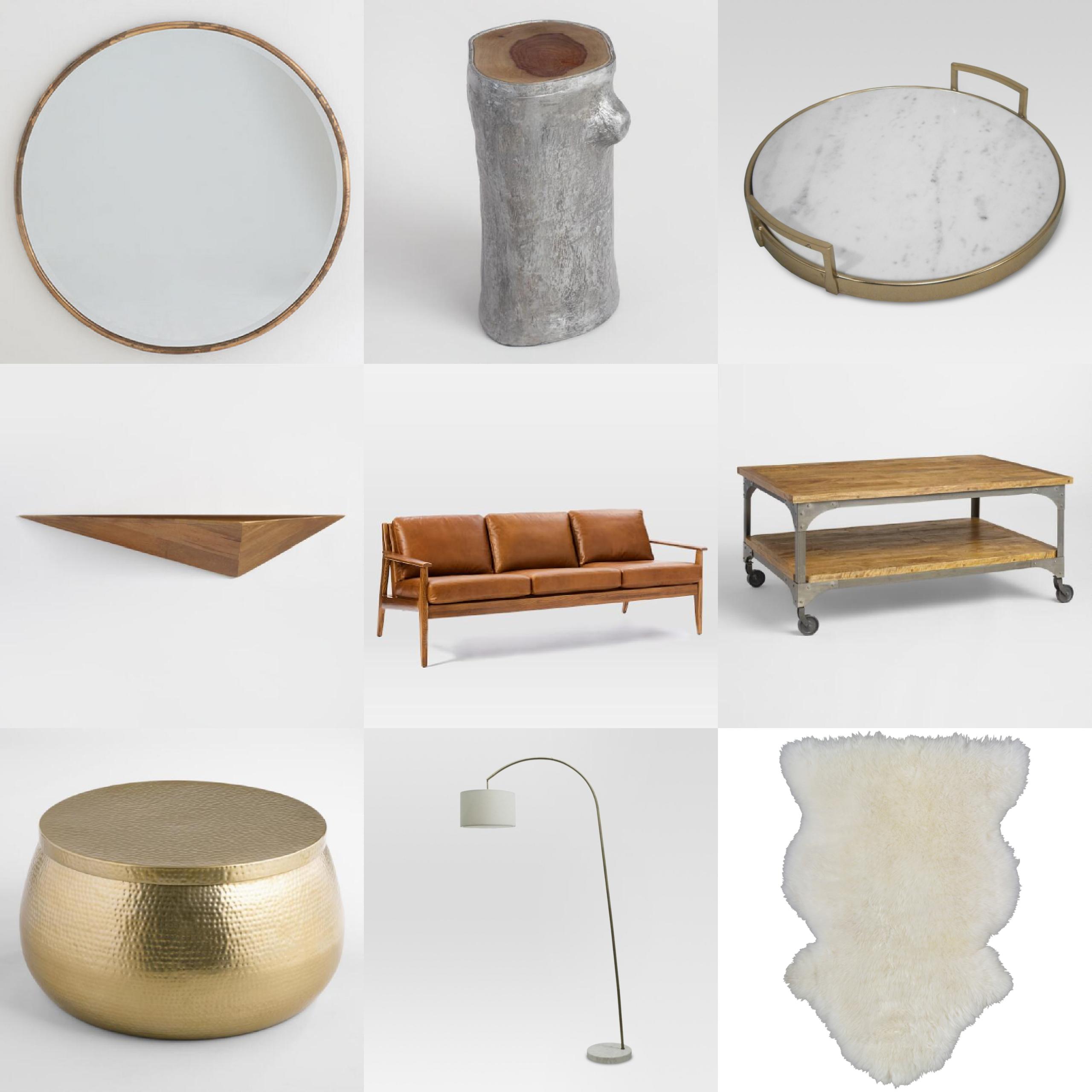
I’ve put together some mood boards of the process we went through to pick the rest of the decor. I started with some of the neutral basics I already had and added a few I wanted. One big addition for us was also a coffee table. Because of the size of our last living room, we had never pulled the trigger on a coffee table. We love our pick (we actually bought two coffee tables, but one acts as more of a side table), it is affordable, functional, and just the right size for the space. Unfortunately this couch is sold out online, but I’ve shopped some worthy alternatives at similar price points.

Adobe Spark (11)

Mirror, Side Table, Tray, Shelf, Couch (1, 2, 3), Coffee Table, Coffee Table, Lamp, Throw

BRIGHTS and TEXTURE

After the basic neutrals, I decided that I wanted to add some touches of pink throughout the living room. I picked up the pillows and throw on sale at Anthropologie. My husband has given me plenty of grief about the price, but the rest of the pillows are a combination of old favorites from Ikea, and some refreshed cream basics from target.

We also picked up two of the Eve Buttoned Chairs from West Elm. I was adamant that we switch out my two woven fabric chairs for this microfiber because of the way that dog hair gets trapped in the woven fabric of our yellow chairs. I actually kept both yellow chairs because there is plenty of space for extra seating in this living room.

Adobe Spark (12)

Rug, Pillow, Throw, Runner, Pillow, Chair 

LITTLE EXTRAS

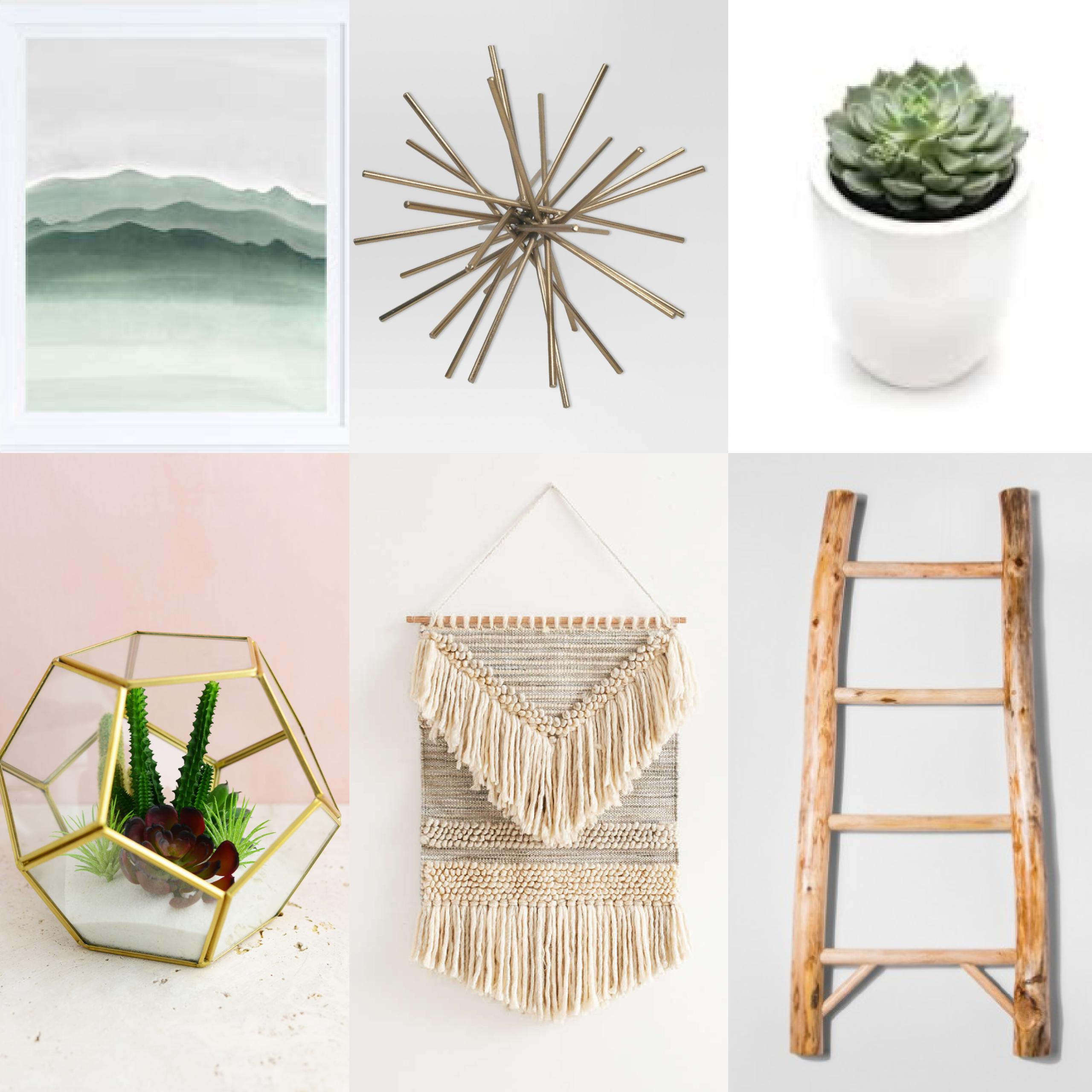
Last, I wanted to have some decor in this room that was simply for looks! Now that my children are older, I don’t have to worry about whether or not someone will throw the small gold starburst sculpture, or if they will pluck a succulent out of the terrarium, or try to climb the ladder that is only meant for blankets.

Adobe Spark (15)

Picture, Starburst, Succulent, Terrarium, Wall Weaving, Ladder