Can you imagine? Deafness where once was joyous Sound Blindness where once filtrations of color-filled light Ricocheted Can you imagine? Losing everything? If you are human, the guess is, yes But why must pain catalyze all our understanding? Is it Truly our only teacher? Isn’t the promise of Death Enough to cause us to cling to love, to Life, to now, maybe not. So maybe we go deaf, blind, Senseless Into that good night, into the dark, waiting for The dawn with breath so small we barely live, sore Respiration Reaction, all part of this existence when what we Thought we wanted most is gone, dematerialized where Reality is echoed and Chambered Oh heart, please, live, please drink the night and day as A cup of bitter sweetness, lasting but a blink A piano hammer in the abyss, hammer to string, string bing, bing, ba-bing, go, boogie, Be
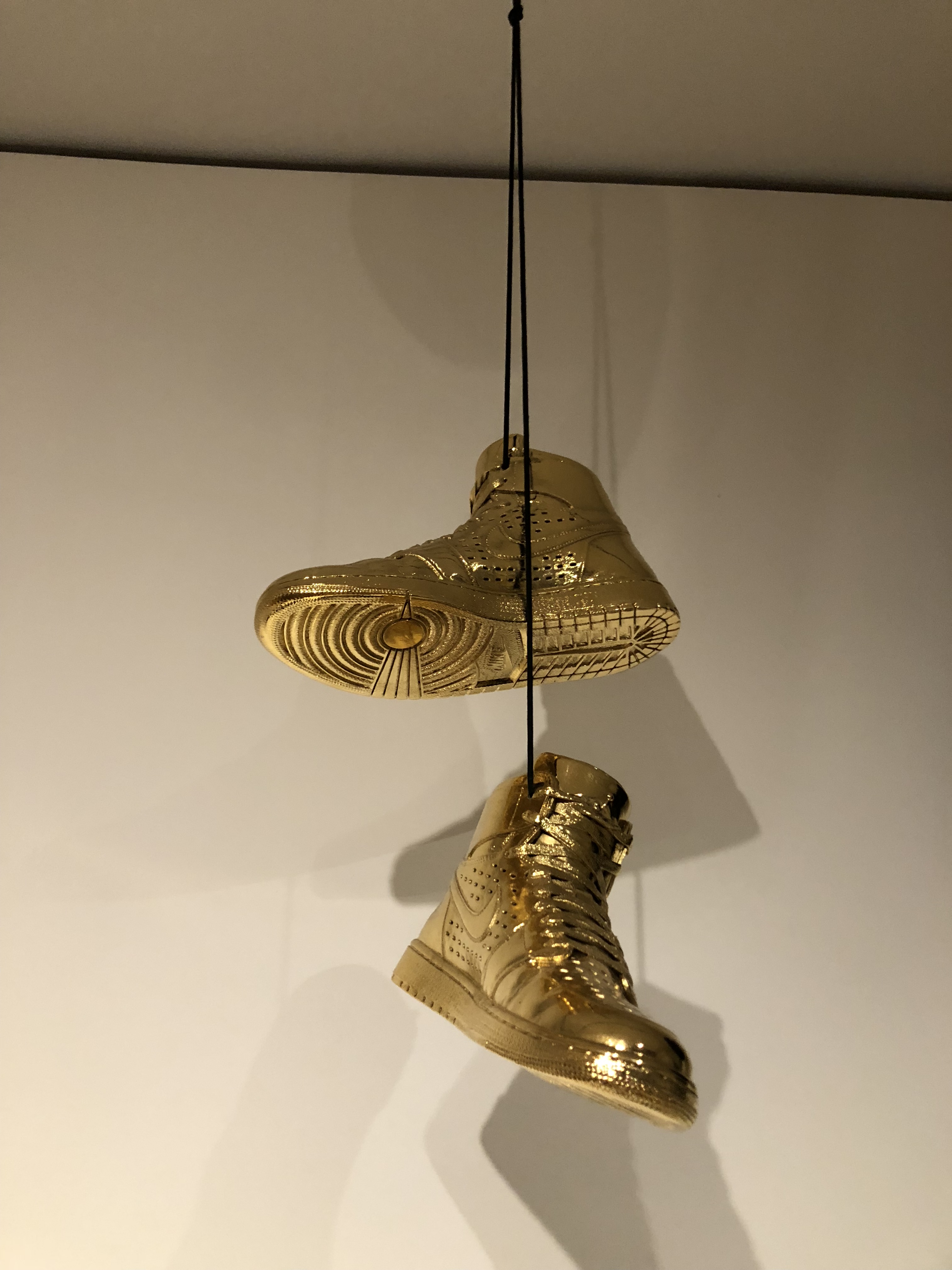
Gold Nike Shoes. Oakland Museum of California. Image, my own.
Andante
It will never do to keep running Into yourself if you can’t look up, Ponder the path of the stars in The night sky, gaze with longing And new eyes, on the moon with Rapture, take in the horizon each Day and walk into a new lifetime
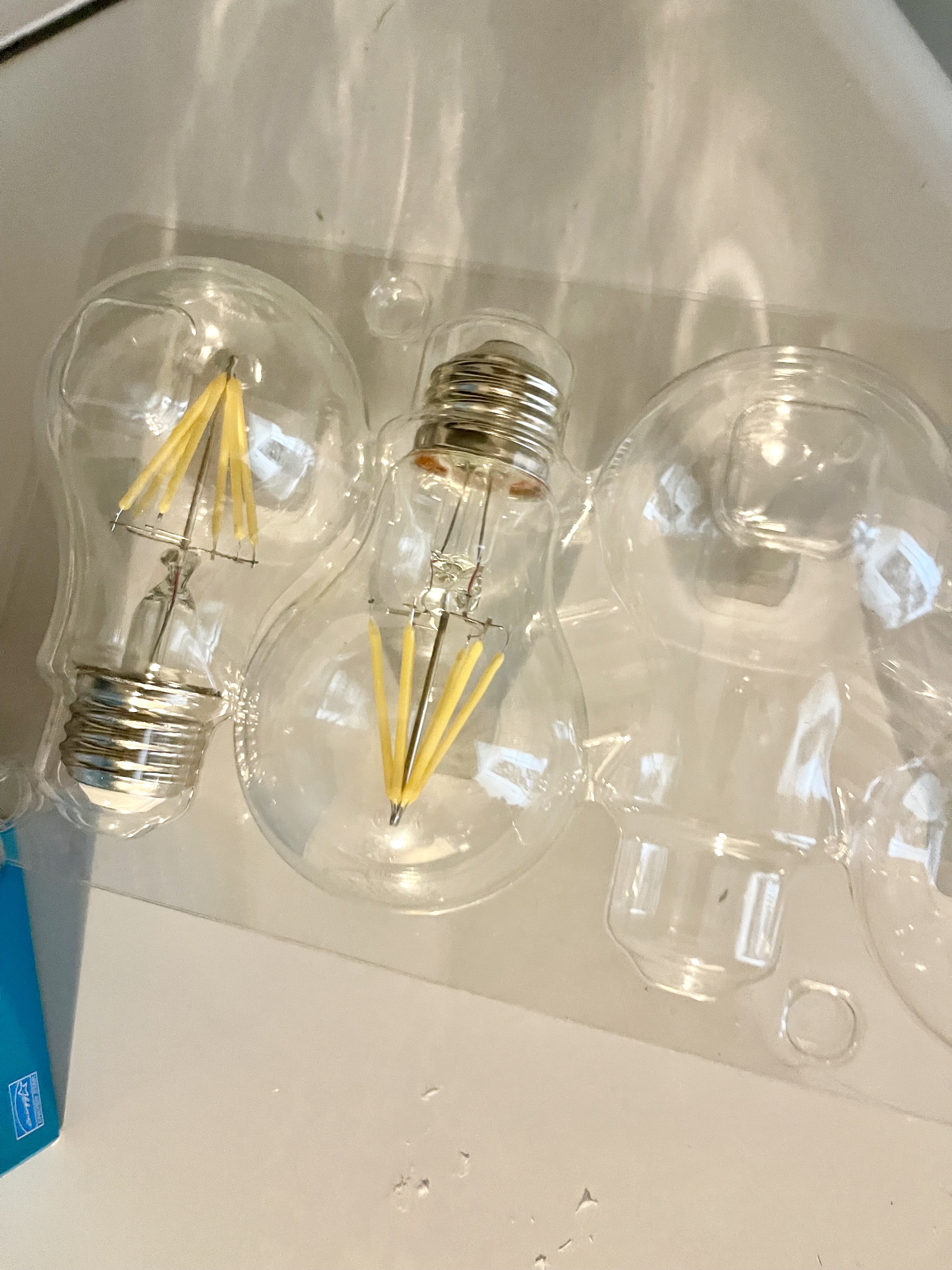
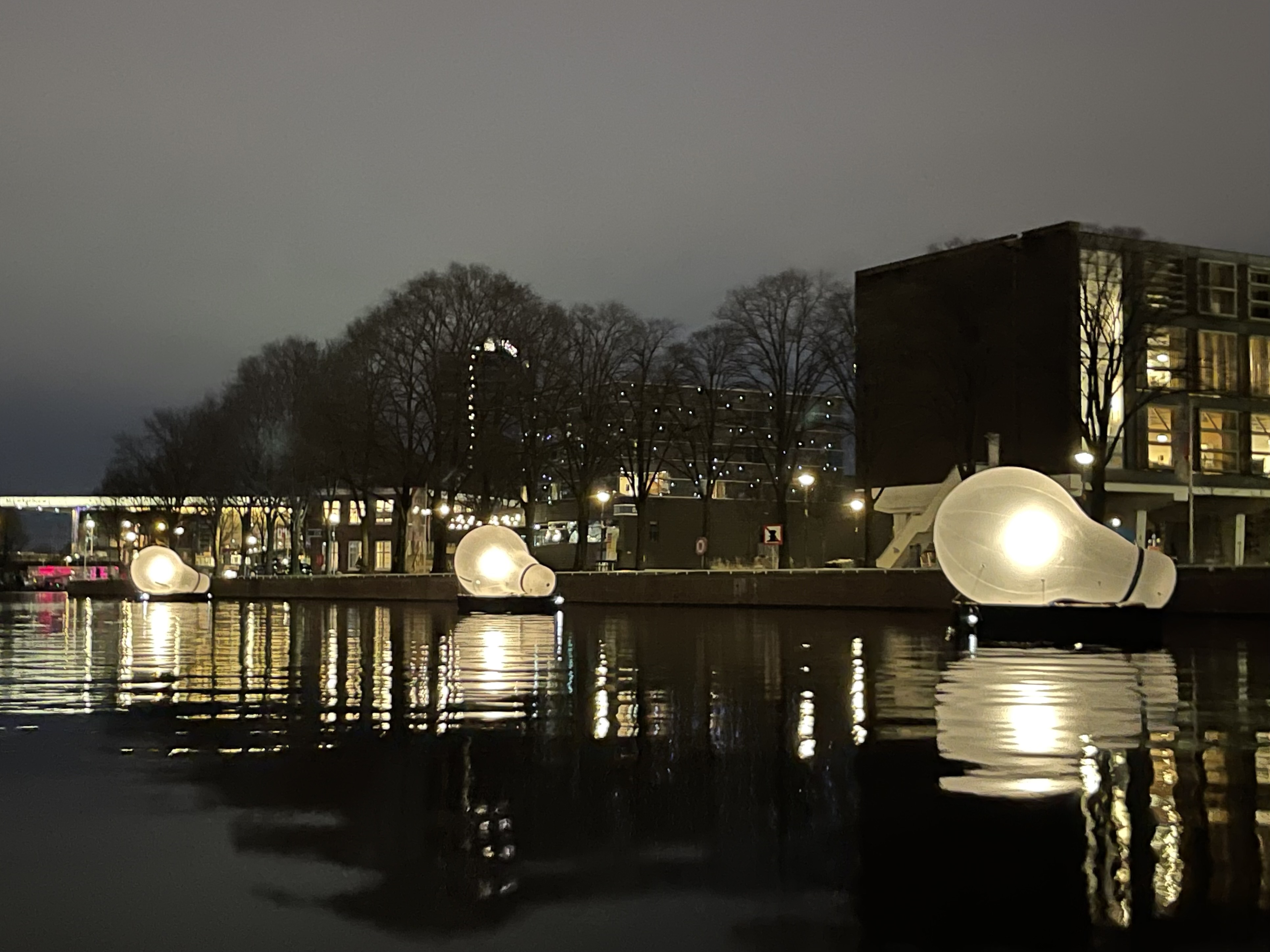
Light Bulb(s). Image, my own.
Honey
Honey, laughter and green curry are all the #soulfood I need the joy of bright kaffir lime leaves charged into garlic and simmered over vegetables, a meal to carry us through the ages, a gale of fascist hail and bull shit, the storm of the century is upon us, and all we can do is cook, sing, and watch the moon as it rises high in the night, silent observer of her earthly neighbors what a perplexity what a tragedy, only for a moment, all mixed with joy and delight, how will we last, how will we survive the fight join it, gear up, only history knows on this very first calm snowy night. We hunker in, we knit, we resist like life depends on it because it does, resistance can be small nearly silent until the way is clear and that same moon swims overhead as the path is lit in the quiet dark
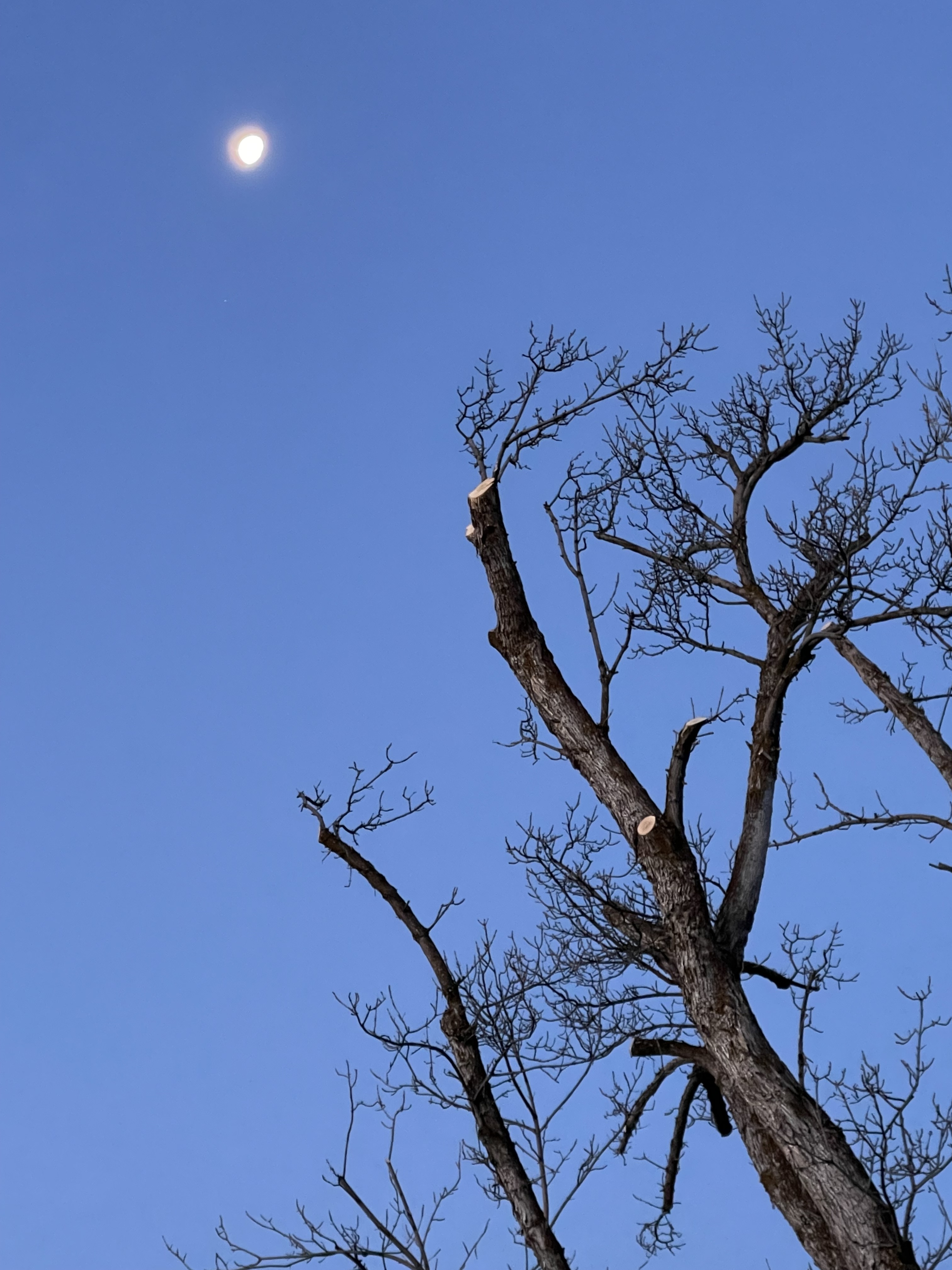
Moon. Image, my own.
Orb
In reality In the body Black and gray White and blue softest aura Hazing purple Bold broad Moon the Clouds opaled All around Stars and sky Dappled through and Through Lord, Bless Gratitude for Ohs and glitters Heavens and Earth The glory of it All that lone Full Moon
Noordwijk, Netherlands; North Sea Shore. January 2023. Image, my own.
Regret
I stood in the tide of the North Sea and I should have dived in. I should have stripped off my clothes like an overgrown baby and screamed and squawked into the surf
I should have shrugged off my care for my friend’s husband. I’m sure he would have politely turned around if I’d asked. then I’d have had to contend with the flotsam
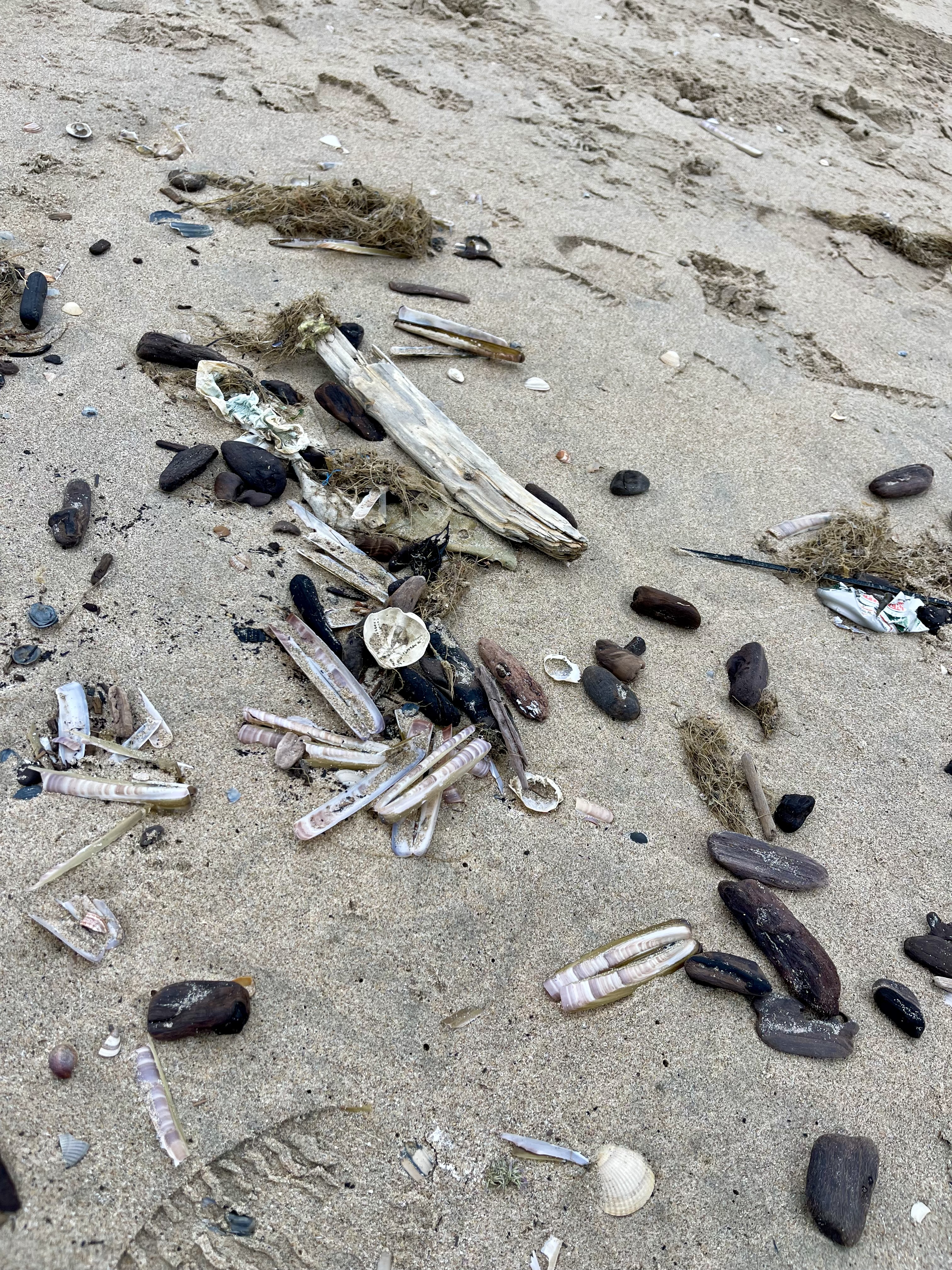
on the beach, but that wouldn’t have mattered, half shells, stones, sponges even the cuts on my feet would have been worth it if I’d boldly yawped into the bubbling spume, a signal
to the universe that I knew, I saw what was coming next (which is a lie) but in that moment, to prove to myself I was animate, to confirm I could do anything, to beat my chest at the
edge of the world, to be alive, especially if I had known everything that would begin– days later– the layers of dreams I’d have to divest, the altar I’d have to burn
in sacrilege, the pain that would engulf me, the end This is important because now I know that my jaunt into the North Sea would look pale, naked, unfeathered in comparison to reality
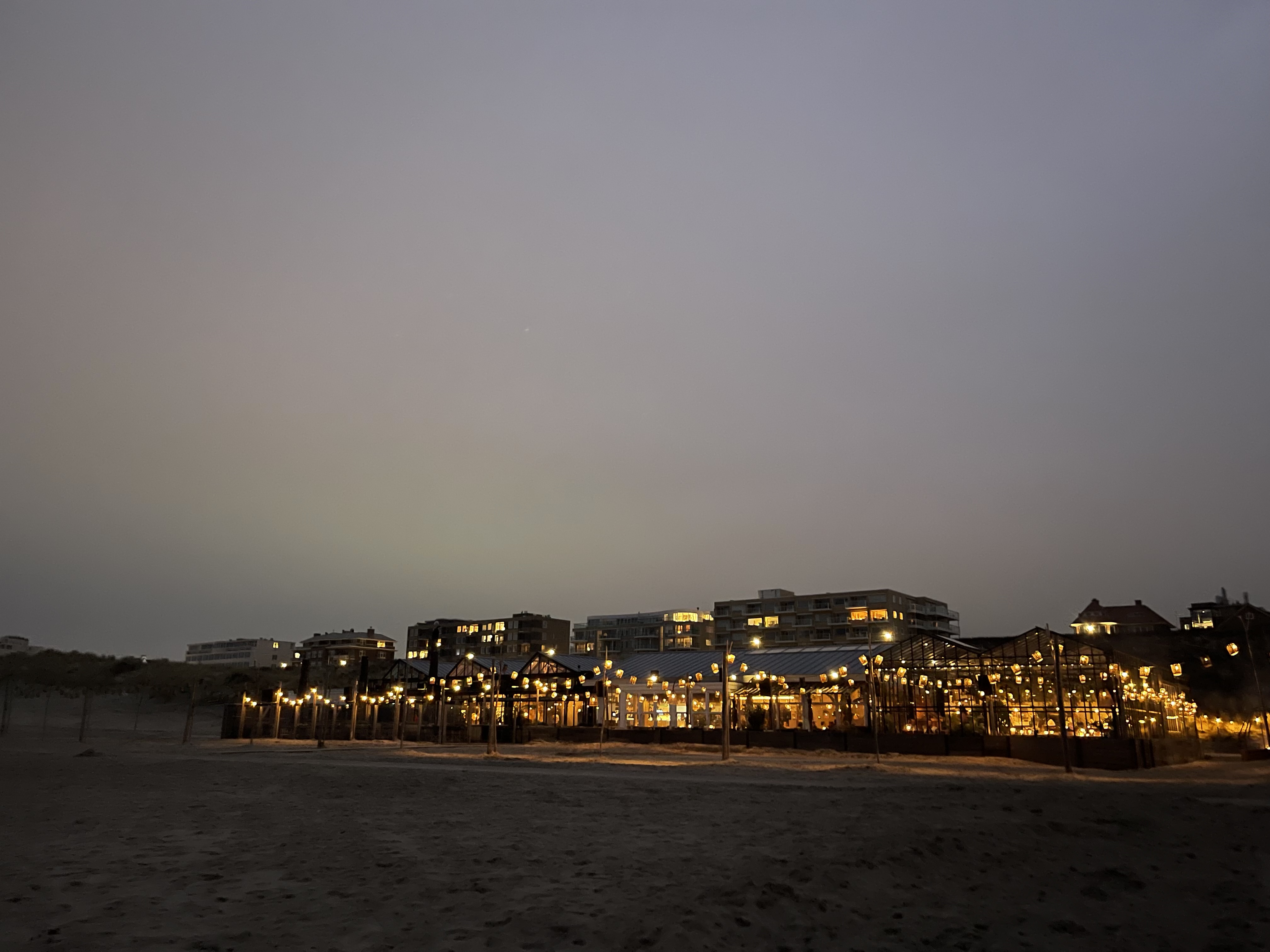
and it really wouldn’t have changed anything. the tide would have rolled, salt-gray, rhythmic, unforgiving, over me as the lanterns burned brightly in the beach house but it’s one thing I may always regret
Flotsam of the North Sea. Noordwijk, Netherlands. Image, my own.
Ghost
You never think That someone will pass through you Like the ghost of who they once were Like the spirit of a person you once knew
You never think That it could hurt so badly to unravel Like every color of who they were was in you Like each thread that stitched you all together was undone
You never knew What death while someone is alive feels like What saying goodbye without saying anything means What one body of pain can experience
Until you knew
Tide. North Sea, Noordwijk, Netherlands. Imgae, my own.
Comfort
sink into the folds of an oversized chaise tuck your body between the seat cushion and english arm rest your head on the soft folds of the chenille bolster, squish and knead yourself into the billows of down fill rest all of yourself in there to see if you’ll be safe from the storm
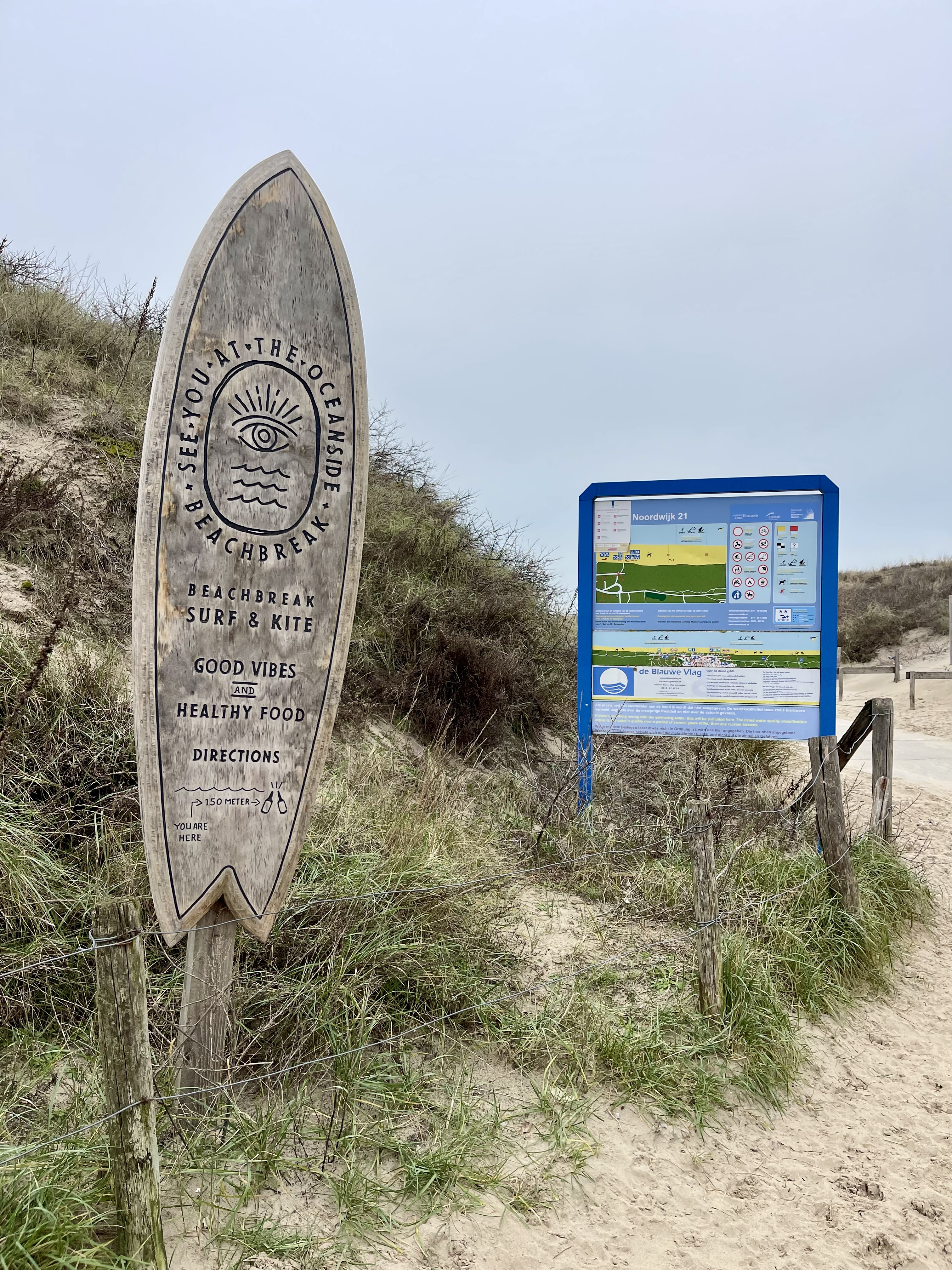
Directions. Noordwijk, Netherlands. Image, my own.
Celebrate
listen, don’t you forget that even days of sorrow can be days of celebration that’s the paradox we were born for this
My House at Night. Noordwijk, Netherlands. Image, my own.
Spoon
if you bring your thighs right under the nook of my knees and the bulk of your body right into the curve of my hips and your chest flush with my back and wrap yourself around me all night, I may remember what love, and safety, and sighing in peace really feels like I’ll be home again quiet, delicious, hazy jazz you’ll quell my longing
Jazz Café Alto. Amsterdam, Netherlands. Image, my own.
Relentless
sometimes this existence can feel so heavy so weighted and wearisome so relentless
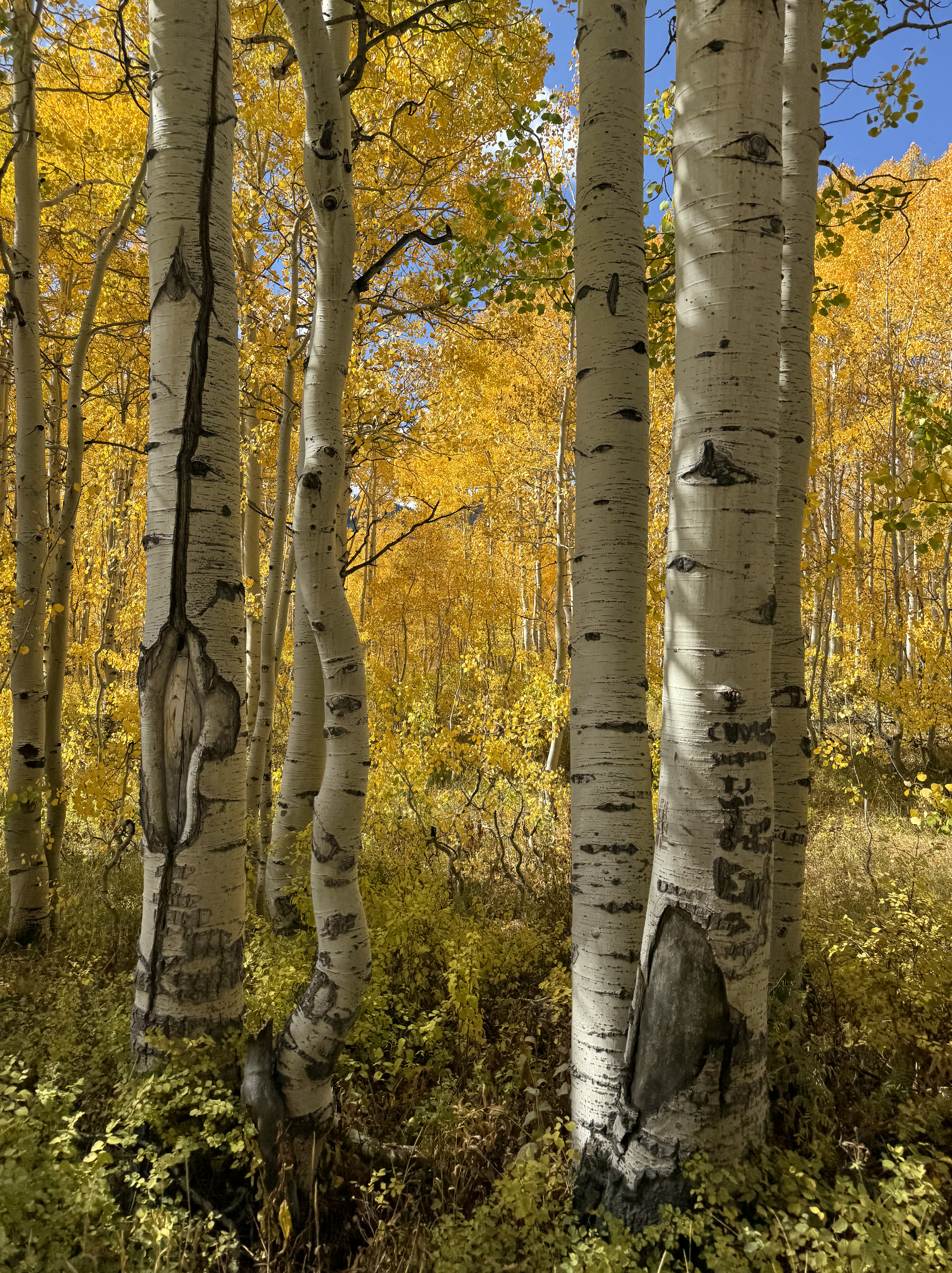
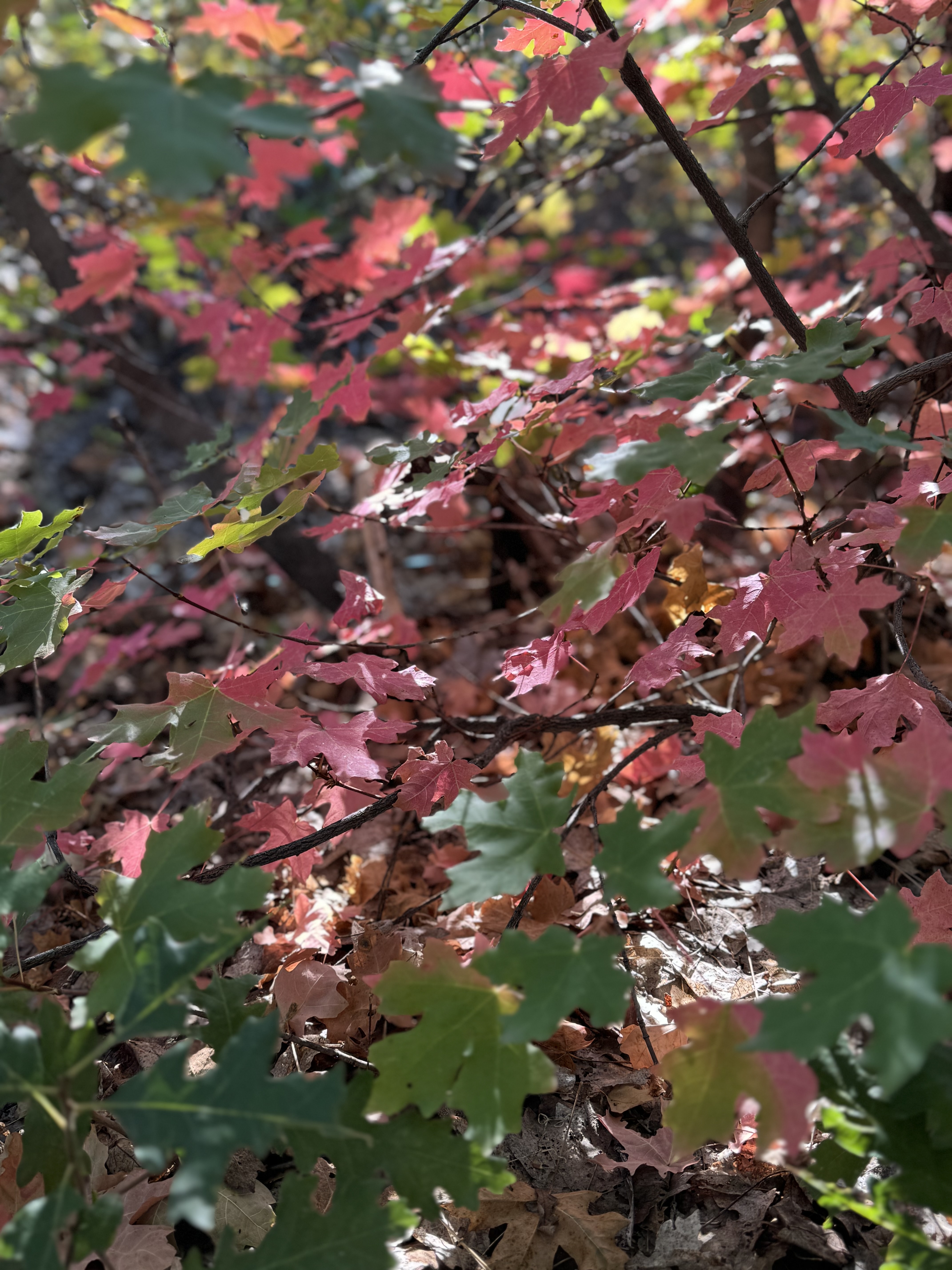
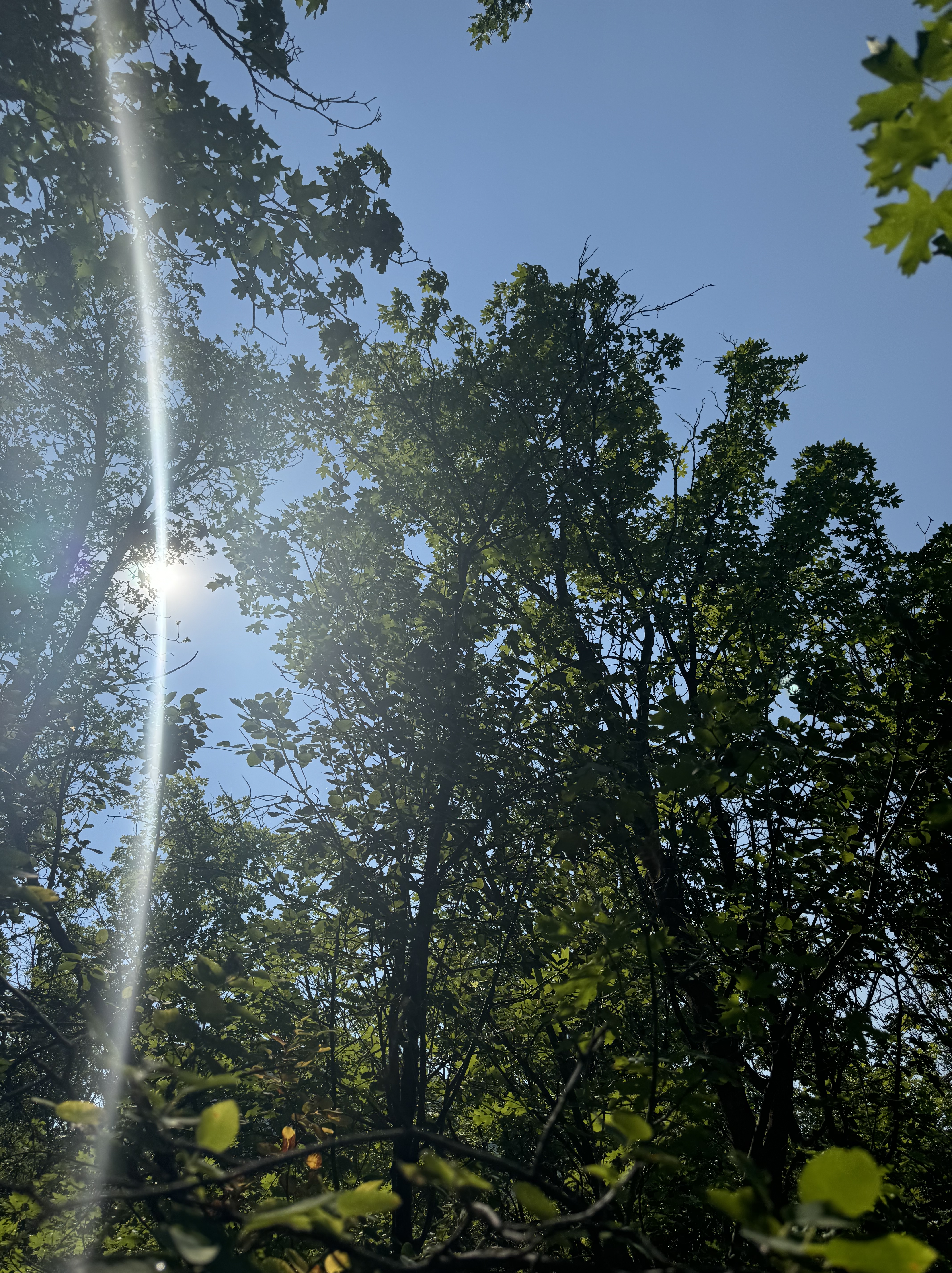
Scrub Oak in Transition, September 2024. Image, my own.
Autumn Equinox
there is this balance, this even-keeled consciousness, an equanimity of the breath in the air this time of year, the night and the day coming into equilibrium, living and dying reflected in the vegetation, the need for both action and rest, moving and pause, all things in their time and space
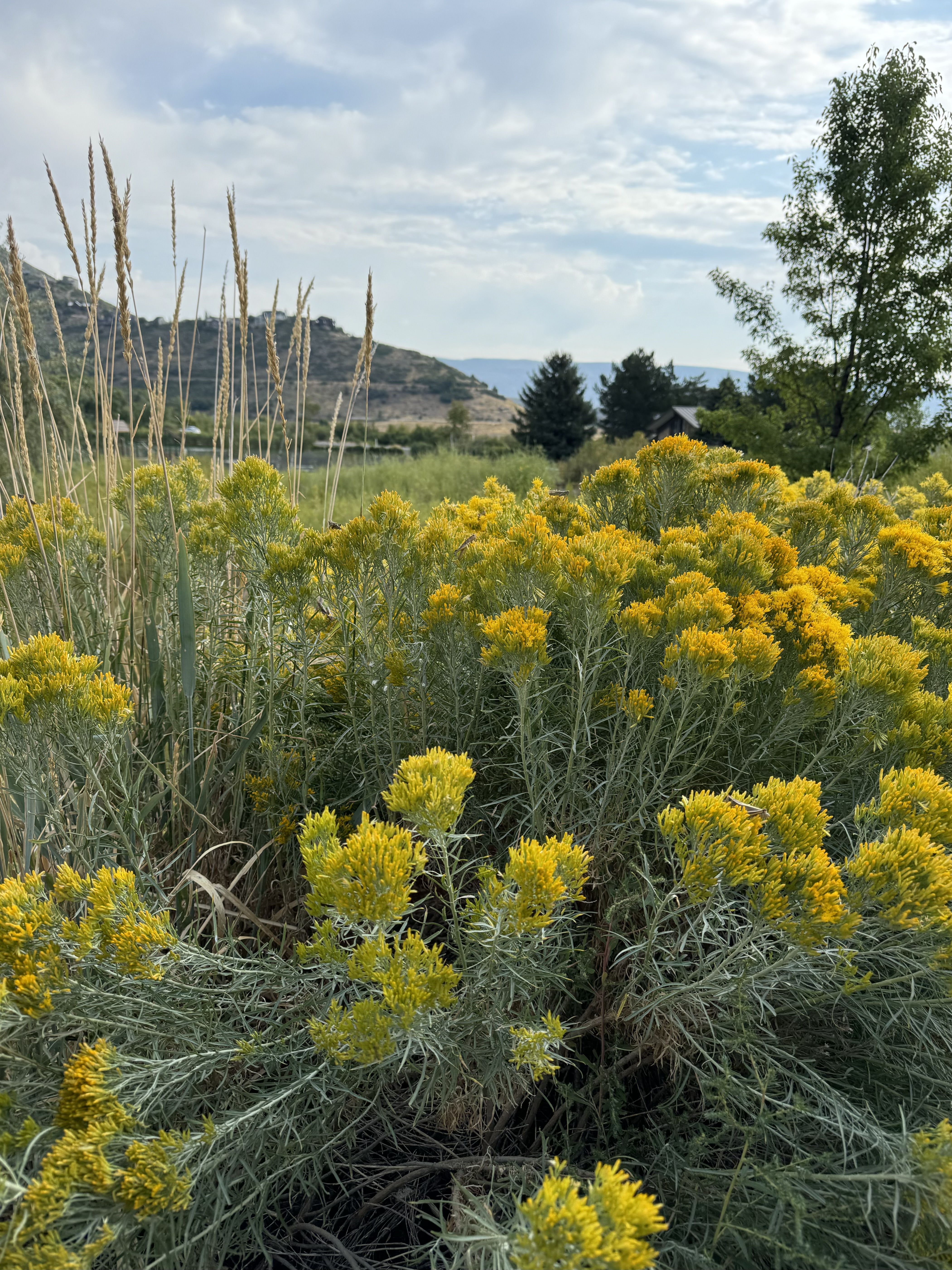
Rubber Rabbitbrush, September 2024. Image, my own.
Evolve -for the elders who’ve shone a light along the way
I’ve been watching the course of Life more closely as I’ve neared ‘halfway’
I’m totally clear, I may die tomorrow of a fungal infection brought on by an errant hang nail
This year, I started to see and understand some parts about this journey called life,
Facets that had never been open to me before, that had never been revealed
In youth. I began to witness the power of personal human evolution.
I’m sure I’ve seen it displayed previously, but now, it seemed closer, more raw and real
The strength, the peace, the solidarity, and grounding that some humans
Offer themselves and others when they choose to live with their arms stretched
Up to the divine, when they’re moving forward in purpose while trusting the
Siren song of the universe to guide them to good ends, and over hard roads, too, don’t
Mistake. I don’t think that living this evolution is simple in any way. To allow the
Lessons that life has offered you to be inculcated into your core, this isn’t a flat
Path, rather peaks and valleys, I see my mother who pursues her passions like watercolor and arts
Grant writing without prompting or celebration, and steadily understands
what she loves, what she holds dear and then lifts up those elements of her
Life, tending to her own garden of desire, she invests her best self in her and us.
All I’m saying is that for a very long time I felt completely perplexed with the recipe of this
thing I was witnessing– evolution– my septuagenarian friends, were practicing this
Art of living with purpose, too, with love and with a fair dose of spicy ironic interjection
Swimming every day, hiking all over the hills and valleys of our home
They were another of my sign-posts. And my uncle, who spoke the eulogy at
My aunt’s celebration of life, a woman who also lived and gave her life over to joy,
He has also chosen to live in the miracle of the era of man, to let life
Be the ocean, the teacher, and he became the student, he’s allowed those learnings
To become part of him in the way he loves his children, the way he acts
In community, the way he carries the knowing that life will always be a question, a universal
Query that we can only answer by living more truly, more soundly, more surely in verity
To that Flame that was lit within us at our birth, the miracle of existence realized, we evolve
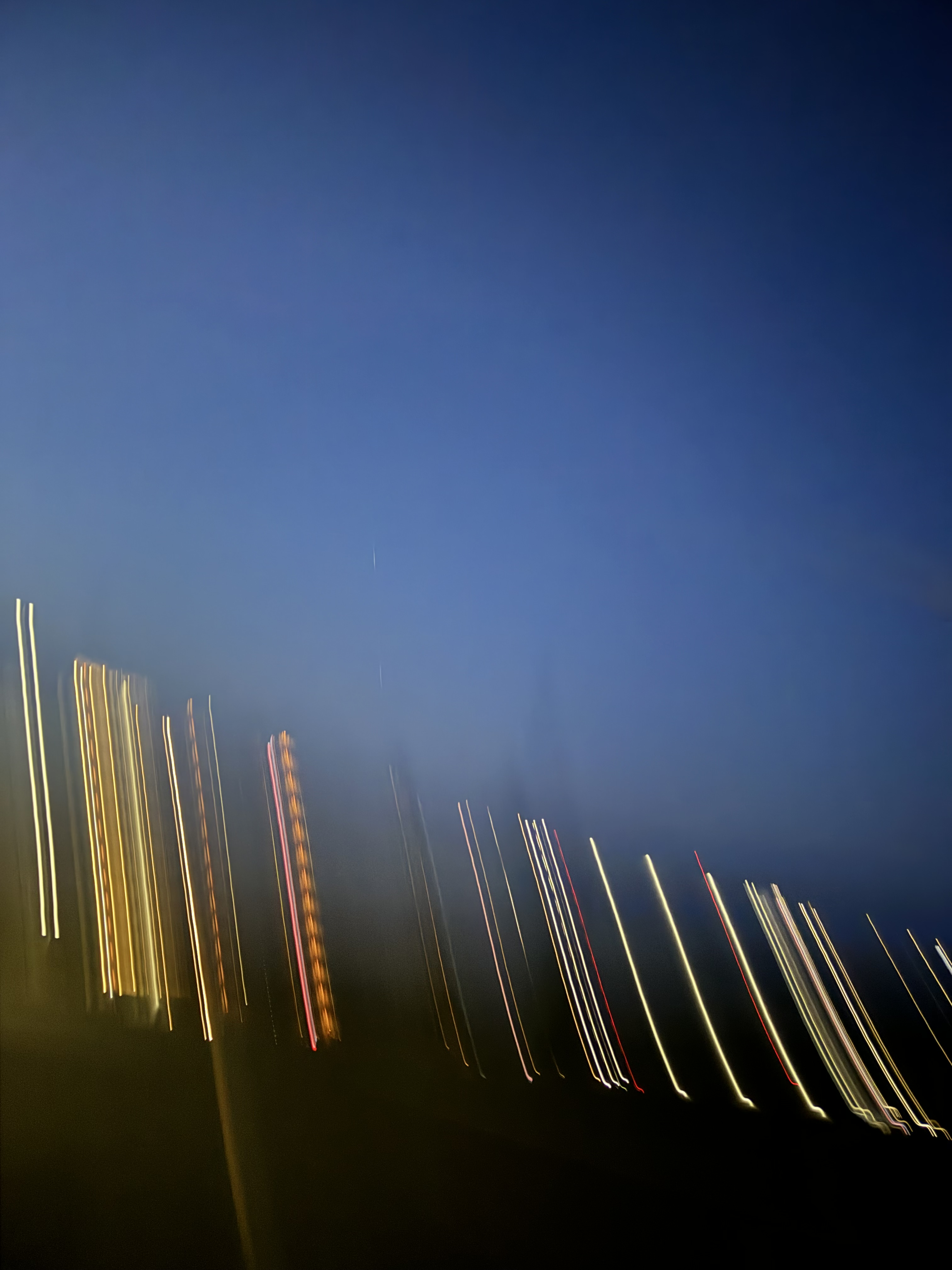
Lights. September 2024. Image, my own.
On Being
be who you are and who you can be, and meet those two verities inside yourself with loving kindness and compassion and let it be enough to experience the joy of living as you see fit as you love yourself
Andrew Wyeth Grasses, September, 2024. Image, my own.
Steady in the Fall
the sun and moon move into equilibrium waxing crescent to quarter
peloton of geese ride high in the wide blue sky, calling and answering back, headed south
flowers still bloom, delicate violet saturated yellow, vibrant magenta, as grass fades, sepia to umber
fully bronze dragon fly the size of a silver dollar flickers past in the sun chased by a saxe blue fly the same size
grasshoppers bunch on mustard rabbitbrush in the sway of breeze next to dark-chocolate velvet cattails, stalks steeped in pond-water
cooper’s hawk cries from the brush high and free like an alter ego finding the next rodent in the undergrowth
the air takes on the rush and pulse of crisp wind as the sun’s rays angle longer, cooling field, flower, and fly
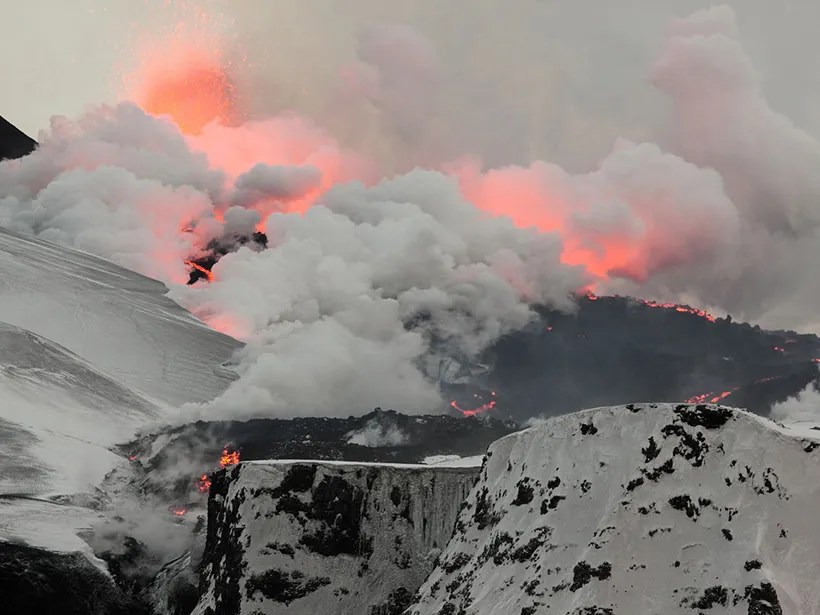
Scientists used white plumes of steam like these to track lava from the 2010 Eyjafjallajökull eruption as it melted the glacier. Credit: Boaworm, CC BY 3.0
——-
Eschatology by Megan Dickson
Life took us to the edge of the known universe
this brink, this precipice, on a red dirt plateau, all rust-verged and jagged, like a tear in heart tissue, like broken bone projecting through soft skin.
skin, bone, sinew often don’t break cleanly so there, on that terrifying cliff, we looked out into the blackness and saw that it was our own
dotted with infinite, swirling stars, nebulous arms of our galaxy, folded across that night, that nothing. we realized the instant we stepped to the fathomless limit
all the light we carried in our core could somehow save us, from this end. So into the starry, inky ebony we leapt, being careful to be sure that we crossed over the boundary between
everything we’d known, into every night we’d ever feverishly dreamed. this jump, this real act of self-preservation flung us into
the heart of the unknown cosmos and there we were to greet ourselves at the gates of our unknowing. we opened the tiny, golden latch on the
impossibly large, swinging metalwork gate, stepped slowly, quietly over the threshold of revelation, everything open and waiting for us in that pitchy gloam still had
to be sensed– felt, touched, tasted, smelled– not physically, but by the fingers of the formerly known soul that now bore this greater knowing. this
was not the end but the beginning. a larger excursus on the limitless infinite than we had previously known. we’ll never know if there
was only one way to this beginning– the ledge, the leap, the jump– our tiny, finite, blink of a guess gives us the idea that, no, there are
many precipices, many pinnacles, many paths to the infinite edges of the unknown into new reaches of galactic consciousness– seeing and knowing more than we
could possibly have imagined yesterday
——-
What will happen when there is no ice left in our house? What will the warming Earth mean for humans and animals? Now, nearly twenty years from some of my most intense life experiences, travel, and living in Alaska, I finally realize that the difficulty with this moment of continuing glacial recession is that it is so very difficult for humans to push past their one-hundred-year lifespans to see beyond to the systems that shape not only our now, but our future.
I’m the first to raise my hand and express that this kind of complex information is difficult for the lay-person to process. So how do we make science, scientific facts, and continued scientific hypothesis and discovery on climate change more bite sized, more commonplace, more palatable. The ignorant me doesn’t have a ready answer for this.
Will we overheat and roast as the seas engulf us before we grasp the stunning reality that we need to move from believing that humans can harness Earth and her resources rather than humanity taking more careful notes on how Earth regulates her own systems?
Are we at the 911 phase of this journey? I scarcely think anyone knows. This summer, 2024, has felt hotter than ever. However, feelings don’t really translate into hard scientific evidence. But my “feeling” is backed up by science. July 21, 2024 was the hottest day ever recorded on planet Earth.1
——-
Fanning the yellowed pages under my thumb, the book fell open easily in my hands to the front inside cover. Plastered under a handwritten note was a sticker of a galaxy spiraling in a sea of black, and under its outstretched arms were printed the words, “Ex Libris Kenneth A. Farnsworth.” From the library of my father. He had been the one who scrawled the message above the sticker, “Mom, with love and gratitude for turning me on to this ‘good stuff’.”
Tenderly, I traced the edges of the sticker, and drew my fingers across the fading ink. This small volume was an important relic from my grandmother’s life, a testament to her love of the written word, to the way she not only relished poetry and prose but had also passed this love on to her children and grandchildren. I thought that the book looked centuries old, an age cracked spine and what looked like a hand stitched binding were beginning to peel apart leaving bits of cheese cloth, paste, and leather showing in between. The worn leather exterior bore the title, stamped in gold ink, One Hundred and One Famous Poems. The copyright read Riely & Lee 1958. I guess relic, old, and antique were relative terms.
For instance, I had mistakenly assumed that ideas surrounding the greenhouse effect, and global warming were part of “new science,” or discoveries made recently relative to my lifetime. The reverse is true. Some of these calculations dated back over a century which makes them almost archaic in my humble perspective. Some of the poets in Grandma’s book– Dickinson, Browing, Emerson, Whitman, Longfellow, Wordsworth– had lived during the time when the first scientific theories about what is now termed the “natural greenhouse effect” were being developed. Englishman John Tyndall is credited with the discovery of greenhouse gases in 1859. He drew a simple comparison, “Just as a dam causes a local deepening of the stream, so our atmosphere, thrown as a barrier across the terrestrial rays, produces a local heightening of the temperature at the earth’s surface.” This wasn’t new science it was old news.
On page 81, Lucy Larcom’s poem titled, “Plant A Tree,” sounded like a worthy credo for an early American environmentalist. She had died just one year before Swedish chemist Svante Arrhenius began testing his theories that coal burning was changing the character of earth’s atmosphere. Larcom wrote, “He who plants a tree… Plants a hope.” In 1894, a year after Larcom’s death, Arrhenius hoped to determine the effect on earth’s climate in the unlikely event that greenhouse gases like carbon dioxide emitted from coal burning ever doubled. His conclusion: if the greenhouse gases doubled, earth’s temperature would rise.
So if basic climate science isn’t new, why has it taken such a long time for humans to perceive, address, or pay attention to these warnings from scientists? The answers are certainly multi-layered: the relatively short time-span of human life, the heated politicization of climate change, the fact that scientific knowledge is not based on speed but on thoughtful interrogation, the fact that we know that Earth has experienced many climate epochs and mass extinctions in its deep past. Climate scientists including glaciologists, often ask very specific questions of climatic change in very narrow systems. Another reason may be that it can be very difficult to determine when humans should intervene in their environment.
In fact, an article in The Atlantic2 this July, offers some insight and ideas about human intervention into glacial preservation, in short, geoengineering. Ross Anderson interviews Slawek Tulaczyk about his projects on Thwaites glacier in Greenland and on the Western Antarctic ice sheet where he has come to believe that one of the only ways that ice, and perhaps Earth, can be saved from ‘catastrophic’ sea-level rise is to give humans more time to grapple with climate change; therefore, Tulaczyk proposes that humans attempt to stop ice sheet from floeing. His hypothesis and process go well beyond all geoengineering feats that have been attempted on Earth this far. In lay terms, Tulaczyk suggests that we pump water out from underneath large glacial ice sheets in hopes that they will readhere to the underlying bedrock. Tulaczyk believes that humans could keep massive ice shelves intact, and in essence, keep them from separating, melting, and causing sea-level rise.
There on my bed, a weird quantum meeting took place. I imagined Robert Frost listening to these glaciologists, then returning home to send the Intergovernmental Panel on Climate Change (IPCC), President Jim Skea, these famous lines,
SOME say the world will end in fire,
Some say in Ice.
From what I’ve tasted of desire
I hold with those who favor fire.
But if it had to perish twice,
I think I know enough of hate
To know that for destruction ice
Is also great
And would suffice.
Fire, ice, ice, fire. From first-hand Northern climate immersion, I would still have to go with the first. I’d say fire.
Geldingadalagos, Eruption at Geldingadalir Iceland, 2006, credit: Mangus Johannsson
——
Two days after my grandmother’s funeral, my fingers brushed the soft sheen of one silk square of quilt. Bright mauve lilacs, butter daffodils, and blush sweet peas undulated across the small cubes of fabric. I drew a cubed piece of leopard print fabric to my nose, hoping to catch even a faint breath of her. A gaudy half-moon of colorful Klein blue silk shone in front of me masking the neutral brown tones of the living room carpet in my parents’ home in Duchesne, Utah.
She would have worn any one of these silk creations anywhere. That was the best part. Sure grandma had the shirts that were reserved for church, but it was just as common to find her out behind the house in the garden sweating under a wide blue sky, a broad brimmed straw hat, and a silk shirt splashed with brazen colors clashing in contrast to the hue of her pants. Perfectly garish.
My sisters and I quietly continued our work. Grabbing a shirt from the silky mound behind me, this one a deep emerald green I remembered how at Christmas she had once worn it with a pair earrings stuck through the collar her idea of “jazzing up” an ensemble. Ostentatious octogenarian that she was, we were cutting all of her shirts into quilt squares, though no one in the family, children or grandchildren, had ever made a quilt.
There were plenty of decisions surrounding her death that caused familial disagreement– her obituary, her headstone, her viewing. Most of these squabbles came from the amalgam of contrasting beliefs, values, views, and lifestyles manifest in her posterity. But everyone seemed to want to hold on to these shirts and other articles of clothing sometimes so threadbare, frayed, unraveling that only a few small quilt squares could be saved.
*(This is the latest in a series of essays here on Refined + Rugged. They include: Hope (Alaska), Hope (and Ice), Hope (and Earth), Hope (and Loss), Hope (and Love). I’m exploring what it means to be human in a time of unprecedented climate change. As the world warms, and humans begin and continue to adapt to these massive climate changes in our lifetime, what will this mean for our environment, our Earth, our children, and our grandchildren. As always, thank you for reading, commenting, liking, sharing, and generally pondering these questions with me. Love, Megan)
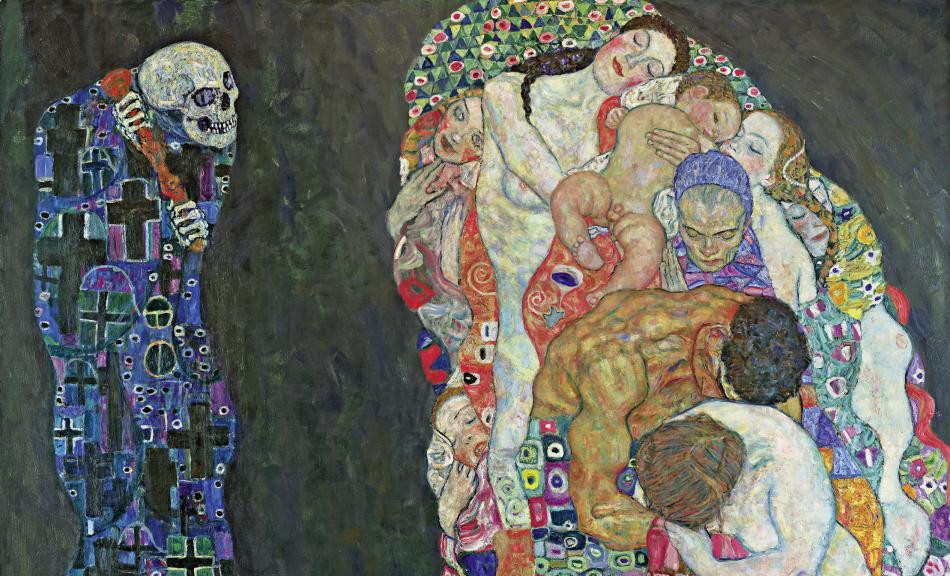
Death and Life, Gustav Klimt, 1910, Leopold Museum, Vienna, Austria. This “life” is comprised of all generations: every age group is represented, from the baby to the grandmother, in this depiction of the never-ending circle of life. The solitary, darkly dressed figure of death stands on the left.





 Refined + Rugged