No one tells you that love and risk are synonymous.
This is a hard truth to bear in this world, I’ve found.
But people also don’t tell you that love comes in so many beautiful forms that perhaps the human tongue has never named or caressed or articulated them all– anima, amor, amatio, cupido, diligentia, ludus, eros, agape, pragma, philautia, zelo Love
Love forms the deepest connective tissues and threads of our psyche and souls– the circle that embraces us all, and this love is vast, sweeping, sublime, teeth– it is the sinew of the divine that runs through all living things. You Me.
It’s the why behind how washing the dishes and a sensual lie-in, lay in, lay on can be erotic. Simple.
That is the wonder of love. The musings that both bring us to our knees in gratitude as well as sorrow, pleasure as well as pain, transcendence and immanence. What shall we choose? Love allows us to stand at the edge of the universe of our knowing and unknowing.
Love
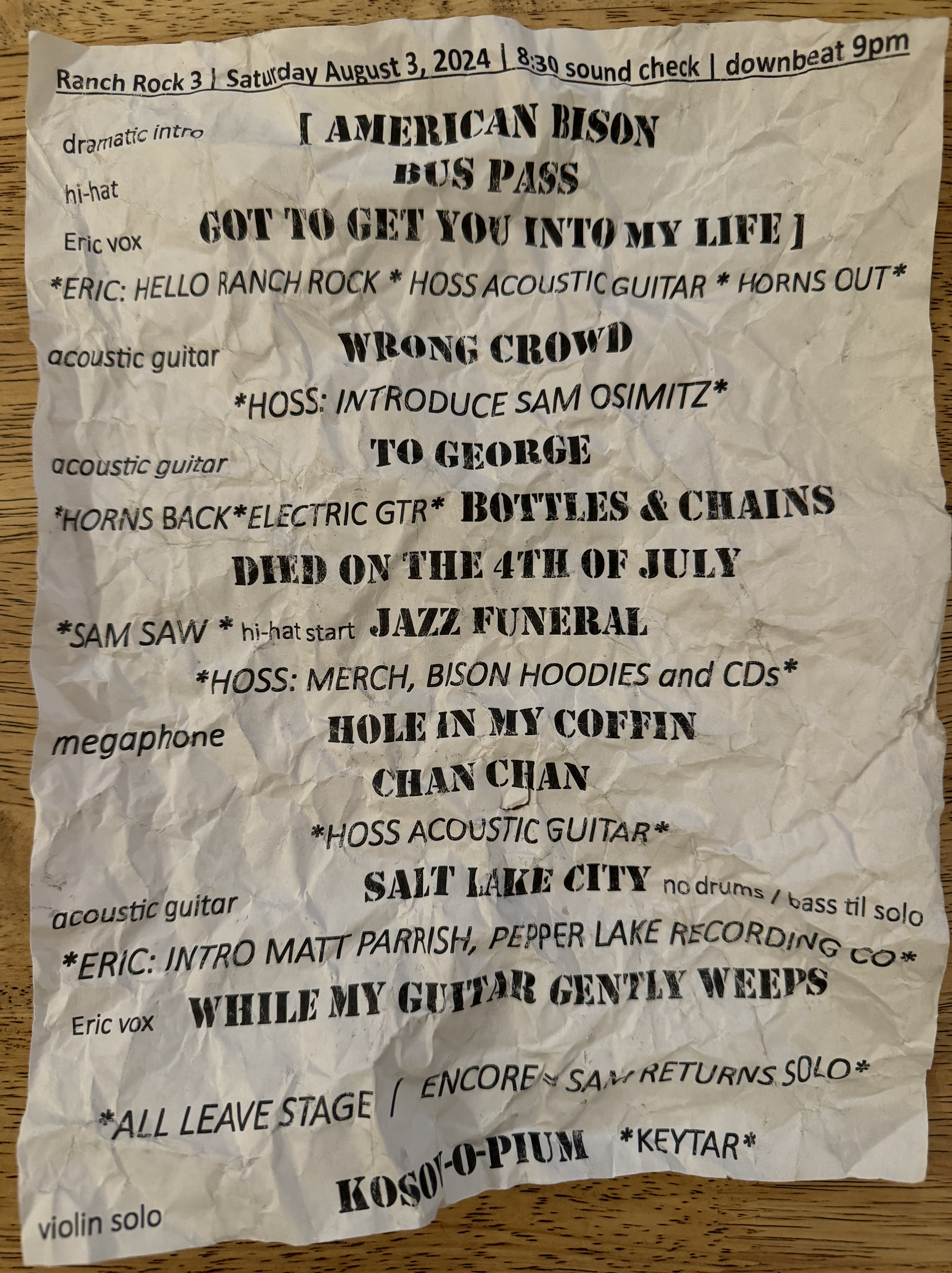
Set List from an Epic Music Fest, Ranch Rock III, 2024
Connaissances
Today my old life died and my new life spawned
I had a tiny lump in my throat
My stomach turned a bit, and I
took a long, deep breath through the pain
then I realized that I was hungry for breakfast,
stomach grumbling, I went out and ate and egg
Eden, Utah
Artist You are the artist of your soul, winsome and west her and just so me
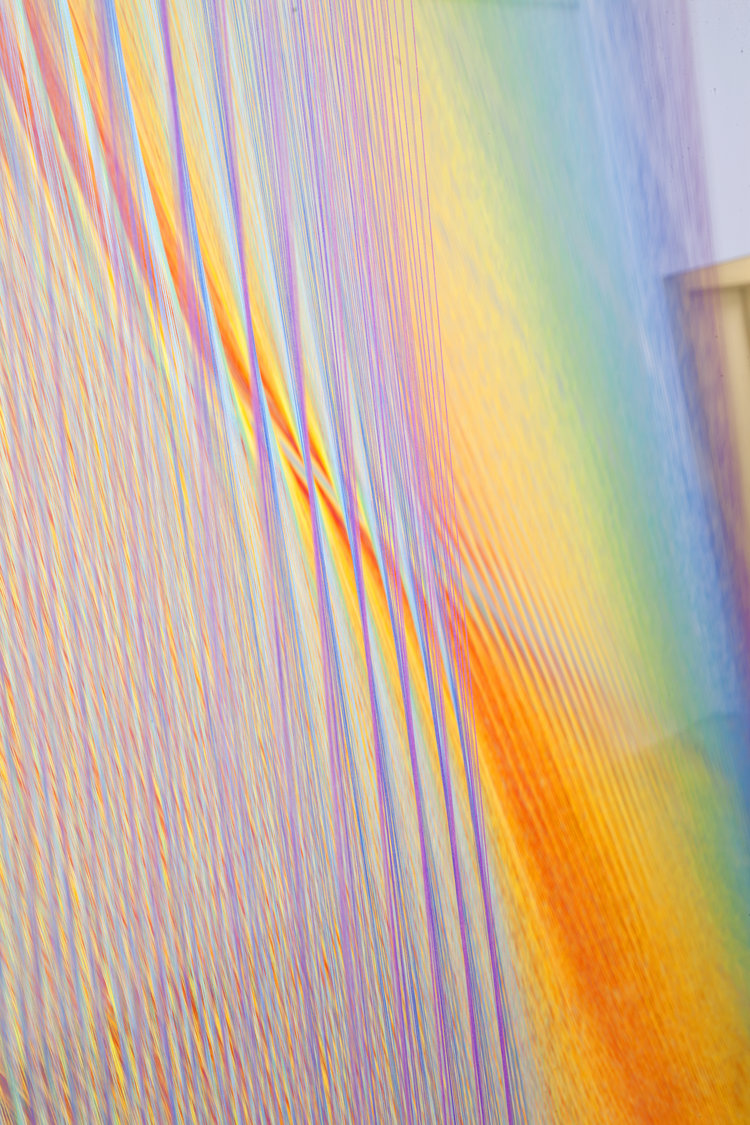
Gabrielle Dawe, Plexus 36
Ikigai
When you know things When you understand and Begin to Evolve and sure, you’ll be erroneous again, don’t forget that there will always be People who will try to tell you Otherwise The sky is falling for them, for sure rather, Recognize that You Know that the sun is rising You are not nothing that you do Exist they are misinformed Just as all the ideas that have ever been flat lines, no heartbeat
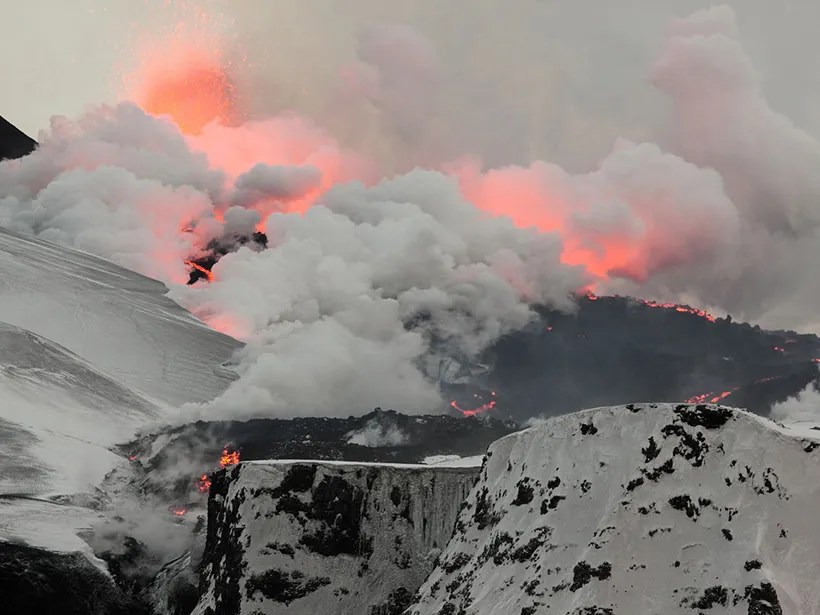
Scientists used white plumes of steam like these to track lava from the 2010 Eyjafjallajökull eruption as it melted the glacier. Credit: Boaworm, CC BY 3.0
——-
Eschatology by Megan Dickson
Life took us to the edge of the known universe
this brink, this precipice, on a red dirt plateau, all rust-verged and jagged, like a tear in heart tissue, like broken bone projecting through soft skin.
skin, bone, sinew often don’t break cleanly so there, on that terrifying cliff, we looked out into the blackness and saw that it was our own
dotted with infinite, swirling stars, nebulous arms of our galaxy, folded across that night, that nothing. we realized the instant we stepped to the fathomless limit
all the light we carried in our core could somehow save us, from this end. So into the starry, inky ebony we leapt, being careful to be sure that we crossed over the boundary between
everything we’d known, into every night we’d ever feverishly dreamed. this jump, this real act of self-preservation flung us into
the heart of the unknown cosmos and there we were to greet ourselves at the gates of our unknowing. we opened the tiny, golden latch on the
impossibly large, swinging metalwork gate, stepped slowly, quietly over the threshold of revelation, everything open and waiting for us in that pitchy gloam still had
to be sensed– felt, touched, tasted, smelled– not physically, but by the fingers of the formerly known soul that now bore this greater knowing. this
was not the end but the beginning. a larger excursus on the limitless infinite than we had previously known. we’ll never know if there
was only one way to this beginning– the ledge, the leap, the jump– our tiny, finite, blink of a guess gives us the idea that, no, there are
many precipices, many pinnacles, many paths to the infinite edges of the unknown into new reaches of galactic consciousness– seeing and knowing more than we
could possibly have imagined yesterday
——-
What will happen when there is no ice left in our house? What will the warming Earth mean for humans and animals? Now, nearly twenty years from some of my most intense life experiences, travel, and living in Alaska, I finally realize that the difficulty with this moment of continuing glacial recession is that it is so very difficult for humans to push past their one-hundred-year lifespans to see beyond to the systems that shape not only our now, but our future.
I’m the first to raise my hand and express that this kind of complex information is difficult for the lay-person to process. So how do we make science, scientific facts, and continued scientific hypothesis and discovery on climate change more bite sized, more commonplace, more palatable. The ignorant me doesn’t have a ready answer for this.
Will we overheat and roast as the seas engulf us before we grasp the stunning reality that we need to move from believing that humans can harness Earth and her resources rather than humanity taking more careful notes on how Earth regulates her own systems?
Are we at the 911 phase of this journey? I scarcely think anyone knows. This summer, 2024, has felt hotter than ever. However, feelings don’t really translate into hard scientific evidence. But my “feeling” is backed up by science. July 21, 2024 was the hottest day ever recorded on planet Earth.1
——-
Fanning the yellowed pages under my thumb, the book fell open easily in my hands to the front inside cover. Plastered under a handwritten note was a sticker of a galaxy spiraling in a sea of black, and under its outstretched arms were printed the words, “Ex Libris Kenneth A. Farnsworth.” From the library of my father. He had been the one who scrawled the message above the sticker, “Mom, with love and gratitude for turning me on to this ‘good stuff’.”
Tenderly, I traced the edges of the sticker, and drew my fingers across the fading ink. This small volume was an important relic from my grandmother’s life, a testament to her love of the written word, to the way she not only relished poetry and prose but had also passed this love on to her children and grandchildren. I thought that the book looked centuries old, an age cracked spine and what looked like a hand stitched binding were beginning to peel apart leaving bits of cheese cloth, paste, and leather showing in between. The worn leather exterior bore the title, stamped in gold ink, One Hundred and One Famous Poems. The copyright read Riely & Lee 1958. I guess relic, old, and antique were relative terms.
For instance, I had mistakenly assumed that ideas surrounding the greenhouse effect, and global warming were part of “new science,” or discoveries made recently relative to my lifetime. The reverse is true. Some of these calculations dated back over a century which makes them almost archaic in my humble perspective. Some of the poets in Grandma’s book– Dickinson, Browing, Emerson, Whitman, Longfellow, Wordsworth– had lived during the time when the first scientific theories about what is now termed the “natural greenhouse effect” were being developed. Englishman John Tyndall is credited with the discovery of greenhouse gases in 1859. He drew a simple comparison, “Just as a dam causes a local deepening of the stream, so our atmosphere, thrown as a barrier across the terrestrial rays, produces a local heightening of the temperature at the earth’s surface.” This wasn’t new science it was old news.
On page 81, Lucy Larcom’s poem titled, “Plant A Tree,” sounded like a worthy credo for an early American environmentalist. She had died just one year before Swedish chemist Svante Arrhenius began testing his theories that coal burning was changing the character of earth’s atmosphere. Larcom wrote, “He who plants a tree… Plants a hope.” In 1894, a year after Larcom’s death, Arrhenius hoped to determine the effect on earth’s climate in the unlikely event that greenhouse gases like carbon dioxide emitted from coal burning ever doubled. His conclusion: if the greenhouse gases doubled, earth’s temperature would rise.
So if basic climate science isn’t new, why has it taken such a long time for humans to perceive, address, or pay attention to these warnings from scientists? The answers are certainly multi-layered: the relatively short time-span of human life, the heated politicization of climate change, the fact that scientific knowledge is not based on speed but on thoughtful interrogation, the fact that we know that Earth has experienced many climate epochs and mass extinctions in its deep past. Climate scientists including glaciologists, often ask very specific questions of climatic change in very narrow systems. Another reason may be that it can be very difficult to determine when humans should intervene in their environment.
In fact, an article in The Atlantic2 this July, offers some insight and ideas about human intervention into glacial preservation, in short, geoengineering. Ross Anderson interviews Slawek Tulaczyk about his projects on Thwaites glacier in Greenland and on the Western Antarctic ice sheet where he has come to believe that one of the only ways that ice, and perhaps Earth, can be saved from ‘catastrophic’ sea-level rise is to give humans more time to grapple with climate change; therefore, Tulaczyk proposes that humans attempt to stop ice sheet from floeing. His hypothesis and process go well beyond all geoengineering feats that have been attempted on Earth this far. In lay terms, Tulaczyk suggests that we pump water out from underneath large glacial ice sheets in hopes that they will readhere to the underlying bedrock. Tulaczyk believes that humans could keep massive ice shelves intact, and in essence, keep them from separating, melting, and causing sea-level rise.
There on my bed, a weird quantum meeting took place. I imagined Robert Frost listening to these glaciologists, then returning home to send the Intergovernmental Panel on Climate Change (IPCC), President Jim Skea, these famous lines,
SOME say the world will end in fire,
Some say in Ice.
From what I’ve tasted of desire
I hold with those who favor fire.
But if it had to perish twice,
I think I know enough of hate
To know that for destruction ice
Is also great
And would suffice.
Fire, ice, ice, fire. From first-hand Northern climate immersion, I would still have to go with the first. I’d say fire.
Geldingadalagos, Eruption at Geldingadalir Iceland, 2006, credit: Mangus Johannsson
——
Two days after my grandmother’s funeral, my fingers brushed the soft sheen of one silk square of quilt. Bright mauve lilacs, butter daffodils, and blush sweet peas undulated across the small cubes of fabric. I drew a cubed piece of leopard print fabric to my nose, hoping to catch even a faint breath of her. A gaudy half-moon of colorful Klein blue silk shone in front of me masking the neutral brown tones of the living room carpet in my parents’ home in Duchesne, Utah.
She would have worn any one of these silk creations anywhere. That was the best part. Sure grandma had the shirts that were reserved for church, but it was just as common to find her out behind the house in the garden sweating under a wide blue sky, a broad brimmed straw hat, and a silk shirt splashed with brazen colors clashing in contrast to the hue of her pants. Perfectly garish.
My sisters and I quietly continued our work. Grabbing a shirt from the silky mound behind me, this one a deep emerald green I remembered how at Christmas she had once worn it with a pair earrings stuck through the collar her idea of “jazzing up” an ensemble. Ostentatious octogenarian that she was, we were cutting all of her shirts into quilt squares, though no one in the family, children or grandchildren, had ever made a quilt.
There were plenty of decisions surrounding her death that caused familial disagreement– her obituary, her headstone, her viewing. Most of these squabbles came from the amalgam of contrasting beliefs, values, views, and lifestyles manifest in her posterity. But everyone seemed to want to hold on to these shirts and other articles of clothing sometimes so threadbare, frayed, unraveling that only a few small quilt squares could be saved.
*(This is the latest in a series of essays here on Refined + Rugged. They include: Hope (Alaska), Hope (and Ice), Hope (and Earth), Hope (and Loss), Hope (and Love). I’m exploring what it means to be human in a time of unprecedented climate change. As the world warms, and humans begin and continue to adapt to these massive climate changes in our lifetime, what will this mean for our environment, our Earth, our children, and our grandchildren. As always, thank you for reading, commenting, liking, sharing, and generally pondering these questions with me. Love, Megan)
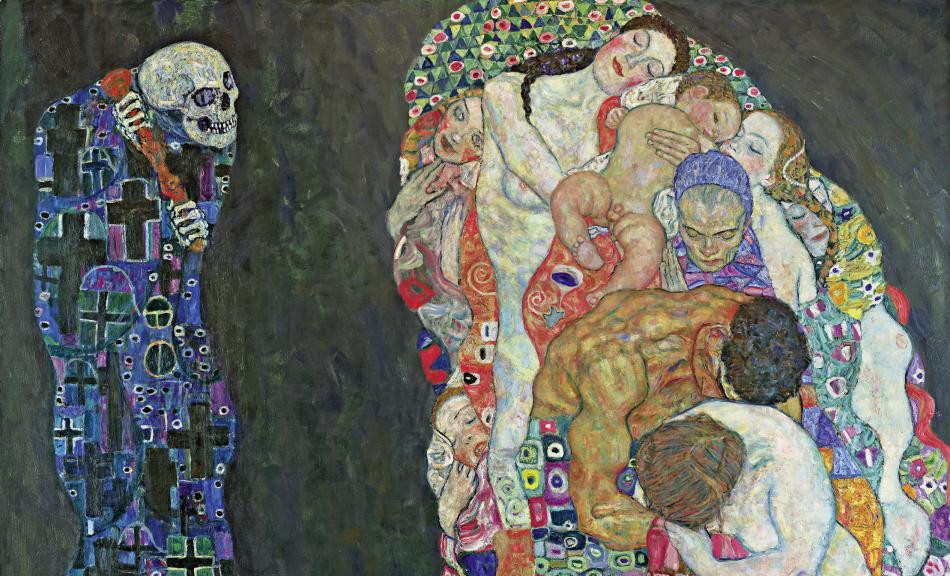
Death and Life, Gustav Klimt, 1910, Leopold Museum, Vienna, Austria. This “life” is comprised of all generations: every age group is represented, from the baby to the grandmother, in this depiction of the never-ending circle of life. The solitary, darkly dressed figure of death stands on the left.
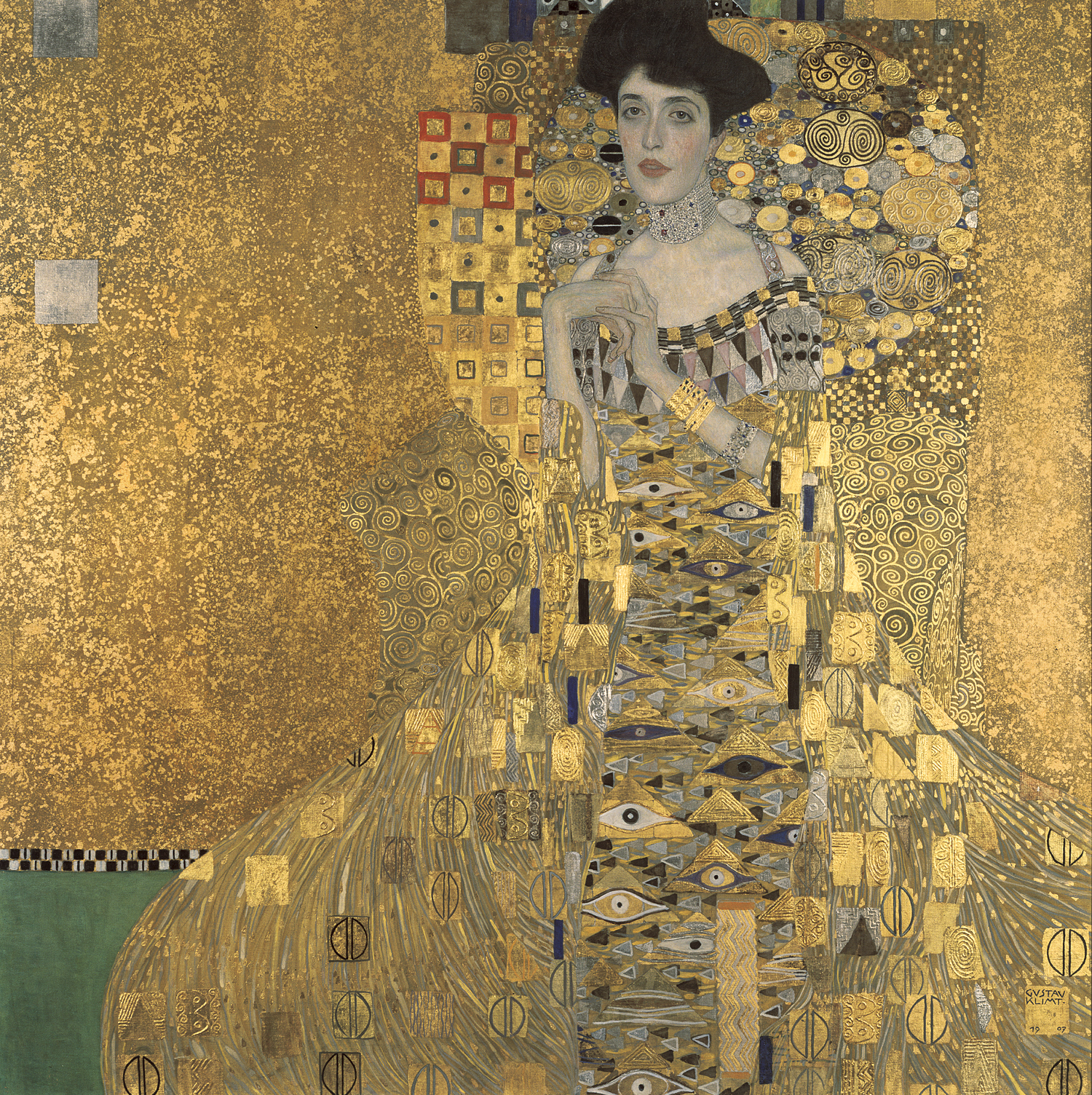
Portrait of Adele Bloch-Bauer I , 1907; Gustav Klimt; Oil, gold, and silver on canvas Neue Galerie, New York
The Matriarch, Grandma Dorothy dressed in a gold lamé housecoat each year for Thanksgiving dinner. The table, set with rose china, was laid out long in her small basement apartment. Poised and gracious in her kingdom, she sat at the head of the table and smiled at each child and grandchild as we voiced gratitude for our blessings. She, in turn, gave thanks for “all of you.”
Regal, despite the crippling arthritis which attacked her bony sylph of a body, she held herself with an aristocratic air. Her back stayed straight with practiced posture through two total knee replacements, three husbands, four births, and five decades of single motherhood. Her studied gait had slowed, but still kept its polished flow from her days at the Presbyterian Girls School in Missoula, Montana, where Bertha Harriett, her mother, had insisted her only daughter be enrolled.
Dorothy’s hands gave one clue to her impatient internal pace; slender, knuckley, and nubbed, they were never still whether fluttering in her lap, tapping the tabletop, or brushing out a rhythm on her thigh. Another clue to her core came from her eyes. Bright and clear, her hazel eyes couldn’t hide all her knowing. They blinked and batted, magnified behind her glasses which earned her the nickname Granny-Bird. Beyond the constant pain of fibromyalgia which inflamed all her soft tissue, my grandmother carried the wit and wisdom that only a lifetime of studied learning can teach and only a sage can repeat.
“I just ache all over,” she explained.
When I was twenty-three and she was seventy-nine, she was diagnosed with lupus. In near-constant pain, I drove her an hour to her primary care physician. She said to the doctor seriously, “Fix me.” Holding her hands outstretched as if in child’s pose, palms up, in release and submission to the pain, in hope for healing. Then looked him piercingly in the eye until he admitted with a stutter that none of her ailments had a cure, a salve.
There was no fix, no hope. Regaining his composure, he whispered to her quietly, “We are a horse and we are a rider. The horse grows old, tired and pained; the rider is young forever.” So, she continued to wince and sigh in her sleep and persisted in walking slowly, majestically enough so the burden wouldn’t show much.
—–
Question by May Swenson
Body my house my horse my hound what will I do when you are fallen
Where will I sleep How will I ride What will I hunt
Where can I go without my mount all eager and quick How will I know in thicket ahead is danger or treasure when Body my good bright dog is dead
How will it be to lie in the sky without roof or door and wind for an eye
Without cloud for a shift how will I hide?
—–
No longer seven, Holland America Line Westours brought me back to Alaska in 2000 as a nineteen-year-old tour director. My job was to guide tour groups ranging in size from twenty to fifty people on nine-day land tours between Anchorage and Skagway, Alaska. The distance covered on each tour was somewhere around 812 miles, 1,624 round trip.
During the second week in May, the tour director trainees converged on the Anchorage Hilton. I’d never been a room with so many extroverts. The uniform for that year was khakis and red shirts, and the majority of our training as tour directors consisted not of classroom instruction, but taking the actual tours that our guests would take when they arrived in Alaska.
A typical first day in a Holland America cruise-tour package included a stop at the Alaska Native Heritage Center, a brief city tour, followed by a trip out to Portage Glacier. Our fifty-five-passenger motor coach ferried the group the forty-five miles or so to the Visitor’s Center. There is no better way to see Alaska than from the windows of a motor coach. Greyline, Holland America, claimed the window had been engineered by Kodak, and I thrilled as I gazed on Alaska for the second time.
Twelve years of nostalgia struck as we reached the Visitor’s Center, and I hurried off the bus into the building without a glance toward Portage Lake. Though I was now nineteen, it was as if I was there for the first time. With the other tour directors, I took a seat in the theater for Voices from the Ice. I was excited for my companions; I thought I knew the finale.
The movie ended, the screen rose, the curtain parted, and behold… a lake. There was no glacial face, no snout. No grand finale. No blue terminus of ice to awe at. Nothing but a dingy, mud-gray, motionless lake, dotted with giant melting ice cubes.
—–
ICE by C.K Williams (excerpt)
That astonishing thing that happens when you crack a needle-awl into a block of ice: the way a perfect section through it crazes into gleaming fault-lines, fractures, facets; dazzling silvery deltas that in one too-quick-to-capture instant madly complicate the cosmos of its innards. Radiant now with spines and spikes, aggressive barbs of glittering light, a treasure horde of light, when you stab it with the awl again it comes apart in nearly equal segments, both faces sadly grainy, gnawed at, dull.
…
Imagine then how even if it shattered and began to liquefy, the hope would still remain that if you acted quickly, gathering up the slithery, perversely skittish ovals, they might be refrozen and the mass reconstituted, with precious little of its brilliance lost, just this lucent shimmer on the rough, raised grain of water-rotten floor, just this drop as sweet and warm as blood evaporating on your tongue.
—–
Skagway became Alaska’s first incorporated city on June 28, 1900, boasting 3,117 residents. The population has fallen steadily ever since, and the 862 year round residents remain set at sea level at the mouth of the Lynn Canal, the deepest fjord in North America. The “Gateway to the goldfields!” continues to be Skagway’s modern claim to renown. The famous picture of gold miners and fortune finders treacherously clambering over the “Golden Staircase”, grand piano included, is set right outside of Skagway in the now non-existent town of Dyea.
The land surrounding Skagway rises abruptly from the ocean with White Pass Summit hitting 3,292 feet just 37 miles North of town into sub-arctic alpine tundra, think scrawny, wind and ice-bitten trees and tiny kettle lakes. But Skagway City’s climate is temperate coastal rain forest, think lush top-soil and muskeg, thick fern foliage, and dense forests just outside city limits.
I run. Chugging South down the Klondike Highway into the town of Skagway, I keep my eyes trained on Harding Glacier. This small hanging glacier, nestled in the armpit of Harding peak across Taiya Inlet from Skagway, has almost melted out of existence over my five summers in Alaska. Alarms sound off through my senses, as my feet scud over old glacial silt which lies alongside the road, “Fire!” Watching the midnight sun rise hotter and hotter in the Northern sky each summer has fueled my fear.
Finishing my run, I stand sweating, in ninety-degree heat on Broadway’s boardwalk, the main drag in downtown Skagway. This heat just isn’t quite right. A mere four blocks wide twenty-three blocks long, tourists clog every artery of Skagway’s downtown district, weaving in and out of open store doors, gawking through shop windows. Down at the docks there’s only parallel parking for mammoth cruise ships that pull-in and drop their load of 3,200 passengers per boat, per day.
With five berths, the math is easy, these ships can release 16,000 people or more into town on any given summer day. None of them seem too concerned about the fate of Harding Glacier or the Juneau Ice Field. I see the signs of glacial recession everywhere. What should we do? Imagination plays a “what if” video clip: I turn to the man in the green fishing vest and dockers khaki shorts standing next to me on the boardwalk. He’s quickly licking the myriad of drips from a pecan praline double cone he just purchased from Kone Kompany, held tightly in his fist.
In my imagination, I unload, “Sir, I know you’re on vacation” I pull out my imaginary microphone, begin diplomatically, “but does this heat scare you? You know, we’re in Alaska, the North country? Do you believe in global warming? Does it look to you as if this blue ice is a bit uncomfortable in this unbearable heat? Look, everything is melting, you, me, your ice cream cone, the glacial ice. Which boat did you come in on, the Diamond Princess, Empress of the Seas, the Volendam, Carnival Spirit? Did you enjoy awing all the way up the Lynn Canal this morning from your deck chair at the blue ice hung across the shoulders of the Chilkat and Coast Mountains? Nature dressed up just for you, sir. Do you want your grandchildren to be able to see what you saw? I really want my children to experience Alaska the way I did, glaciers and all. What should we do?”
There it is. Even though the scene played out in my mind instead of in real-time, I feel better. Sounding the global warming alarm. It’s not a him thing, or a me thing, it’s a we thing. Which doesn’t make the situation of Arctic warming any better, but it sure does make me feel a whole lot better to pass the blame on to the guy in the flop-backed fishing hat, or at least share it with him.
—–
Grandma was with me, lying on the purple silk bedspread in her room like a queen. I, her five-year-old courtier, heard the tiny tinkling tick of each bead hanging over her lavender pillows as my head parted them to rest on her shoulder. Opening a worn copy of The Tales of Old Mother West Wind, Grandma flipped to “The Tale of Johnny Fox.” We read for what seemed like days in a world where the wind had a name, and her animated baby breezes played tricks on the rabbits, beaver, and foxes who always seemed to get caught in the bluster.
At age six, I watched her morning routine. A garish multi-colored silk mu-mu, draped loosely over her small shoulders, got pinched under the little bulge of her belly then fell long to the floor. A tall glass of skim milk, burned buttered toast, bowl of soggy mini-wheats, all crumbed and dripped over a crossword puzzle. After breakfast, she’d shower and then stand naked and wrinkled, puffing loose folds of skin with talcum powder while listening to the tenor whine of the Bible on her old black tape recorder.
Even when I was eight, long after my parents were sleeping, I’d tip-toe into her bedroom and watch late-night reruns of MASH, The Love Boat, Star Trek the Next Generation, and eat bread-in-milk from mugs with spoons. She too was a night owl, and she’d sit next to me on her water bed, smelling of vitamin E oil and half-dry finger nail polish, her gray curls preserved for the night in a paisley scarf. I’m too young to understand that one day, I’ll lose her forever.
*(This is the second in a series of braided essays and poems about love, loss, ice, life, and what our world faces as we experience climate change at the human level. Here’s the first essay: Hope (Alaska). Thanks for reading!)
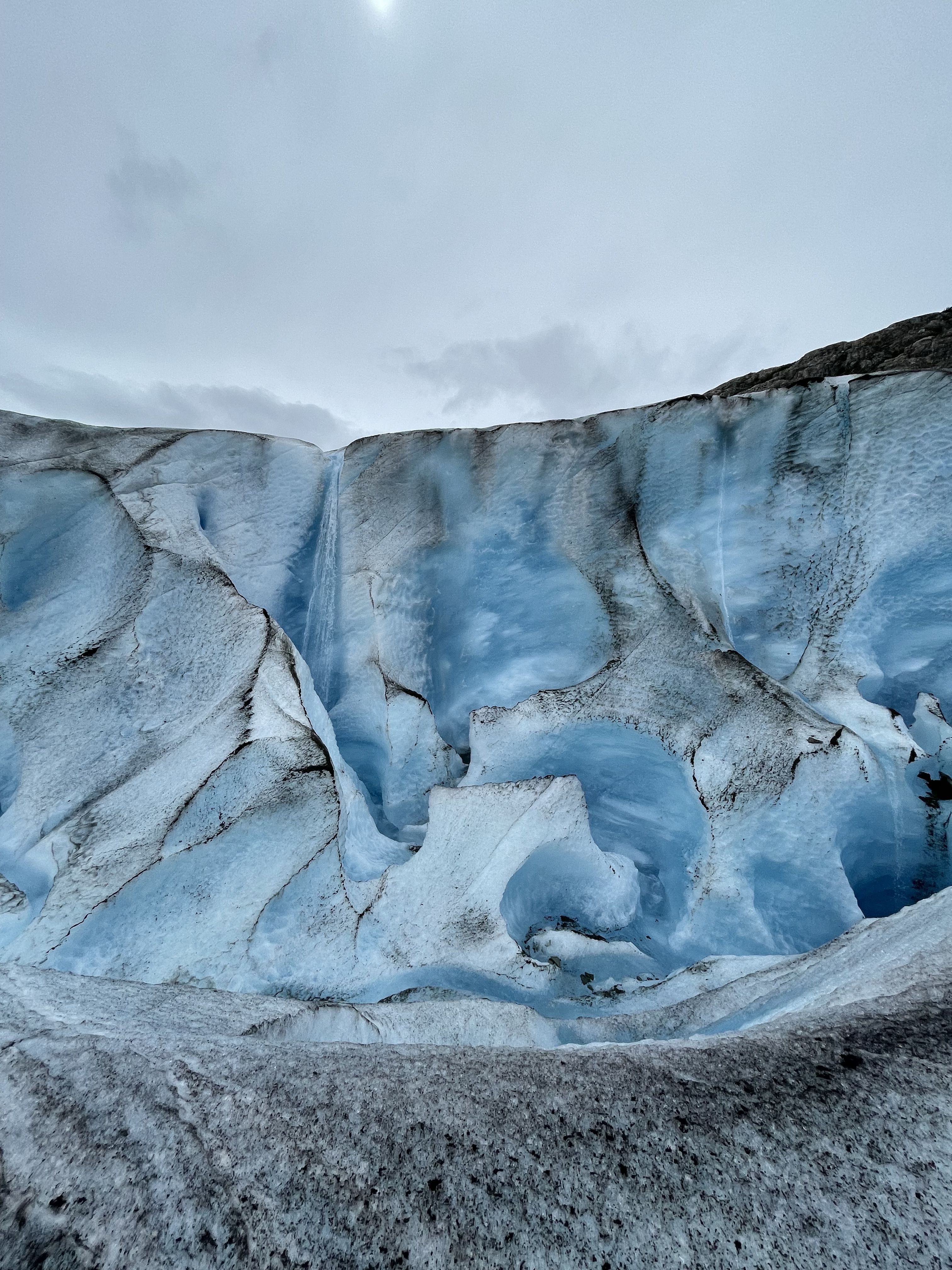
Terminus of the Meade Glacier, Juneau Ice Field, July 2022. Image, my own.


 Refined + Rugged